
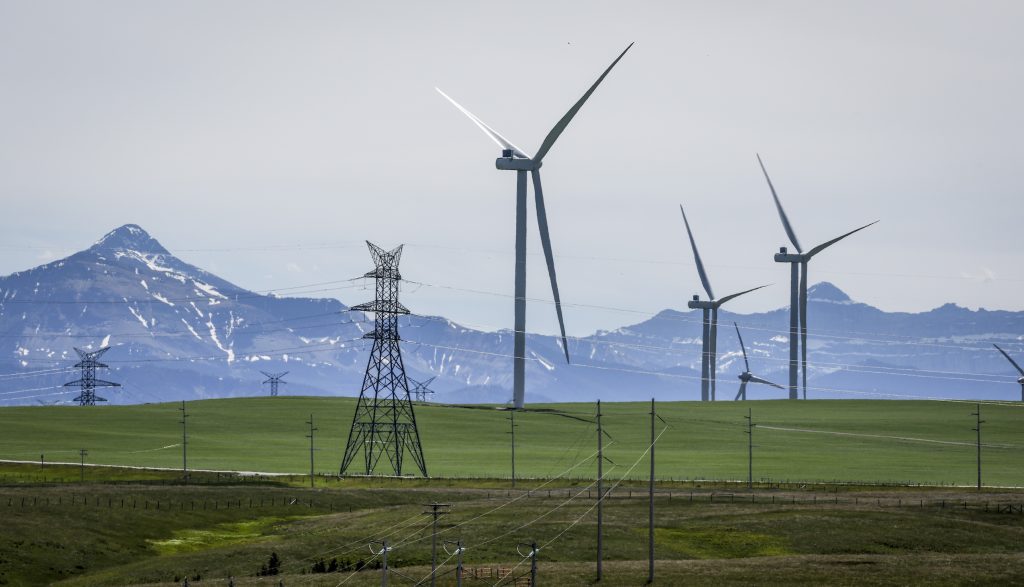
Investment in renewables in Alberta has cratered due to government policies, according to a new report.
The province was once the epicentre for clean electricity in Canada, but Business Renewables Centre-Canada, an organization that facilitates and tracks investment in renewable energy, says 2025 marked the first time in seven years that no new wind power was announced.
“New wind projects have stalled altogether,” reads the renewables in review report. “All projects currently under construction were commissioned by the end of 2024 and 2025 marked the first year without any reported wind capacity additions since 2018.”
Solar power has also been hit hard, with the smallest annual growth in capacity since 2019 — a time when the sector was on the cusp of an investment surge.
Proposed renewables projects, including those that were ready to start construction, have been cancelled and new project proposals have disappeared, according to the organization. New corporate deals all but evaporated in Alberta in 2025, declining by 99 per cent compared to 2023.
The report puts the blame squarely on government policies and directives that have restricted renewable energy development and introduced significant uncertainty into Alberta’s private electricity market. The Alberta government did not respond to The Narwhal’s request for comment by publication time.
Sara Hastings-Simon, an associate professor in the department of earth, energy and environment at the University of Calgary, who helped found the Business Renewables Centre-Canada but is no longer attached to the organization, said the drop in investment isn’t surprising.
“Renewable energy development is really a global market,” she said. “So jurisdictions are competing against every other jurisdiction out there for development. When the situation gets less attractive, you see capital going from being very interested to being very uninterested.”
Alberta once led the country in renewables investment
Alberta was once the darling of renewable power investment and growth in Canada, far surpassing other provinces as wind and solar projects multiplied.
The driver was the province’s private electricity market and the ability of large corporations to sign agreements with renewable generators to buy all that clean power to lower or offset their own emissions. Those arrangements are called power purchase agreements.
Power purchase agreements, which bankrolled renewable projects, were responsible for 60 per cent of Alberta’s renewable surge. The Business Renewables Centre-Canada estimates projects funded through these contracts since 2019 “have resulted in over $7 billion in capital investments and generated around 7,000 construction jobs, almost entirely in Alberta.”
Then, in 2023, the United Conservative Party government under Premier Danielle Smith shocked the industry by unilaterally implementing a moratorium on any new renewable energy projects for seven months — a move she said was in response to requests from the Alberta Electric System Operator, which was in fact opposed to the plan, and the utility regulator.
Behind closed doors, Mike Law, the former CEO of the Alberta Electric System Operator, which oversees the electricity grid, had warned the government that its moves against renewables would send the industry into a “tailspin.”
“If we make ourselves unwelcoming, investment will just go elsewhere,” he wrote.
Law later lost his job and was replaced by a government-appointed member of the operator’s board.
Alberta renewables moratorium was followed by major overhaul
The situation didn’t improve for renewable developers once Alberta’s moratorium was lifted, with the introduction of stiff new regulations that prevented projects in vast areas of the province.
Shortly after that, the province initiated a hasty comprehensive overhaul of the electricity market that introduced more uncertainty, as well as new rules on transmission that will restrict the ability of renewable projects to earn a profit.
A report commissioned by the grid operator and published in 2025 centred on interviews with eight unidentified “major financial institutions” to gauge reaction to the operator’s massive overhaul of the provincial electricity grid. It appears to predict the investment vacuum outlined in the Business Renewables Centre-Canada report.
“This climate of uncertainty has increased the cost of capital, reduced appetite for new investments and led to delayed or cancelled projects,” reads the report, which was authored by consulting firm Morrison Park Advisors. “Some lenders reported that projects in advanced financing stages were paused or abandoned altogether in response to recent announcements.”
The report says investor confidence in Alberta as a stable market has been “significantly undermined.”
In addition to the regulatory and policy hurdles, Alberta also weakened its industrial carbon price scheme and drove down the value of carbon credits, a key pillar to incentivize decarbonization and drive renewable growth.
In an emailed response to questions from The Narwhal, the Alberta Electric System Operator did not take issue with the findings in the new Business Renewables Centre-Canada report, and pointed to the fact 92 per cent of Canada’s renewable electricity growth came from Alberta in 2023.
It also highlighted a current oversupply of installed capacity on the grid and depressed prices, which could impact investments.
“Low-cost renewable energy is important, but we also need to recognize there are also several reliability concerns stemming from rapid integration of renewables that must be addressed,” it said in a statement.
The system operator said its market reforms are “intended to strengthen the reliability of the grid, improve cost outcomes for Albertans, and support investment in both new and existing technologies.”
Hastings-Simon, however, called the situation in Alberta a “perfect storm” of factors impacting renewables.
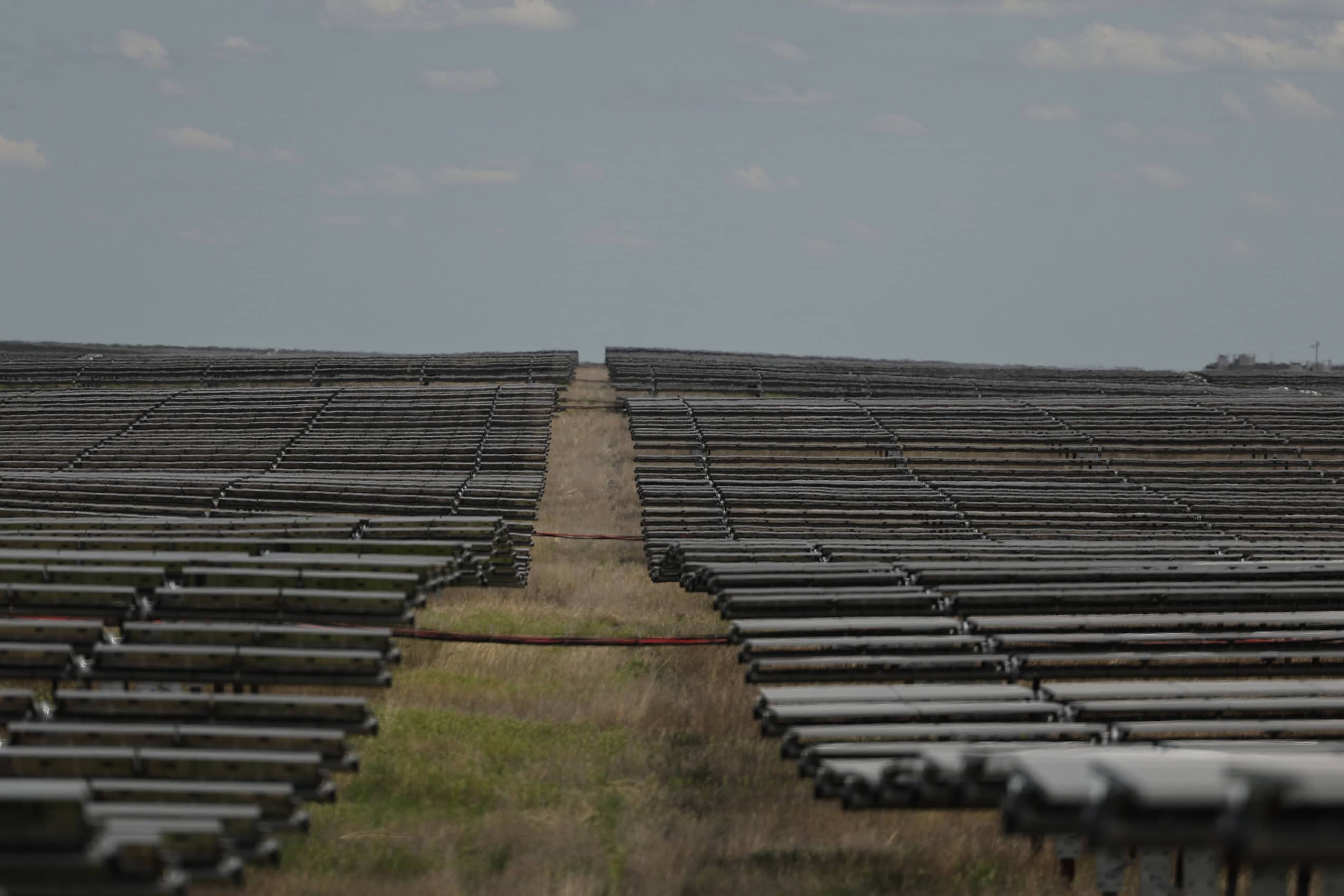 In 2025, solar power in Alberta saw its smallest annual growth in capacity since 2019. The outlook for renewable energy in Alberta in 2026 isn’t looking any better, according to a new report from the Business Renewables Centre-Canada. Photo: Leah Hennel / The Narwhal
To put the impact of those changes in context, Jorden Dye, the executive director of Business Renewables Centre-Canada said approximately 1,000 megawatts of renewable electricity was added to Alberta’s grid each year between 2021 and 2023. That number is expected to be around 200 megawatts this year.
“If the market continues the way we’re at, I see it as it’ll be very specific projects that are able to go through — in the right spot at the right time — but that’ll be it,” Dye said.
Nova Scotia now leads the country in renewables investment
The outlook into 2026 isn’t any better, according to the Business Renewables Centre-Canada, which says there are “no active” projects backed by a power purchase agreement announced for this year.
Wind, in particular, will likely continue to wither, and developers have “almost completely stopped advancing their projects.”
That said, the organization isn’t entirely pessimistic.
It says solar projects that are ready to move forward haven’t completely pulled out of the development queue, but are waiting for more certainty before proceeding.
It also highlights the recent memorandum of understanding with the federal government over a West Coast pipeline that includes a commitment to strengthen the province’s industrial carbon price. That carbon levy could provide more incentive for power purchase agreements, but Alberta further weakened the scheme after signing the memorandum.
Dye also pointed to the promise of storage batteries as a means to blunt some of the impacts from new transmission rules.
In the meantime, other Canadian jurisdictions are luring investment. Nova Scotia led the country in corporate power purchase agreements in 2025, usurping Alberta. But Dye said no one jurisdiction is in a position to replicate Alberta’s previous growth.
Hastings-Simon said a lot of work went into attracting big renewable developers to Alberta, work that paid off with significant investments. But, she added, Alberta “dropped the ball,” and some of that — including the chilling impacts of the renewables pause — will be hard to reverse.
“I think certainly things that are really unprecedented when it comes to government involvement in the market are probably the hardest to recover from,” she said.
Updated Jan. 27, 2026, at 4:45 p.m. MT: This story was updated to include comments from the Alberta Electric System Operator, which were received after the deadline.