

Apple on Thursday confirmed acquiring the Israeli startup Q.ai, in what appeared to be part of the tech giant’s efforts to make inroads into the wearables market, with the aid of artificial intelligence.
The purchase cost Apple almost $2 billion, people familiar with the terms told the Financial Times. Industry press said it was the second-largest acquisition in the company’s history, after its purchase of the Beats music giant in 2014.
Q.ai is tight-lipped in public about its technology, but patents it filed show tech being used in headphones or glasses using “facial skin micro movements” for nonverbal communication, according to the FT.
Apple’s vice president of hardware, Johnny Srouji, said in a statement that the startup is “pioneering new and creative ways to use imaging and machine learning.”
The move may be a component of Apple’s strategy for “wearable” products, such as smart glasses. Software that reads facial expressions could potentially make way for a hands-free user interface that doesn’t require talking out loud, reports noted.
Sign up for the Tech Israel Daily
and never miss Israel’s top tech stories
By signing up, you agree to the terms
Tom Hulme, who heads GV (formerly Google Ventures), one of Q.ai’s main backers, wrote in a blog post about the acquisition: “For decades, we have been forced to speak the language of the machine: learning to type, to click and to swipe. But, we believe we are in the midst of a new tech revolution: an era where the machine finally learns to understand us.”
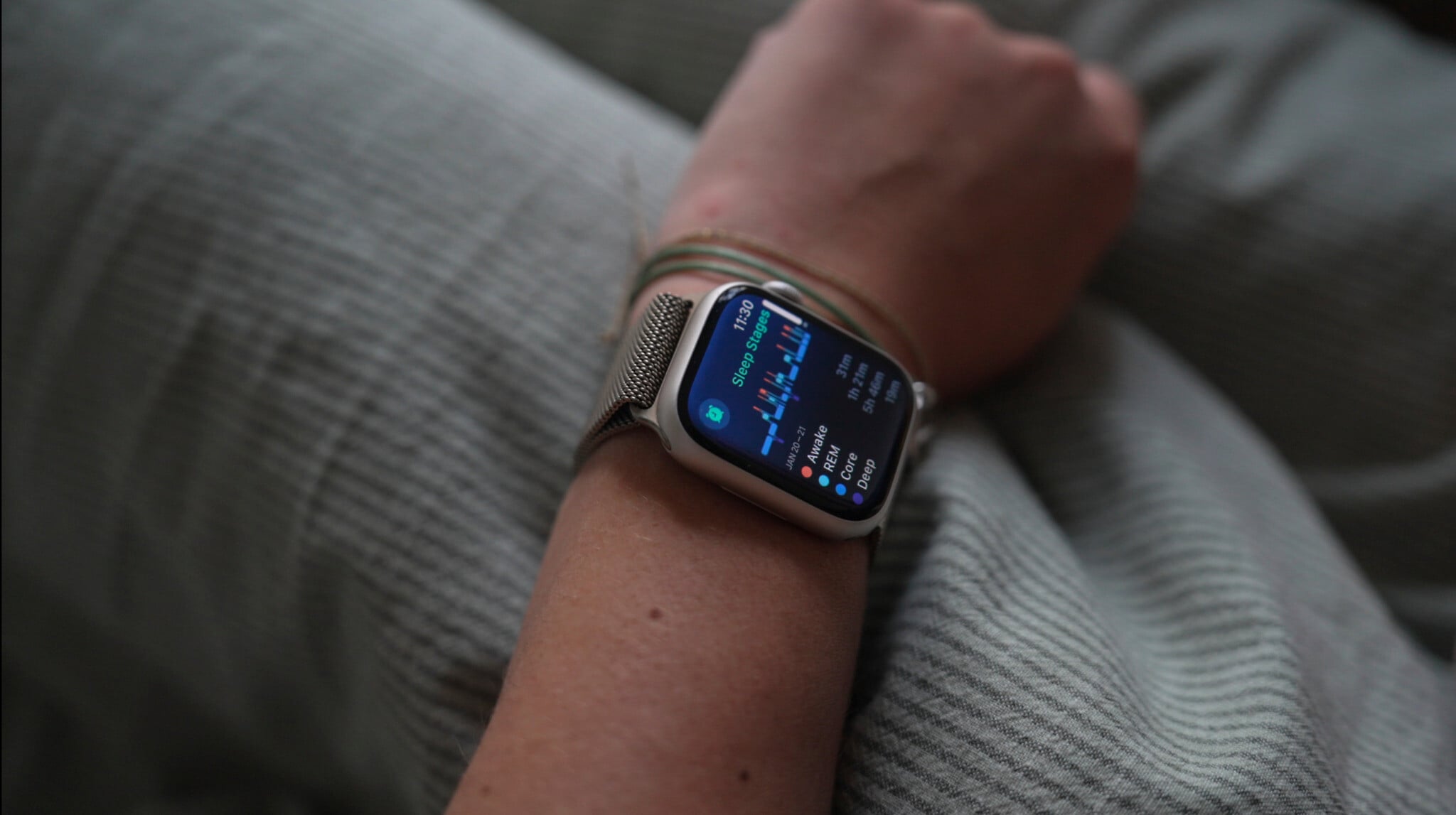
A person wears an Apple watch, Jan. 21, 2026, in Atlanta, Georgia. (AP Photo/Emilie Megnien)
Among Q.ai’s other investors are Kleiner Perkins, Spark Capital and Exor, FT reported.
The startup, founded in 2022, is led by Aviad Maizels, whose previous project, PrimeSense, was also acquired by Apple in 2013 and was core to developing the latter’s facial recognition software.
His co-founders are fellow Israeli entrepreneurs Yonatan Wexler and Avi Barliya.
In Hulme’s blog post, the GV executive noted: “After the horrendous October 7th attack in 2023, approximately 30% of the company were drafted into military service, and for months afterwards our weekly meetings were interrupted as the team had to scramble into bomb shelters.”
He added: “Not once did [the Israelis] complain, instead their energy was focused on supporting their community and making technical breakthroughs.”
Is accurate Israel coverage important to you?
If so, we have a request.
Every day during the past two years of war and rising global anti-Zionism and antisemitism, our journalists kept you abreast of the most important developments that merit your attention. Millions of people rely on ToI for fact-based coverage of Israel and the Jewish world.
We care about Israel – and we know you do too. So we have an ask for this new year of 2026: express your values by joining The Times of Israel Community, an exclusive group for readers like you who appreciate and financially support our work.
Already a member? Sign in to stop seeing this
You appreciate our journalism

You clearly find our careful reporting valuable, in a time when facts are often distorted and news coverage often lacks context.
Your support is essential to continue our work. We want to continue delivering the professional journalism you value, even as the demands on our newsroom have grown dramatically since October 7.
So today, please consider joining our reader support group, The Times of Israel Community. For as little as $6 a month you’ll become our partners while enjoying The Times of Israel AD-FREE, as well as accessing exclusive content available only to Times of Israel Community members.
Thank you,
David Horovitz, Founding Editor of The Times of Israel