
As the Portland Fire prepare for their 2026 return to the WNBA, all eyes in the city are watching the team’s every move.
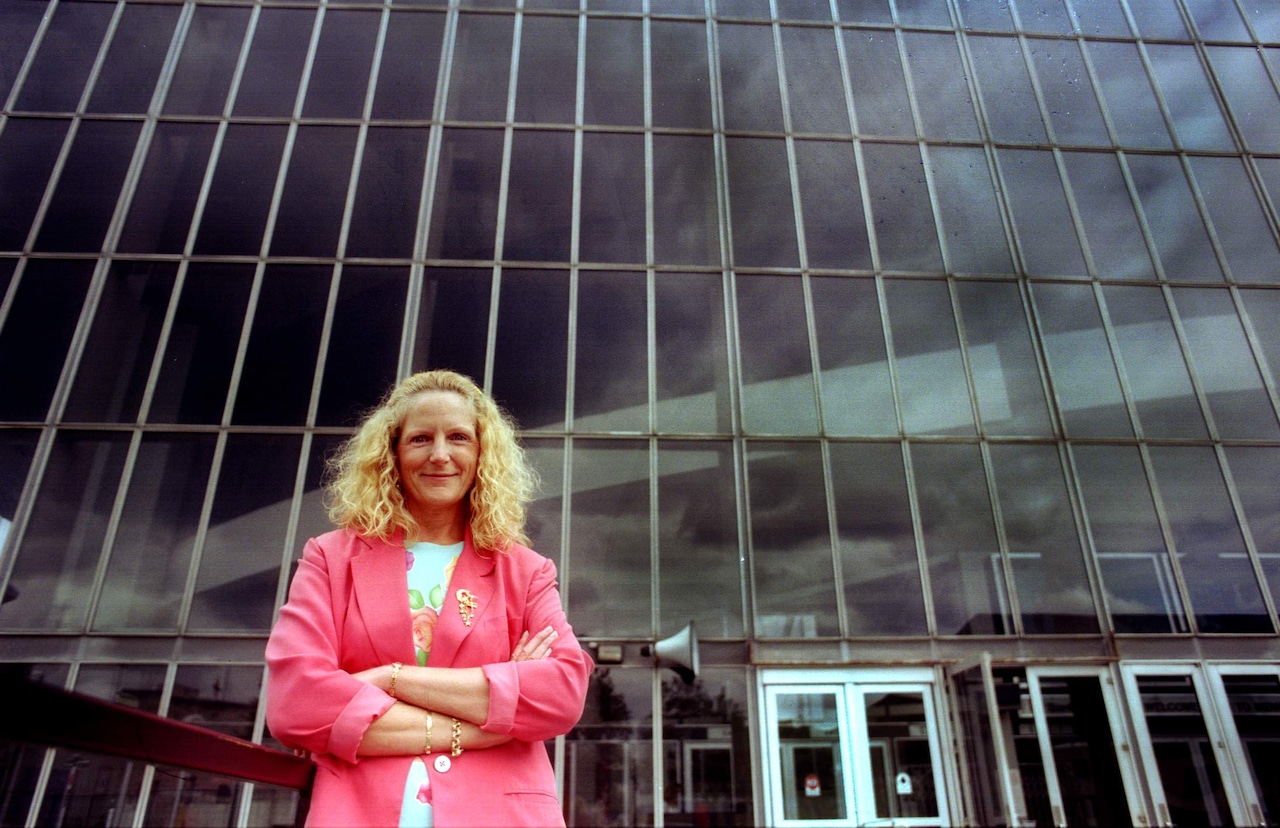
Linda Weston is one of those following closely. And the longtime Oregon businesswoman has liked what she’s seen so far.
“You know, I think they’re doing a lot of what I would have suggested,” Weston said.
Weston is perhaps best known in Oregon’s business scene as the longtime director of the Oregon Entrepreneurs Network, a non-profit that helps educate young entrepreneurs in the state.
But before that, Weston was the general manager of the Portland Power, the city’s American Basketball League team from 1996 through 1998. The team suddenly ceased operation in December 1998 when the ABL closed up shop in the middle of the 1998 season. It made way for the Portland Fire to enter the WNBA in 2000.
“It’s vastly different from what the Fire have now,” Weston said about her time as general manager for the Power. “We had a very, very tiny staff, and we had zero money, and so we really had to scramble a lot of grassroots marketing.”
Weston said the Power was an “all hands on deck” situation. They had players out at all times speaking in schools and making appearances at events. Players like Sylvia Crawley and hometown hero Katy Steding would go out the morning after games to talk to students.
“The players were such great role models,” Weston said, remarking that Steding once showed up to a school with a black eye from fighting for a rebound the night prior. “They were out in the community all the time, and they were truly wonderful people.”
The work paid off, as the Power had the second highest home attendance in the ABL. On opening night, Weston said the Power brought in 9,000 people to Memorial Coliseum.
“But I have to say, looking back, I feel like in some ways we were inventing it as we went along. It was quite remarkable.”
When she looks at the work that Fire has done since the team was announced, she said general manager Vanja Černivec is already doing a lot of the things that she would have suggested.
“The more you can build community, the better,” Weston said. “And that’s what we tried to do. You know, you have to be out there talking to people and the good news for the Fire is there has been such a huge surge in interest in women’s sports in general, but specifically women’s basketball.”
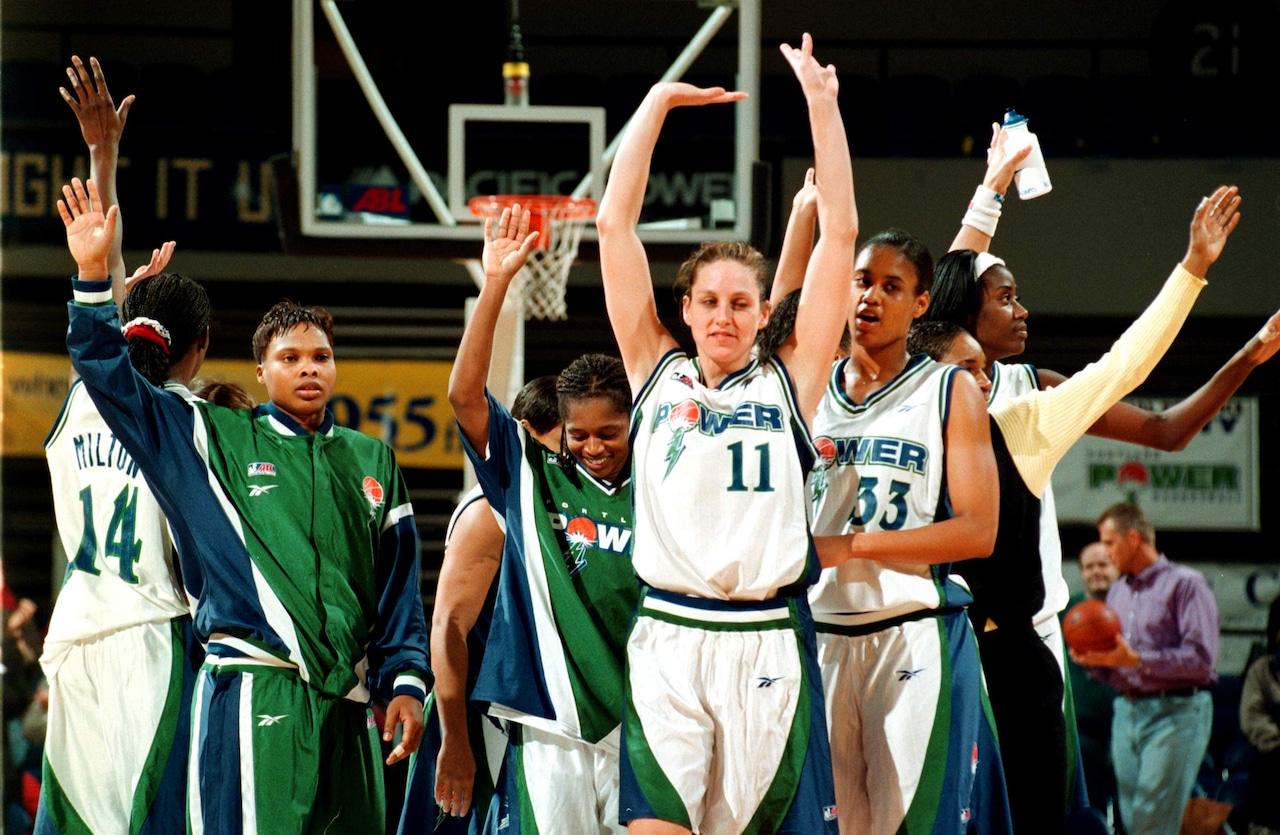 Portland Power players salute their fans after defeating Seattle on November 28, 1998. From left to right, DeLisha Milton, Elaine Powell, Sonja Henning, Katy Steding, Danielle McCulley, Debra Williams, and Sylvia Crawley face the new year with job searches ahead.THE OREGONIAN
Weston also made sure to single out her admiration for the team’s “Portlandia” schedule announcement.
“I look at all of the things they’re doing, and I am thrilled that they are doing them,” Weston said. “And I have to also say that I am honestly a little bit envious that we didn’t have some of those resources available. And I also understand that’s a function of the time. You know, it was 30 years ago. Things have changed.”
Weston said there are similarities when it comes to the start of the Portland Fire of today and the start of the Portland Power in the ‘90s.
Right now, the WNBA is expanding with the Golden State Valkyries in 2025, the Fire and the Toronto Tempo in 2026, and expansion teams going to Cleveland (2028), Detroit (2029) and Philadelphia (2030) in the coming years. The recent growth comes as the WNBA has seen a rise in popularity from stars like A’ja Wilson, Caitlin Clark, Angel Reese, Paige Bueckers and Sabrina Ionescu.
The ABL kickstarted in 1996 to piggyback on the success of Team USA at the 1996 Summer Olympics and a surge in popularity following the 1995 NCAA basketball season when Connecticut went 35-0 and won the national title.
“There was a surge of interest, which we thought was huge at the time, but it’s nothing like we’re seeing today,” Weston said. “Oh, my gosh, what a thrill. I went up to Seattle a year ago to see (the Storm) play the Fever, and there were 18,000 people in the stands and that was mind boggling. There’s this huge surge of interest in not just women’s basketball, but women’s sports and general.”