
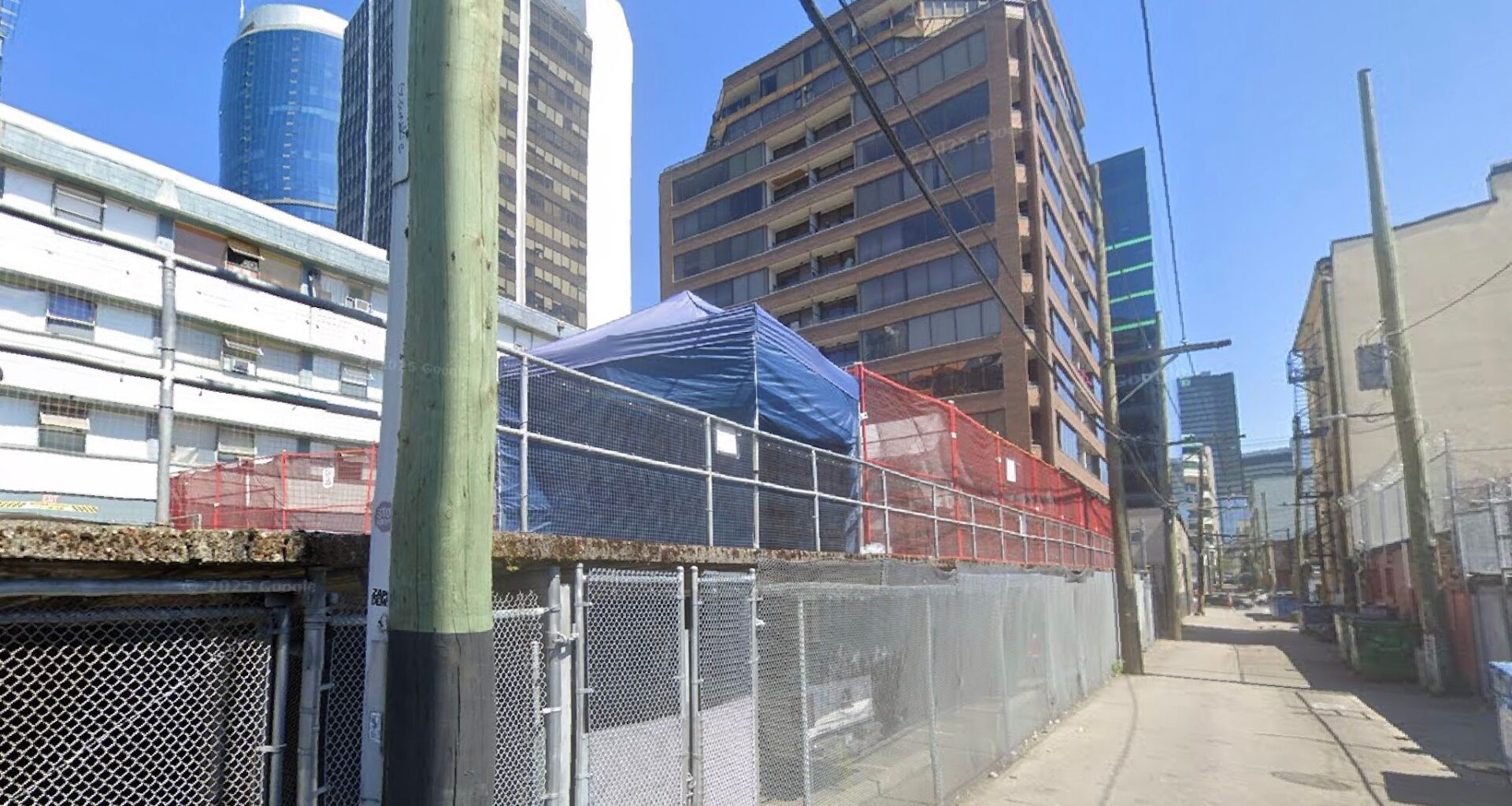
After just under two years of operations, the controversial Thomus Donaghy Overdose Prevention Site (OPS) will permanently close at its current location of 1060 Howe St. in downtown Vancouver at the end of operating hours today, Jan. 31, 2026.
In April 2024, Vancouver Coastal Health Authority first opened this OPS in the rear of non-profit housing operator Community Builders’ Metson Rooms & Shelter building, within a fenced-off area with tents on the rooftop of the two-storey parkade fronting the laneway.
In a bulletin issued late Friday afternoon, the health authority stated that the closure of the facility at this location is at the direction and discretion of the property owner.
Moving forward, the intent is to find a new replacement permanent location for this OPS, which provides supervised consumption, drug checking, and other harm reduction services. In the meantime, people who use the facility will be informed of the closure and how to access harm reduction supplies.
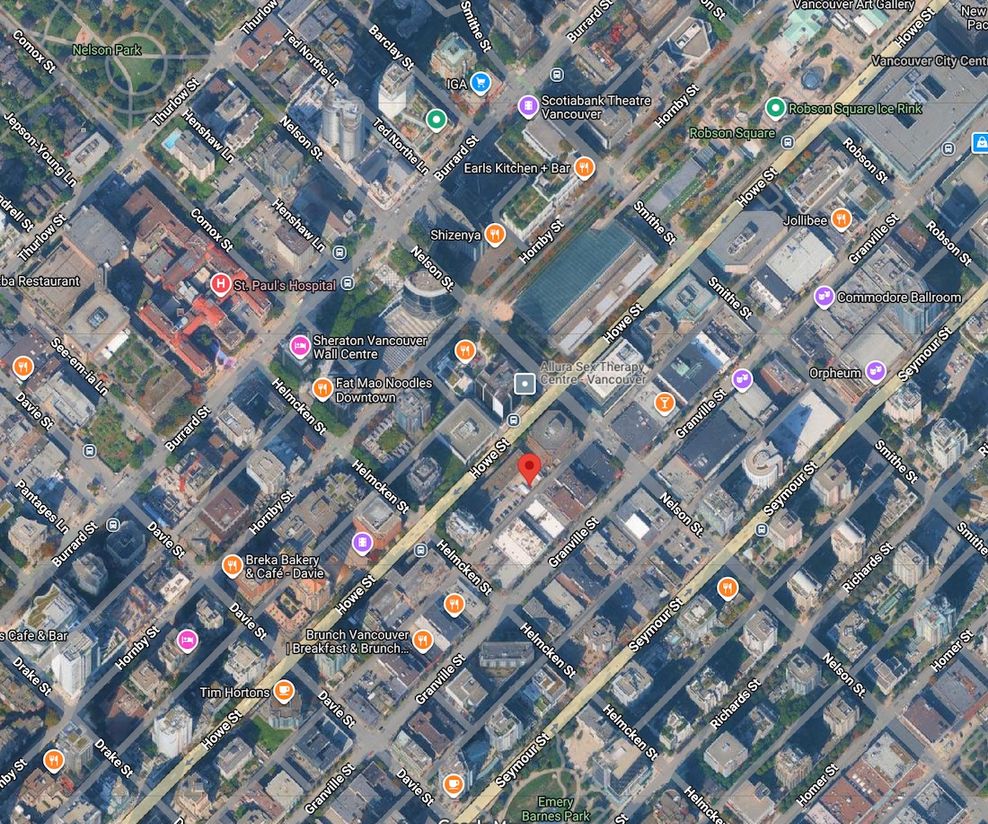
Thomus Donaghy Overdose Prevention Site (OPS) in the laneway of Metson Rooms & Shelter at 1060 Howe St., Vancouver. (Google Maps)
Between March 2021 and March 2024, this facility — operated by the non-profit RainCity Housing — was previously located on the ground floor of the City of Vancouver-owned social housing building at 1101 Seymour St., where it was informally known as the Yaletown OPS.
The municipal government did not renew the lease at the 1101 Seymour St. location due to significant controversy surrounding operator issues, including a high number of complaints from neighbours who said public disorder, strewn garbage and needles, crime and public safety concerns, and sidewalk encampments in the area stemmed from the facility’s presence. Local residents and businesses asserted that the operator, the health authority, and the City broke their promise — made during Vancouver City Council’s debate in October 2020 over the original lease approval — that the facility would be a “good neighbour.”
After years of significant disruption and safety concerns, local residents impacted by the OPS sued the health authority, City, and Raincity Housing in 2023.
In 2025, the B.C. Ministry of Health released new minimum service standards for all OPS facilities in the province, establishing a wide range of new operating requirements to better ensure such facilities are good neighbours. To address the lawsuit, an out-of-court settlement was also reached that same year, with the health authority agreeing to follow the new provincial standards for operating OPS facilities, and the municipal government agreeing to consult with area residents before opening new OPS locations.
The controversial former Seymour Street site was itself a relocation of the OPS that had previously operated in a tent in the Thurlow Street parking lot at the rear of St. Paul’s Hospital. Raincity Housing first opened that location in May 2018, and it was the very first OPS in Vancouver outside of the Downtown Eastside. It closed following the fatal stabbing of a volunteer working at the OPS in July 2020.
After the death of Thomus Donaghy, Providence Health Care and the staff at St. Paul’s Hospital raised safety concerns about an on-site OPS location. The facility was also formally named the Thomus Donaghy Overdose Prevention Site in his memory.
Providence Health Care, the hospital’s operator, was also opposed to the OPS returning to St. Paul’s Hospital following the closure of the Seymour Street location.
According to the health authority, since 2021, this OPS at its various locations has seen over 100,000 visits, reversed over 300 overdoses, and connected many people at risk of overdose to essential health supports and services.
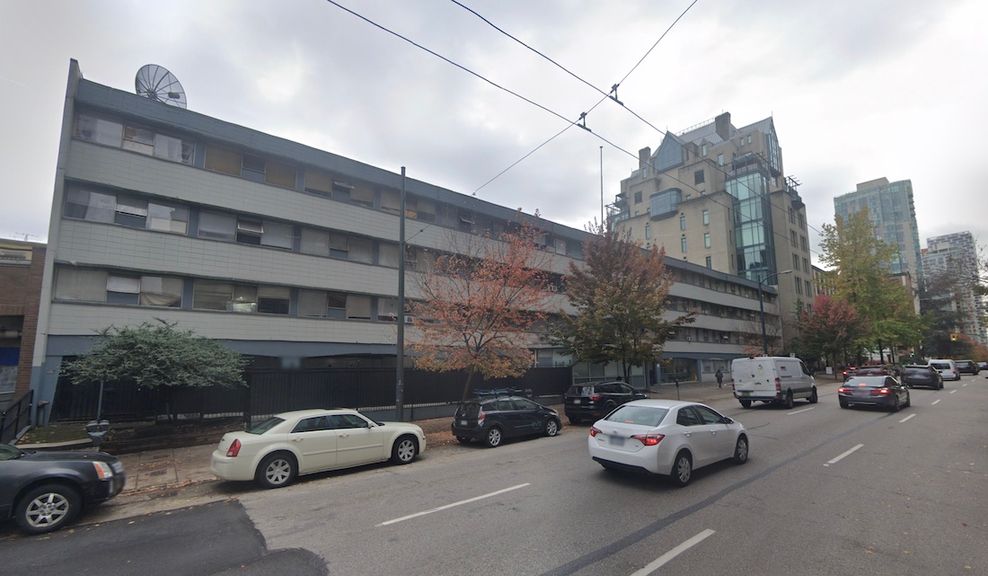
Metson Rooms & Shelter at 1060 Howe St., Vancouver. (Google Maps)
The 1960-built, four-storey building at 1060 Howe St. was previously a budget tourist hotel known as The Bosman. In 2009, Portland Hotel Society leased the building for an initial period of three years as a pilot project supported by the Mental Health Commission of Canada to demonstrate ways of supporting homeless people with mental illness. With government funding, the building saw continued operations made possible by funding from governments and other non-profit entities.
After the hotel closed, the guest rooms were converted into 100 units of supportive housing. A 40-bed temporary winter shelter also opened in the ground level in 2017, and it was upgraded to a year-round shelter starting in 2019.
The property of the Metson Rooms & Shelter building is owned by local developer Prima Properties, which has long-term plans to redevelop the site into a residential tower.
Before the end of June 2026, the nearby Luugat supportive housing building — the former Howard Johnson Hotel — at 1176 Granville St. will permanently close, ending its current uses ever since it was acquired by the provincial government at the peak of the pandemic for its conversion into rapid supportive housing.
Over the past few years, local businesses and residents increasingly linked the building’s change of use and operations as a contributing factor to the Granville Strip’s accelerated decline, with many blaming the Luugat for rising public disorder, theft, vandalism, and other crime in the area.
Businesses and residents have been calling on the provincial government to immediately close the remaining supportive housing and SROs on the Granville Strip, in addition to the planned shutdown of the Luugat.