
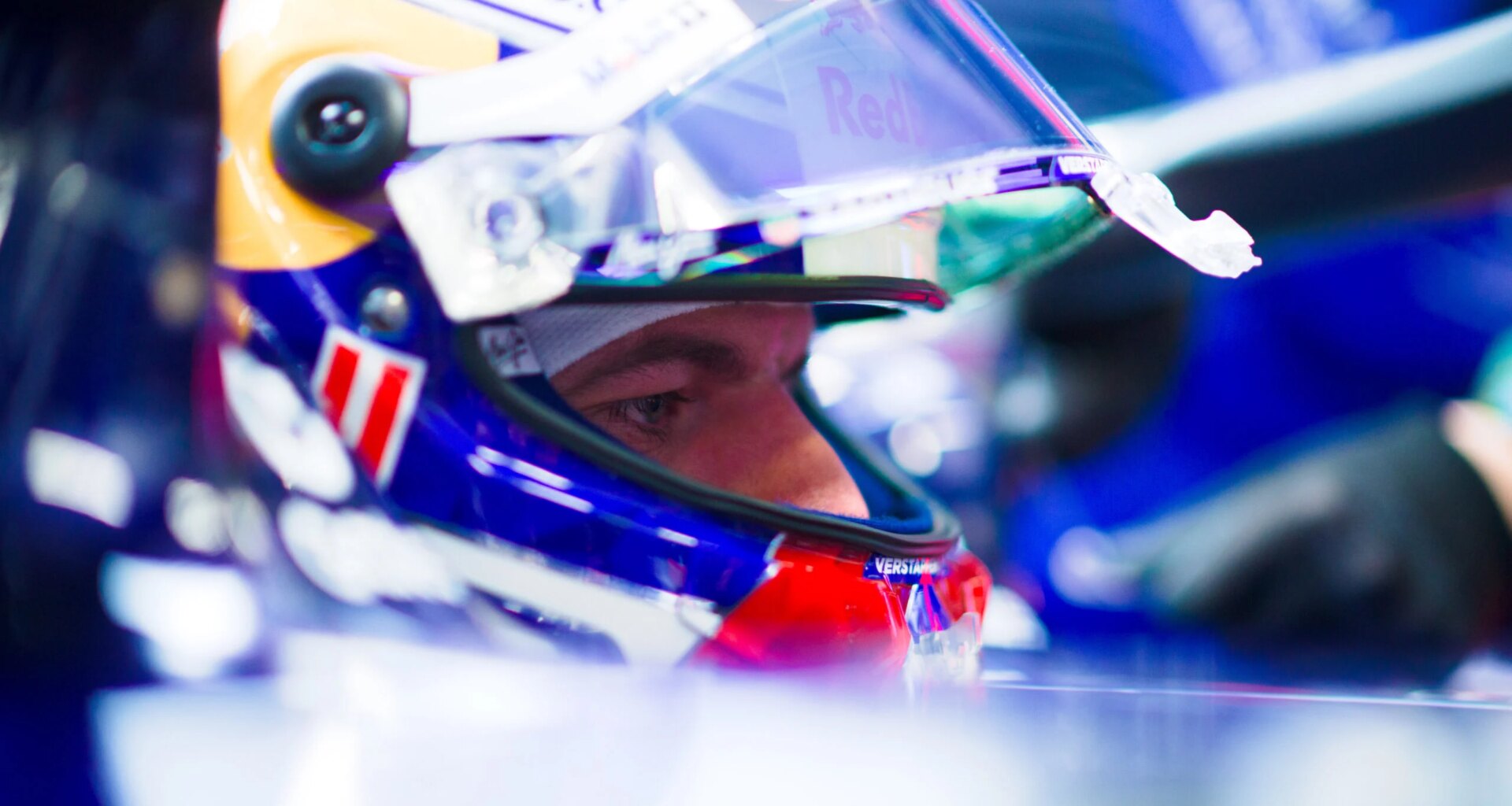
Red Bull’s power units are one of the biggest unknowns heading into 2026. The Austrian team has spent years building and investing in their own powertrains division.
On paper, the challenge of producing an F1 engine for the first time is likely to be a painful process. Team principal Laurent Mekies has made no mistake that he anticipates a difficult campaign, at least in the early stages.
However, these assumptions were fundamentally challenged by the reliability of Red Bull’s engine in Barcelona.
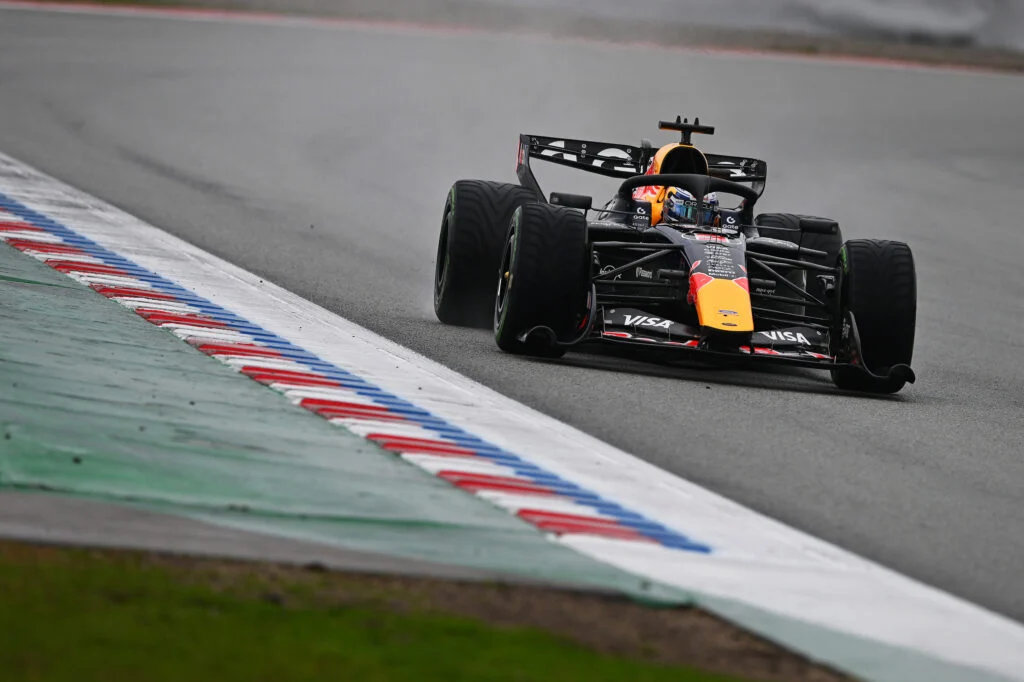 Max Verstappe driving the (3) Oracle Red Bull Racing RB22 on track during day two of F1 Shakedown in Montmelo, Spain. (Photo by Rudy Carezzevoli/Getty Images)
Red Bull praised for reliability of power unit
There are many reasons why Mercedes are consistently described as favourites for the 2026 season. Arguably the biggest factor is the almost universal confidence in their power unit.
Both customer teams and rivals have spoken in glowing terms about the German manufacturer’s chances. The W17’s successful completion of over 500 laps in this week’s Shakedown seems to confirm this consensus.
Another reason why the Brackley squad are seen as favourites is that, generally speaking, there has been an expectation that Red Bull will struggle to deliver a top power unit.
Although few doubt Red Bull’s engineering brilliance, producing a winning engine is seen as a long-term process. Because of this, Red Bull have not received the same vote of confidence as their Mercedes adversaries this winter.
As a result, it should be noted how smoothly the Red Bull engine performed in the Barcelona shakedown.
VCARB team principal Alan Permane has given first impressions of the Austrian manufacturer’s first power unit:
“A huge learning curve for us. A new power unit, of course, a new power unit manufacturer. But Red Bull Powertrains, with Ford, have done an incredible job.
“The engine, the whole power unit has run very, very reliably. I don’t say we were expecting problems, but we’ve been pleasantly surprised with how well things have gone.
“It’s enabled us to just get on and do our programme, and the engine guys have been doing stuff in the background. Lots of tests and things like that, as I’m sure you can imagine.”
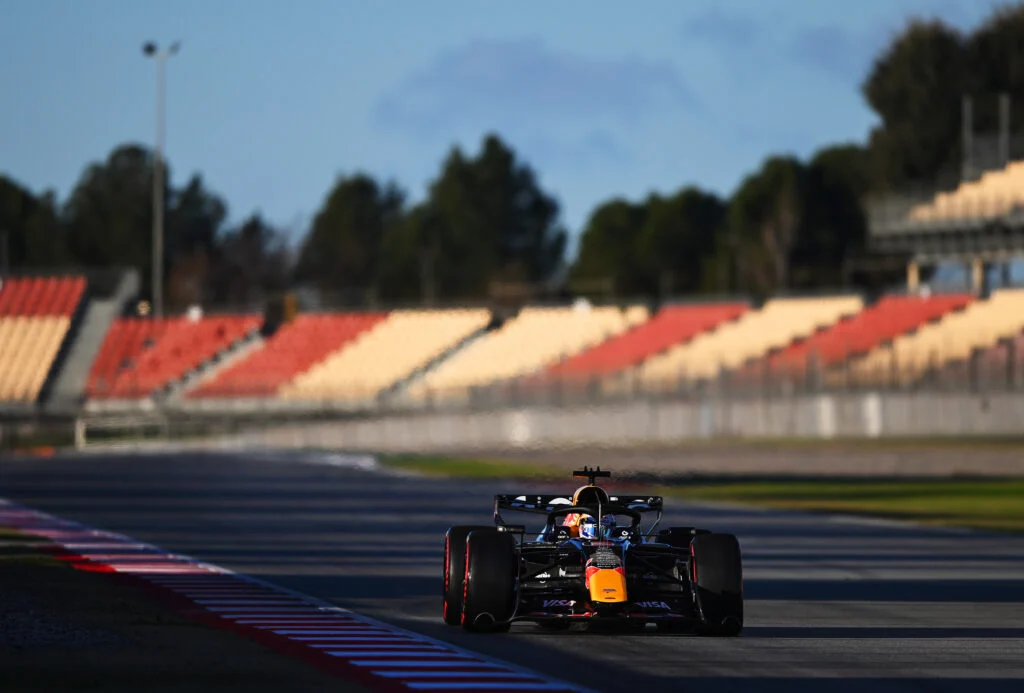 Max Verstappen driving the (3) Oracle Red Bull Racing RB22 during day five of F1 Shakedown in Montmelo, Spain. (Photo by Rudy Carezzevoli/Getty Images)
Still a long road ahead
At this stage, it would be too son for Red Bull to celebrate the success of their 2026 engine. Not only would such actions go against the relentless pursuit of performance that characterises the team’s DNA, but it there are still to many uncertainties about the Red Bull engine.
First and foremost, one smooth test does not automatically guarantee reliability.
Only at higher temperatures and higher engine modes (amidst the stress of a race distance) can the true strength of a car and it’s power unit be determined.
Beyond this, reliability is only half the battle. Mercedes and Ferrari also demonstrated impressive levels of durability with their powertrains – including their customer teams.
This means that horsepower, electrical efficiency and optimisation of the new sustainable fuels will be difference-makers. For Red Bull, this means that finding more performance is of the upmost importance.
Still, the Austrian outfit have avoided a worst-case scenario. Before this week’s track time, there were fears that Red Bull could find themselves immediately on the defensive due to their power unit.
At least for now, this is not the case. Whilst matching Mercedes and the other top manufacturers is certainly not a given, this was never Red Bull’s main objective.
When analysing the Red Bull engine previously on LWOS, one specific aim has been emphasised. The target for Laurent Mekies’ powertrain division is not necessarily to have the best engine – but instead to be close enough to the other manufacturers to keep Red Bull within touching distance.
By doing this, the former Champions believe they can count on their aerodynamic and concept teams to bridge the gap.