

Thursday, 29 January 2026, 16:07
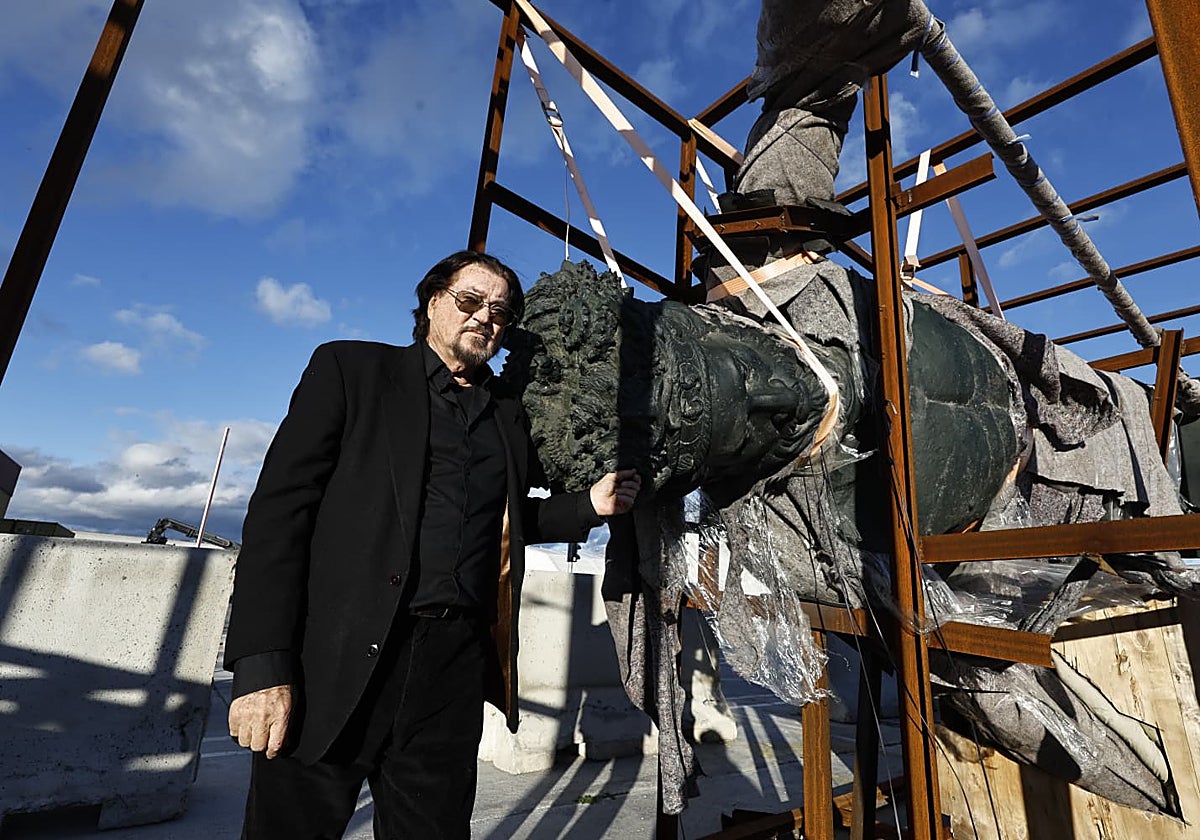
The controversial giant bronze statues of Neptune and Venus created by artist Ginés Serrán will be installed at the port of Malaga in February.
President of the Port Authority Carlos Rubio has not announced the exact date due to the delays in the installation of the foundations that recent rains have caused.
Cornered by serious backlash from art academics, in January local authorities decided to significantly decrease the time during which the ensemble would remain in this key location. Instead of 25 years, Serrán’s gift to Malaga will remain in Plaza de la Marina for six months.
The main critic of the ensemble has been the Royal Academy of Fine Arts of San Telmo. In response, Rubio has criticised the academics for only speaking up after two years of knowing about the installation. However, in a gesture to preserve the peace, he said that the project does not try to “confront anyone”.
The Port Authority has the necessary permits to hold temporary exhibitions. Examples of such are Elena Laveron’s exhibition in 2017 and Arne Quinze’s in 2022, which also displayed large sculptures. “It’s not something new, although these [statues] attract more attention,” Rubio admitted. Moreover, the Lista law allows this type of work to be done without the need for a building permit.
The opposition perseveres
Despite these permissions, the academics sent a letter to all responsible institutions, questioning the legality of the installation. Even after the initially agreed display time of 25 years was decreased to a minimum, they continued opposing the installation altogether.
According to the San Telmo Academy, Sociedad Económica de Amigos del País, the Malaga Academy of Sciences, Ateneo de Málaga and the Institute of Urban and Social Studies, the Neptune and Venus statues don’t have a place at the port.
Their main argument is that, with their imposing size, the sculptures modify the urban landscape and the historic centre. They have also said that their installation requires a municipal licence. Last but not least, these institutions denounce the fact that the contract by which Serrán cedes his work was not subject to a public tender.