
Canada will continue to be a winter sport powerhouse at the 2026 Olympic Winter Games.
Canada is expected to chase Norway, Germany and the United States at the top of the medal table in the Milan Cortina Games, officially opening Friday, and closing Feb. 22.
Advertisement
The Paralympic Games follow March 6-15.
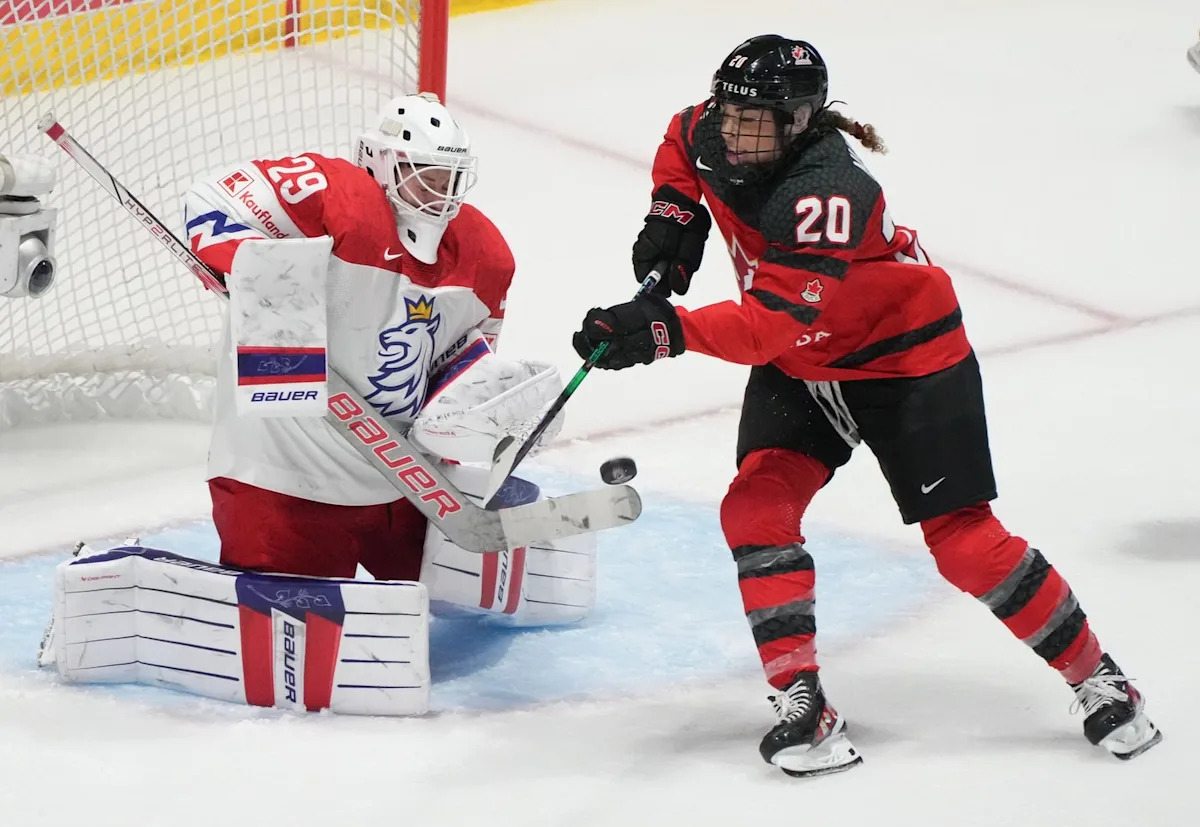
Mixed doubles curling preliminary games start Wednesday. Canada opens defence of its gold medal in women’s hockey Thursday against Finland.
The Canadian team of 207 athletes is comprised of 108 women and 99 men. The 2026 edition includes 98 athletes with previous Olympic Games experience, including 47 medallists.
Canada ranked fourth in the 2022 Beijing Games in total medals with 26 — four gold, eight silver and 14 bronze.
Advertisement
“We always aspire to do better from a medal count perspective than the prior Games,” said Canadian Olympic Committee chief executive officer Dave Shoemaker.
“We won 26 medals in Beijing, and so that’s a bit of a target.”
The Canadian team runs the gamut from 109 Olympic rookies to a handful of athletes still competing long after their 2010 debuts in Vancouver and Whistler, B.C.
The 2010 alumni are hockey players Sydney Crosby, Drew Doughty and Marie-Philip Poulin, speedskater Valerie Maltais; curlers Marc Kennedy and Ben Hebert, ski jumper Mackenzie Boyd-Clowes and figure skater Paul Poirier.
Advertisement
Regina snowboarder Mark McMorris has earned slopestyle bronze medals in three consecutive Winter Olympics starting in 2014.
“There’s not a kid in the men’s slopestyle that’s even attempting to be at this Olympics that was in 2014 Sochi, so that is a motivation on its own,” said the 32-year-old. “I take a lot of pride in my longevity and in competitive snowboarding.”
Freestyle skiers and speedskaters, both short-track and long-track, are expected to lead Canada’s medal change in Italy.
Advertisement
“They are what we would call foundational sports with strong multi-metal potential,” said Own The Podium chief executive officer Anne Merklinger.
Moguls king and three-time medallist Mikael Kingsbury will also compete in dual moguls, making its Olympic debut.
The short-track team, led by breakout star William Dandjinou, is deep in medal threats. Maltais, Ivanie Blondin and Isabelle Weidemann will attempt to defend their gold in long-track’s team pursuit.
Advertisement
Snowboarding and ski cross are also fertile medal ground for Canada.
“For Canada to contest for a top-three finish, we would need those sports to really have a terrific Games,” Merklinger said.
Men’s and women’s hockey and curling are also expected to produce podiums as NHL players return to Olympic men’s hockey for the first time since 2014.
Norway, Russia, Germany, Canada and the United States ranked first to fifth in Beijing’s medal table.
Advertisement
Russia’s invasion of Ukraine, within days of Beijing’s closing ceremonies, made it persona non grata in most quarters of international sport.
The International Olympic Committee will allow only a handful of athletes from that country to compete in Italy as neutral athletes.
Canada is still ranked fourth internationally, based on World Cup and world championship results, ahead of the Winter Games.
“They don’t mail the medals to countries, to athletes and teams,” Merklinger said. “They have to go out there and perform on the day on demand.
Advertisement
“The winter competitive environment is extremely tough; it’s extremely deep. We’re really well positioned as a nation to equal or surpass our performance from Beijing.”
That could be a double-edged sword if it gives Canadians the impression that all is well in high-performance sport.
The Canadian Olympic and Paralympic committees have asked the federal government, on behalf of national sport federations, for a $144-million increase annually in core funding, which they say hasn’t increased since 2005, and is how NSOs fund their operations and develop young athletes.
Advertisement
Two federal budgets have passed without a core-funding increase, although athletes saw a raise in their monthly assistance cheques in 2024.
“The burden is shifting increasingly to Canada’s athletes who are having to increasingly do more with less,” Shoemaker said.
“Canada’s athletes are the best in the world. They’re defying odds, and they may well defy odds and have an exceptional Games. If they do, I’m not worried about that. That would be wonderful to see.
Advertisement
“That will underscore the point that when they do, they inspire a nation. They make us feel proud of the Maple Leaf. They get communities glued together in ways that nothing else does.
“They will put a very strong point of emphasis on the idea to our prime minister and to our minister of sport and to others that they should invest in Canadian sport because it’s a wonderful nation-building activity.
“It requires very modest investment compared to the other things that this government’s considering.”
Advertisement
Canada’s total of four gold medals in Beijing was the lowest since 1994 and well off the 14 earned by the host team in 2010.
Canada tallied a record 29 medals, including 11 gold, in 2018 in Pyeongchang, South Korea.
The COC provides bonus money for medals of $20,000 for gold, $15,000 for silver and $10,000 for bronze.
Health-care technology entrepreneur Sanjay Malaviya of Hespeler, Ont., has donated a top-up of $5,000 per medal won.
The Canadian taxpayer invests about $266 million, according to the federal government’s 2024 numbers, in high-performance sport annually.
Advertisement
Canada is coming off a banner 2024 Summer Olympics in Paris with 27 medals, including nine gold, which was a record for a non-boycotted Summer Games.
“Twenty-seven million Canadians tuned into Paris,” Shoemaker said. “We may eclipse that number given the profile of the athletes that are on display in Milano Cortina.”
This report by The Canadian Press was first published Feb. 2, 2026.
Donna Spencer, The Canadian Press