
Drivers risk potentially massive time losses from not managing energy deployment correctly under F1’s new power unit regulations.
The increased electrification of the F1 2026 power units sees the MGU-K contribute 350kW of energy, as part of a near 50/50 split with the internal combustion engine.
Ayao Komatsu: Mistakes in energy deployment will be visible
Want more PlanetF1.com coverage? Add us as a preferred source on Google to your favourites list for news you can trust.
Last week’s collective shakedown in Barcelona was the first occasion for the teams and drivers to get to grips with how the new power units and the new cars worked on track, having spent the last few years preparing for F1’s revolutionary new ruleset.
Alongside a move to sustainable fuels, the latest-generation 1.6-litre V6 engines utilise harvested electrical energy to contribute a significant percentage of the new cars’ power output, and the management of this is something the drivers must get to grips with quickly to be successful in the new era of the sport.
While the overall outright performance of the cars is unlikely to be far off the performance of the last generation, with laptimes in Barcelona just over five seconds off last year’s best, the ease of potential to make mistakes in managing energy deployment could translate into large chunks of time haemhorraging away during a lap.
Speaking during a media session with select media, including PlanetF1.com, Haas‘ team principal Ayao Komatsu shed some light on the extent of the challenge facing the engineers as the drivers will need to fight some instincts in order to deliver the best possible performance.
“If it were only a tenth, I’d be happy,” he smiled when asked about the potential time loss of mismanaging deployment.
“Honestly, I don’t think you can separate drivers and engineers in this instance. But this is both the good and bad of the challenges of this new regulation; the drivers and engineers really need to work together in a much more integrated way than before in order to develop the car.
“In terms of visibility for the fans, I think fans will see straight away that if somebody is not deploying correctly, let’s say opening their qualifying lap down the pit straight into Turn 1, you will realise straight away they didn’t do it correctly.
“So I think it will be very visible, especially earlier on. I’m sure you’ll see in Bahrain, when you see people doing quali simulation, how consistently everyone’s doing it.
“I haven’t had time to really digest everybody else’s GPS data. Maybe Mercedes hasn’t got that inconsistency, but harvesting is very condition-dependent, driver operation-dependent, and then software needs to work very well to help robustness, if you like.
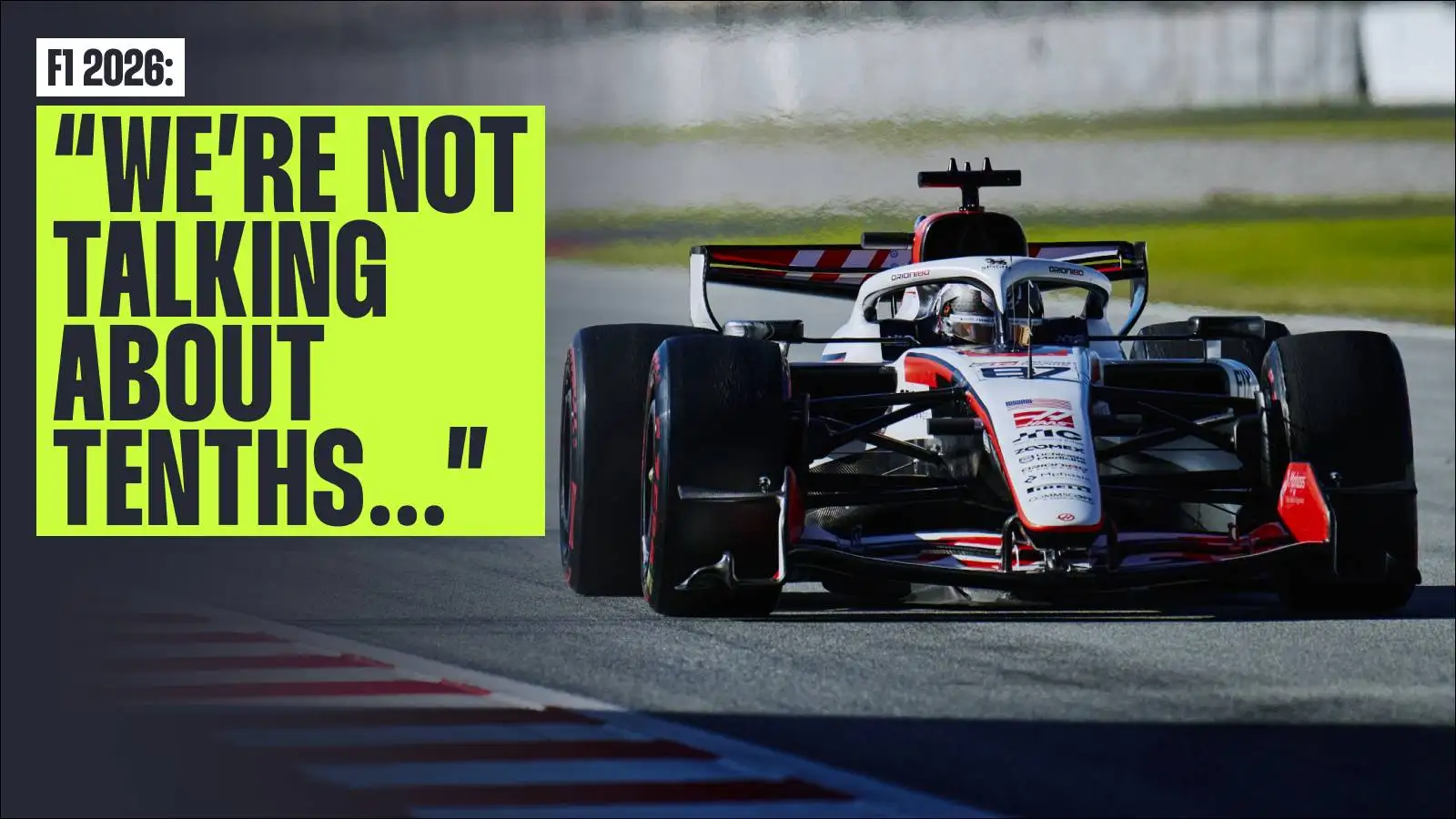
“So there is more vulnerability at the start of the season. I think if something goes wrong, I think it will be pretty obvious, because we’re not talking about tenths. You can lose half a second, six-tenths, seven-tenths, very, very easily. That’s the scary bit.”
With his driver, Esteban Ocon, acknowledging that the new cars are likely to be “energy-starved”, Komatsu said the amount of energy that the cars can recover during a lap is insufficient to allow for anything less than conscientious harvesting.
“The main thing is, obviously, we’re trying to use and deploy so much electrical energy, but what we can harvest, what we can recover is really not enough,” he said.
“That’s the simple message. Therefore, you really have to recover energy very well and not waste the energy you recovered in order to be able to deploy properly.
“If you are wasting the energy on an outlap or even during the race, in certain parts of the track, you haven’t got energy to deploy.
“So everybody is in a very, very tight situation in terms of making the best use of the limited energy you can recover.
“That’s the biggest difference compared to previous years, just the penalty of getting it wrong is huge.”
As an example of how easy it may be to make mistakes, a driver being too greedy on the throttle in one section of the track will have repercussions further around the lap.
“Over a certain percentage of our throttle, there’s no choice by regression, you’ve got to deploy electrical energy. So do you want to go over that threshold?” he said.
“For example, the slow-speed castle section in Baku, there’s no point deploying electrical energy in between corners that’s going to do nothing in terms of straight-line speed or actually break traction, right? So you really don’t want to be deploying any of that electrical energy at a certain point of the track.
“But, if you accidentally do that, go on the throttle a little bit too much, and then deploy the MGU-K, or the MGU-K engages the turbo, then, by the time you go to the main straight, you haven’t got the necessary electric energy available, right?
“So then you pay a big price.
“Preparing for the qualifying lap in Barcelona, it’s very, very important how you go through those last couple of corners. If you don’t carry enough speed out of Turn 14 in Barcelona, then, by the time you come to the start/finish line, you don’t have enough speed, right? So your qualifying app is already ruined.
“But, if you are trying to get the speed up, but then have too much throttle, again, you are deploying towards the end of the outlap, so you just waste the battery on the timed lap.
“So there’s a very clear conflict of a demand of what a driver needs to achieve, the system needs to achieve, so you’ve got to get it right.”
More Barcelona F1 2026 test reaction via PlanetF1.com
Shakedown conclusions: Mercedes back in the light, Red Bull finds peace, key Newey question
Winners and losers from the Barcelona testing shakedown (Circuit de Barcelona-Catalunya)
Figuring out how best to harvest and utilise energy at any given circuit will therefore be an added task for a driver and team upon arrival at any given venue, and Komatsu said the extent of the challenge will vary from circuit to circuit.
“I can’t say much for other PU users, but in our case, certainly, Barcelona was one of the very challenging ones just because of the track layout and how the last corner is,” he said, when asked by PlanetF1.com just how close to 100 per cent understanding it’s possible to be by the season opener in Australia.
“I think Bahrain is going to be slightly easier. Having said that, there’s a lot of work we need to do still to really get ourselves better prepared.
“The first several races, at least, I think you will see some issues, not issues as in a car breaking down or anything, issues in terms of not optimising your deployment for qualifying or during the race.
“We have two more tests to do, and at the first test in Bahrain, I think that’s something we really need to be focused on in terms of going through those procedures, making sure you get the consistency.
“But then again, even if you get to the stage where you’re very confident in Bahrain on consistency, etc, then you go to Melbourne in completely different conditions. That’s going to be another huge challenge. So I think it’s going to be a steep, steep learning curve for most of us.”
A major performance differentiator, aside from the power unit itself, is likely to stem from the fact the power unit manufacturers themselves will have a far greater understanding of the characteristics and potential of their systems than their customer teams.
This means that, for the likes of Audi, RBPT, Mercedes, Ferrari, and Honda, they enjoy a knowledge advantage over the customer squads they supply – a fact that Komatsu says means F1 2026 will not be a “level playing field”.
“You know people like Mercedes, like Ferrari… I mean Mercedes, you remember how prepared they were when they came into this initial hybrid era in 2014,” he said.
“So by looking at Barcelona shakedown week, day one, how much data, how fast they are running, I think they’ve done their homework very well. It’s not a surprise to any of us, right? And then the same with Ferrari.
“Ferrari has been developing quite well, so manufacturing teams, I’m sure, those guys have the knowledge inside out compared to the customer teams like us. So that’s a challenge.
“But having said that, Ferrari has been, over the past 10 years, very collaborative with really good collaboration.
“So we are working together, especially in terms of the energy management area. All the learnings of the Ferrari PU that the engineers do with us, the energy area that goes back to Ferrari, right?
“So within a relevant department, I’m sure we are developing the procedures together, but I don’t say it’s a level playing field. Of course, teams with bigger resources, bigger experience, teams used to running Formula E teams, for instance, they will have an advantage, but that’s how they do their homework, right?
“So I’m not complaining at all, but let’s say it’s gonna be a huge challenge for us.”
Want to be the first to know exclusive information from the F1 paddock? Join our broadcast channel on WhatsApp to get the scoop on the latest developments from our team of accredited journalists.
You can also subscribe to the PlanetF1 YouTube channel for exclusive features, hear from our paddock journalists with stories from the heart of Formula 1 and much more!
Read Next: Drivers reveal downshifting and lift-and-coast demands of new F1 engines