
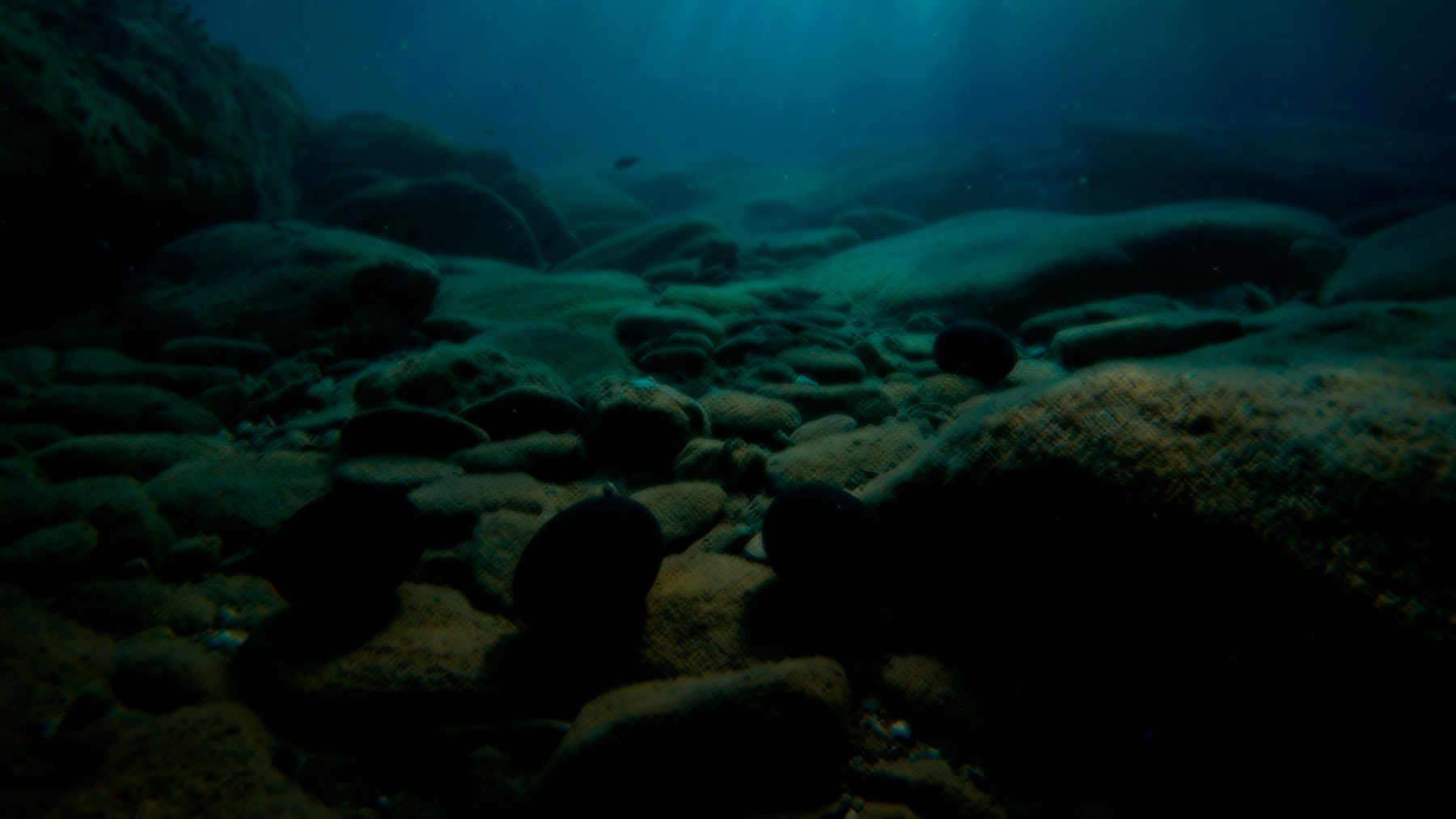
Our Earth is full of weird and wonderful things, and every day, it appears that researchers are stumbling across discoveries that have never been seen before. It’s one thing to look to outer space for discoveries, where, of course, there are many, but to look within our oceans is another story. Here, in the pitch black of down below, you won’t believe what has been found.
The ocean remains a largely unexplored environment on our planet
Although we consider ourselves quite educated and up-to-date when it comes to life on earth, the same cannot really be said for life under the sea. Only about 5% of our ocean has been properly explored, with the remaining 95% still a huge mystery. Can things even survive in the deepest parts of our ocean?
It used to be believed that nothing could survive in the hadal zone, which is the deepest region of our oceans, starting from around 6,000 meters (20,000 feet) down to around 11,000 meters (36,000 feet). This area was actually named after the Greek god Hades of the Underworld, because that’s how far down the ocean floor really is. How can anything live down there?
Well, despite it being completely pitch black and thousands of times more pressurised than out here on land, there are, in fact, organisms that are equipped to survive down there, as surprising as that may be. Discoveries are being made quite regularly that prove there are complex creatures all the way in the deepest parts of our sea. One team of researchers made a recent discovery that both confused and amazed them when they found some strange, black-looking eggs that had never been seen before.
A Japanese team has discovered mysterious black eggs 6,200 meters under the sea
A remotely operated vehicle, driven by a team of Japanese scientists from Tokyo University and Hokkaido University, came across some mysterious eggs on the ocean floor at a depth of 6,200 meters (over 20,000 feet). This region in the Pacific Ocean is known as the abyssopelagic zone, which is the deepest part of the ocean, besides the deeper hadal trenches, which are home to creatures like this one.
Not much is known about these areas, as they are so largely unexplored due to how difficult it is to get there. The researchers who came across these eggs decided to take a sample in order to figure out what this strange species was. They appeared to be black spheres attached to a rock, and a sample was taken for further investigation.
When biologists studied these strange spheres, they found them to be sort of cocoon-like, and on the inside, there were actually developing organisms that had never been seen before. One researcher explains:
“I cut one of them, and a milky liquid-like thing leaked from it; after blowing the milky thing with a pipette, I found fragile white bodies in the shell and first realized that it was the cocoon of platyhelminths.”
So what is in these mysterious deep-sea eggs?
Platyhelminths are invertebrates known usually as flatworms, but are not usually found so deep under the sea. This discovery showed how much we don’t know about these deeper regions. The team that made this discovery has proved that there are free-living flatworms in the abyssopelagic zone, which may look like the shallow water kind, but survive in a completely different environment.
The similarity in the appearance of the embryos within the eggs of deep-sea and shallow flatworms may suggest that the developmental process is not all that different, which is surprising given the change in distance from the surface of the ocean. This discovery is one of many surprising ones, and many more ocean mysteries are waiting to be solved.