
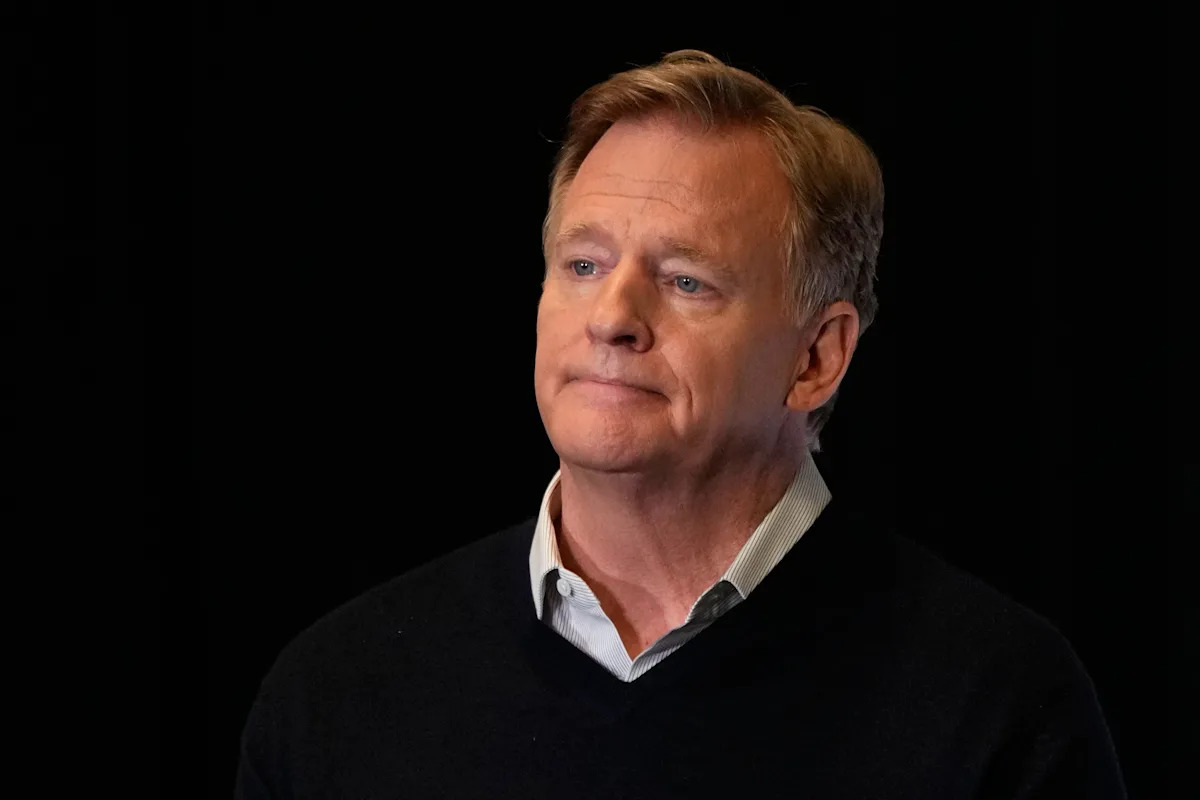
SAN JOSE, Calif. — NFL commissioner Roger Goodell said Monday the league hasn’t begun investigating emails between New York Giants co-owner Steve Tisch and convicted sex offender Jeffrey Epstein, choosing to first “understand the facts” of the exchanges.
Goodell was pressed multiple times by reporters about emails between Tisch and Epstein that were among 3 million documents released last week by the U.S. Department of Justice. The documents, which discussed interactions with various women, were drawn from multiple investigations into the disgraced billionaire financier, who was arrested in July of 2019 and charged with sex trafficking of minors and conspiracy to commit sex trafficking of minors. Epstein subsequently died by suicide one month later in his New York City jail cell while awaiting trial.
Advertisement
Asked if the league was probing the interactions between Tisch and Epstein and considering discipline for the Giants co-owner, Goodell said during his pre-Super Bowl news conference that the league was aware of the emails but had not yet advanced to the point of an investigation.
“You may be getting ahead of yourself on the second part,” Goodell said of the consideration of discipline for Tisch. “We are going to look at all the facts. We are going to look at the context of those and try to understand that — we will look at how that falls under the [NFL’s personal conduct] policy. But let’s get the facts first.”
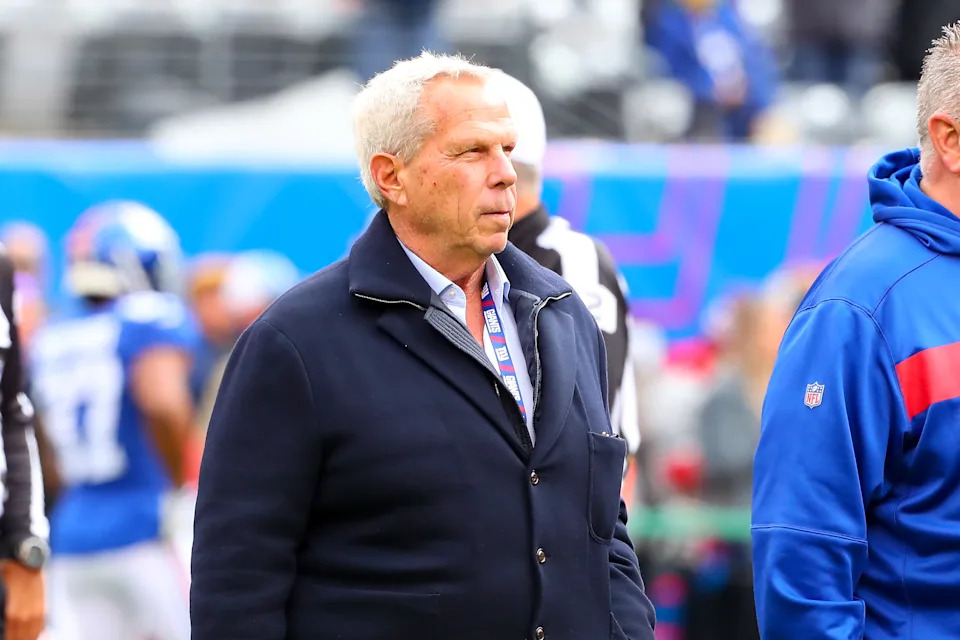
Giants co-owner Steve Tisch said in a statement that his relationship with Jeffrey Epstein was a “brief association where we exchanged emails about adult women, and in addition, we discussed movies, philanthropy, and investments.” (Photo by Rich Graessle/Icon Sportswire via Getty Images)
(Icon Sportswire via Getty Images)
Asked to clarify if that meant Tisch was under investigation, Goodell again said the NFL would first attempt to determine the “facts” and then conclude whether they warranted an investigation.
Advertisement
“I don’t even know the status of all the [DOJ’s document] release,” he said. “I know that 3 million documents came out last week. Listen, we’ll continue to follow any of the facts that come up and determine if we open an investigation based on those facts.”
Tisch’s name appeared more than 400 times in documents from Friday’s DOJ release, some including passing social interactions between the two men and others with specific — and sometimes graphic — conversations about several women whose names were redacted in the files. The emails covered a period of time several years after Epstein had served nearly 13 months in the Palm Beach Country jail, after he pled guilty to a pair of Florida state charges, including engaging in prostitution with an underage girl.
Included in the exchanges, Tisch asked Epstein various questions about women, including if one was a “working girl” or if another was “pro or civilian.” In one email, Epstein asks Tisch, “Did you contact the great ass fake [expletive]…” in reference to a person whose name was redacted. The Athletic was the first to report the existence of the emails after the DOJ release Friday. In response, Tisch issued a statement through the Giants, describing his relationship to Epstein as “a brief association” that he regretted.
“We had a brief association where we exchanged emails about adult women, and in addition, we discussed movies, philanthropy, and investments,” Tisch said in the statement. “I did not take him up on any of his invitations and never went to his island. As we all know now, he was a terrible person and someone I deeply regret associating with.”
Advertisement
Goodell didn’t go into detail about how the league would determine “facts” as a guiding compass to determine if a broader investigation into Tisch would be necessary — but affirmed that the broader scope of the Epstein investigation and that an NFL club owner being drawn into a document release was reason for concern. But he pointed to the league’s personal conduct policy as being an available guardrail should the actions of team owners reflect badly on the NFL.
“That’s why we have a personal conduct policy and [the league] will look into the facts,” Goodell said.
In the released documents, Tisch offered Epstein tickets to Giants games, while Epstein offered to host Epstein at his private island in the Caribbean. Epstein also had emails with women who were seeking to associate with Tisch based on his experience as a producer in Hollywood. Tisch has producer credits on multiple critically acclaimed or cult hit movies over several decades, including “Risky Business,” “Forrest Gump,” “American History X,” “The Long Kiss Goodnight,” and “The Pursuit of Happyness.”
Advertisement
It’s unclear if Tisch’s communications with Epstein constitute an element of a personal conduct violation, although the league’s language for determining an infraction is largely in the hands of Goodell and the influence of other franchise owners. The eight-page personal conduct policy reads in part:
“Everyone who is part of the league must refrain from ‘conduct detrimental to the integrity of and public confidence in’ the NFL. It is not enough simply to avoid being found guilty of a crime in a court of law. We are all held to a higher standard and must conduct ourselves in a way that is responsible, promotes the values of the NFL, and is lawful.”
Regarding team owners, members of franchise management and members of the league office, it adds, “Ownership and club or league management have traditionally been held to a higher standard and will be subject to more significant discipline when violations of the Personal Conduct Policy occur.”
The most notable punishments incurred under the personal conduct policy were workplace misconduct investigations into a pair of club owners: The Washington Commanders’ Dan Snyder and the Carolina Panthers’ Jerry Richardson. After each was found to have committed infractions of the policy, Snyder was fined $60 million by the NFL, while Richardson was docked $2.75 million. Both eventually sold their teams.