

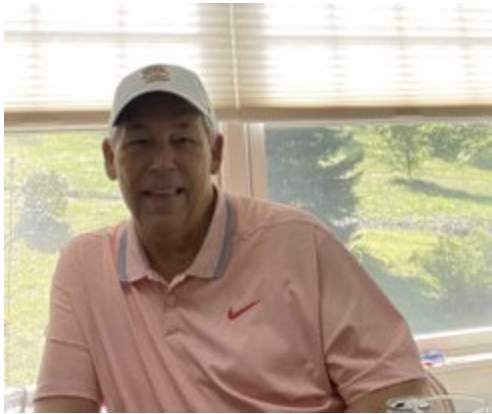
 Don Huot
(BISHOP BRADLEY HIGH SCHOOL/TRINITY HIGH SCHOOL)
A TRUE “BLUE CHIPPER”
Part 1
Before I begin, I’d like MIL readers to know that I’ve wanted to interview this man for more than 20 years. Thanks to the help of a close friend, Richard (Rick) Sullivan and his close friend, Tom Woodring, my wish became reality, but not without a “glitch.”
When I first contacted him, he stated that he was a pretty private man and sitting down for a story about him would mean stepping out of character.
Stories I write are under either of two titles…”Where Are They Now?” or “Spotlight On…”.
I chose “WATN” because he’s very uncomfortable under a spotlight. To gain his “trust” I even had to enlist the support of one of his friends who is also one of “my” own blue chippers, Ron Beaurivage.
So, thank you Rick, Tom, and Ron. The following story is the result of the friendships shared among you three gentlemen and I couldn’t be more thankful.
BLUE CHIPPER
The term first began usage back in the 1950s and it was used in reference to both the stock market and the game of poker.
On Wall Street, stock issued by a major company that had a reputation for stability and financial strength and a good record of dividends was “Blue Chip” stock.
In poker, a blue chip has high value.
The term became so popular, it found its way into the world of sports.
Blue chippers are athletes, particularly high school players, targeted for drafting or signing by teams at the college level and it includes collegiate players being scouted by professional franchises.
A blue-chip player is one who demonstrates rare abilities and can create mismatches that have an obvious impact on the game. A blue chipper will rate in the top five players in the league at that position.
If a person coaches long enough, a blue-chipper will cross that coach’s path…and I believe that for most coaches, that will be true.
If I limit it to only those who made it to the top in their chosen sport, two crossed mine, Mike Flanagan and Steve Balboni, both leading their teams to World Championships.
If I limit it to high school players, then I would add two more, Ron Beaurivage and Scott Thompson, both signed by MLB teams.
But those blue chippers were players from Manchester Memorial High School.
The subject of this WATN story was not.
Though he didn’t play for me and didn’t make it to MLB, after watching him play, especially after watching him pitch, I know a blue chip athlete when I see one…especially when my team faces one, like THIS pitcher.
Read on and I hope you’ll see why.
Unless you played or followed baseball back in the ’60s and ’70s, you probably never heard of him.
If you played against him in Little League, Babe Ruth, high school, or American Legion, you’ve probably never forgotten him!
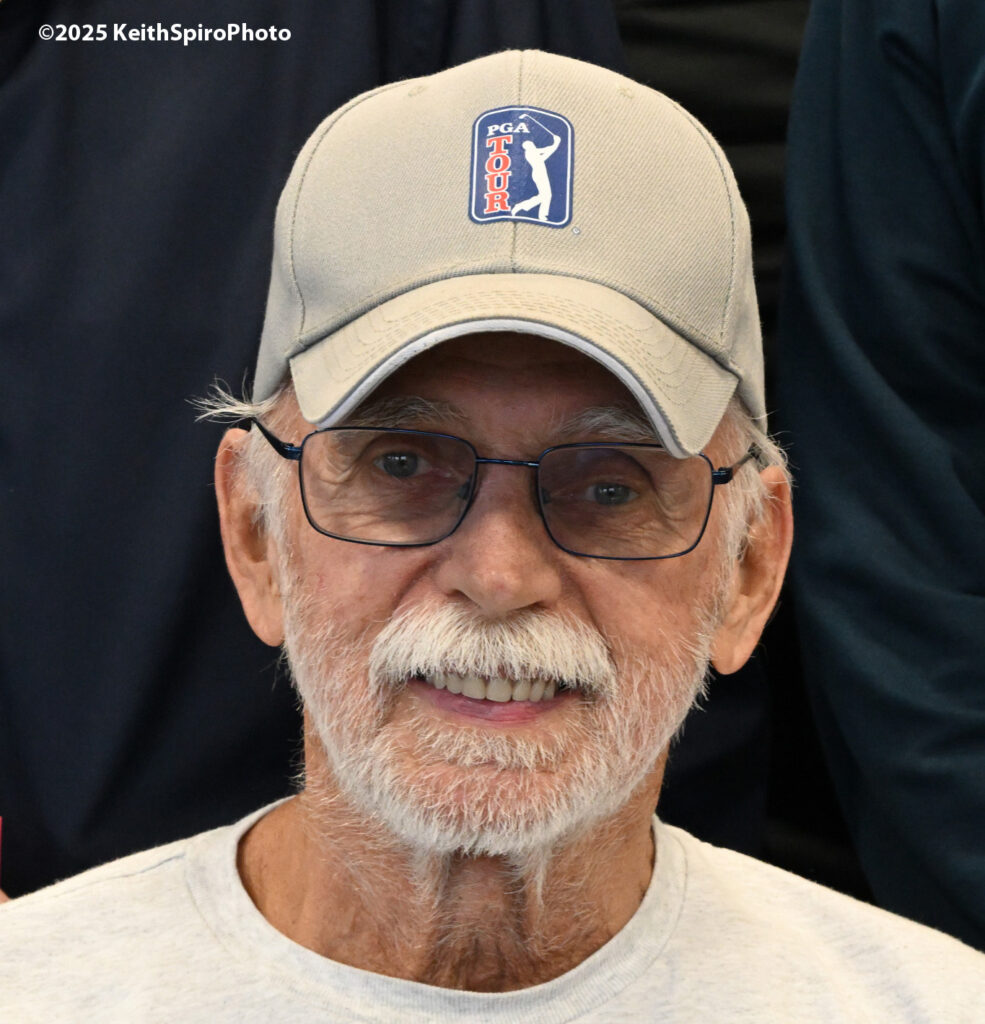
His name is Donald (Don) Huot.
He has no middle name and prefers to be called Don. In fact, the only person who called him Donald was his Mom…and that was only when he had done something wrong.
A MANCHESTER LITTLE LEAGUER…AND AN OMEN OF WHAT WAS TO COME
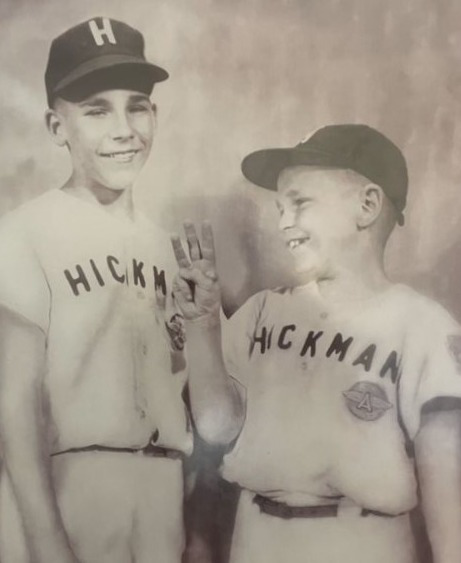
Don is a true Queen City native having been born at the old Sacred Heart Hospital on Hanover Street and residing on the West Side’s Douglas Street with Dad, Conrad, Mom, Bernice, brothers, Willie, Dick, Armand, Ron, Paul, Jim, Denis, and sister, Jane. Count ’em, seven brothers and one sister. If Jane wanted to play baseball, their family could have had its own team!
He began his baseball career playing for Hickman’s Flying A of Southwest Little League. His club won the league championship every year under the coaching guidance of Ed Forbush and Don Anderson (Yes, THAT Anderson from Union Leader journalistic fame).
When I asked what his favorite sports memory was (and he had plenty), he never hesitated. “Playing with my 10 year old brother, Paul, who was my catcher.”
How good was Paul? Good enough to be behind the plate for each of 12 year old Don’s three no-hitters! Paul wasn’t only a good backstop, he could hit, too!
And the omen to come…
During a particularly difficult game at the start of his LL career after giving up a few walks (according to him totaling in the high double figures), Don noticed his Dad sink a little deeper into his seat in the bleachers with each base on balls. He was a little overwhelmed when he watched Coach Ed walk up to Conrad and say “Your son is going to be a great pitcher some day.”
It impacted him so much that he’s used the “message” himself to a struggling ballplayer. After watching his high school shortstop start to come apart after making an error, he walked up to him and told him to put it behind him because some day he was going to be a great shortstop. It surprised his player, but stunned his mother. Every time she sees Don, she thanks him for what he said to her son because her son has never forgotten it either. And I’m pretty sure what that SS will say to a struggling player when he’s a coach.
Don Huot was a POINT GUARD, TOO
A baseball wasn’t the only ball Don could handle well. He was equally effective with a basketball in his hands as point guard for his St. Raphael CYO hoop team, led by another familiar name, coach Tom Kilrain.
If you’re wondering if Don was a decent shooter, he beat out Scott Pappas as Manchester’s leading Catholic Youth Organization’s top scorer by a single point.
Don continued with St. Raphael, but this time playing baseball under the guidance of another Queen City sports legend, George Smith!
Transitioning from CYO ball to the Manchester Babe Ruth League, Don ended up joining Elks under coaches Lou Amato and Chipso George. Toeing the rubber, he was undefeated during his 3 years in BR. Because of his success on the mound, he was selected as a member of two Babe Ruth All Star teams that ended up playing in the national tournaments held in Douglas, Arizona, and Anchorage, Alaska.
DON HUOT HIGH SCHOOL DAYS
From there he became a member of the Bishop Bradley Pioneers baseball team under one more high school legend, Dick Powers. As a junior, he threw a no-hitter against Pinkerton Academy and followed that by pitching and winning the 1969 state championship against the Blackbirds of Keene High School.
It is here that I, the author of this story, want to, need to, step in.
Why?
Because in 1970, I was the opposing coach for what was called (by the UL’s Don Anderson), the greatest high school baseball game ever played in NH.
It was at the Crusaders’ home field that Bishop Bradley Ace, Senior left hander, Don Huot, faced off against my ball club, the Crusaders of Manchester Memorial and our Ace, Junior lefty Mike Flanagan.
Final score: Bradley – 2 Memorial – 1
Total strike-outs: Huot – 21 Flanagan – 21
Read that last stat one more time: Total strike outs 42!!!
During his senior year, the Pioneer blue chipper pitched another no-hitter, this time against the Little Green of Manchester Central.
LEGION BALL FIRST…THEN COLLEGE BECKONS
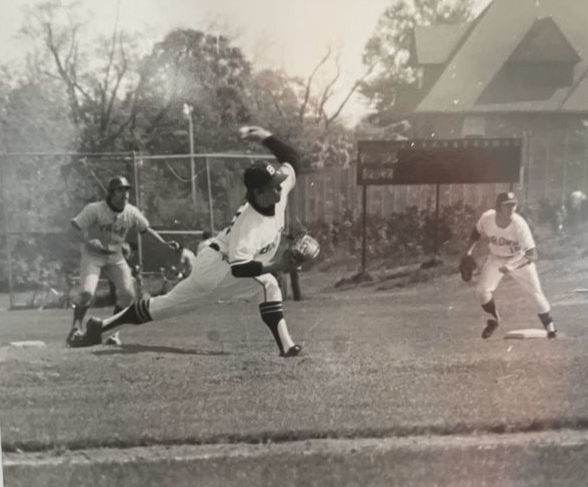
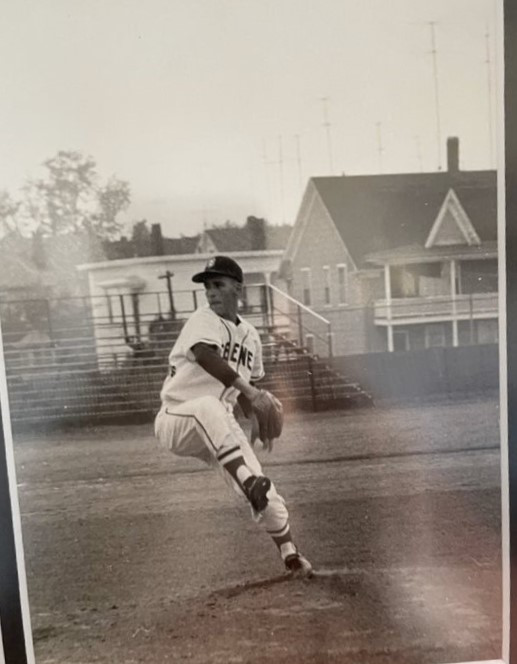
Moving on from high school baseball, Don joined the Queen City’s most successful American Legion team, Henry J. Sweeney Post #2 coached by, surprise, surprise, two more icons, John “Jumbo” Reilly and Jim Triantifellou.
There, he joined his high school nemesis, Mike Flanagan, and Don’s no-hitter success continued, this time against Derry Legion.
He followed that up with a 10 consecutive strikeouts performance against Nashua’s Coffey Post at Holman Stadium then finished his American legion pitching career by throwing 12 scoreless innings against West Covina, California in the national tournament in Klamath Falls, Oregon.
His success on the mound during both high school and legion earned him a scholarship offer from two colleges, U Mass – Amherst and Brown University and Brown won out.
Under Bears coaches, Bill Livesey and Woody Woodworth, he again started with success, going 9-2 during his first two years.
However, it was during the summer between his sophomore and junior years that he experienced a dilemma. Instead of pitching in the Cape League, he was given an option.
He could pitch in Massachusetts or accept an offer from Dale Parent, the player-coach of the Woodstock Schooner-Merchants ball club in the New Brunswick, Canada Semi-Pro League.
There he would play for the Schooner-Merchants at night and during the day, be a groundskeeper for the home field as well as run baseball clinics.
He chose Canada and the “change in venue” resulted not only a change of scenery, but also a change in his pitching mechanics.
During his Babe Ruth, high school, American legion, and at Brown, he pitched from a regulation mound, 10” high – the standard mound height everywhere in the country.
Not so in Canada. Not so in New Brunswick. The mound there…15”…and that difference can make a difference and for Don, it did.
When he returned to Brown and the 10” high mound…he began to have trouble with the two worst areas a pitcher can experience.
Loss of power and loss of control. And, while in Canada, a third was added…they changed his arm slot.
With no designated pitching coach to rely on to help him work through his problems, he had to figure it out by himself…and for a brief period of time he did, throwing his best game for Brown University, a 1-hitter against Princeton.
However, it was also during this time that he experienced his most frustrating and emotionally upsetting moment as a pitcher with a member of his coaching staff, one he’s never forgotten.
His record over his last two years on the mound… 9 wins – 8 losses — 9 complete games
He ended his time at Brown with 18 wins 10 losses. Of those 28 games, he finished 18 of them, tied for 8th place in Brown’s baseball history.
A PERSONAL NOTE
As a pitching instructor/pitching coach for over 50 years, I sincerely believe that if he had a designated pitching coach to properly analyze his throwing mechanics and help resolve the problems he was experiencing, he would have finished with a record of 22 wins – 6 losses AND 23 complete games.
With a record like that, I also think he’d have received at least a couple offers from MLB.
I was never his coach, but, as enticing as the offer from New Brunswick was, I just wish he had spent the summer between his sophomore and junior years pitching at the Cape.
But, as Don said when asked what playing sports has taught him, ”That’s baseball. That’s sports. That’s life.”
Come back tomorrow for Part 2.
Ted Menswar Jr. is a life-long resident of the Queen City and a retired member of the English Department of Memorial High School who has been involved in local sports for 70 years as a player, a coach, a mentor and a fan. He can be reached at [email protected]