
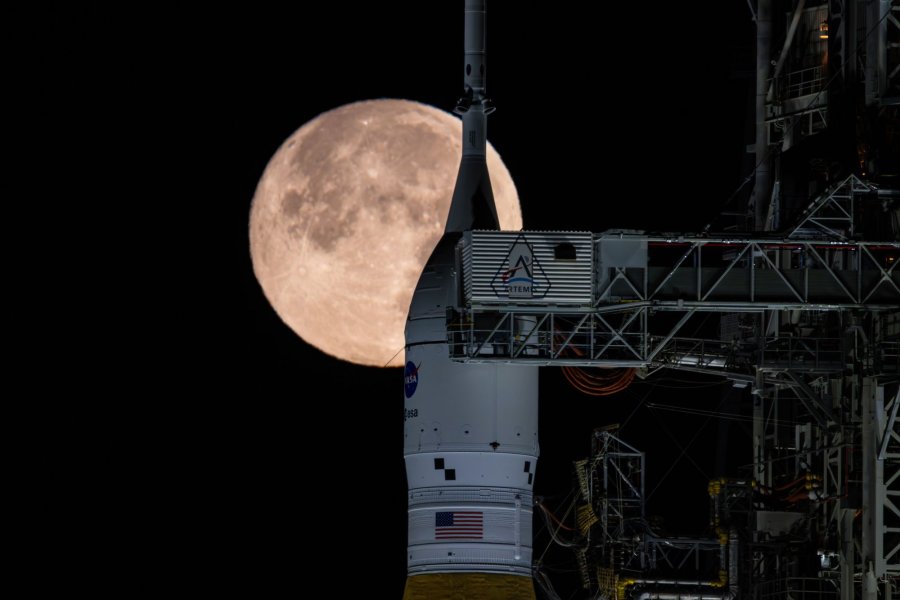
Feb. 3 (UPI) — NASA early Tuesday announced it was pushing the launch date of its Artemis II mission to March, after engineers encountered a liquid hydrogen leak during a critical prelaunch test.
“With the conclusion of the wet dress rehearsal today, we are moving off the February launch window and targeting March for the earliest possible launch of Artemis II,” NASA Administrator Jared Isaacman said in a statement.
The announcement followed the completion of a two-day test called a wet dress rehearsal of its planned lunar flyby at Launch Complex 39B at NASA’s Kennedy Space Center in Florida, which involved Mission Control at the Johnson Space Center in Houston.
NASA had initially aimed to launch Artemis II in a Feb. 8-11 window.
Moving the mission’s launch window will give teams time to review data and conduct a second wet dress rehearsal, NASA said in a separate statement.
“Moving off a February launch window also means the Artemis II astronauts will be released from quarantine, which they entered in Houston on Jan. 21,” it said.
NASA began the 49-hour countdown of the wet dress rehearsal at 8:13 p.m. EST Saturday. The test included the loading of cryogenic propellant into the Space Launch System tanks, sending a team out to the launch pad to close out the Orion spacecraft and safely draining the rocket, among other maneuvers.
Officials said that a liquid hydrogen leak occurred during tanking, and that engineers spent several hours troubleshooting the issue.
By allowing the interface to warm up so seals could reseat and by adjusting propellant flow, teams were able to successfully fill all tanks in both the core stage and interim cryogenic propulsion stage, they said.
The countdown reached about T-5 minutes when a spike in the liquid hydrogen leak rate automatically stopped the countdown sequencer.
“With more than three years between SLS launches, we fully anticipated encountering challenges,” Isaacman said. “That is precisely why we conduct a wet dress rehearsal. These tests are designed to surface issues before flight and set up launch day with the highest probability of success.”
“This is just the beginning,” Isaacman added.
The Artemis I mission in 2022 was a successful uncrewed launch of NASA’s new rocket and spacecraft system. The mission flew around the moon.
The Artemis II seeks to do the same mission but with astronauts. It will carry the first crewed lunar flyby in more than 50 years.