
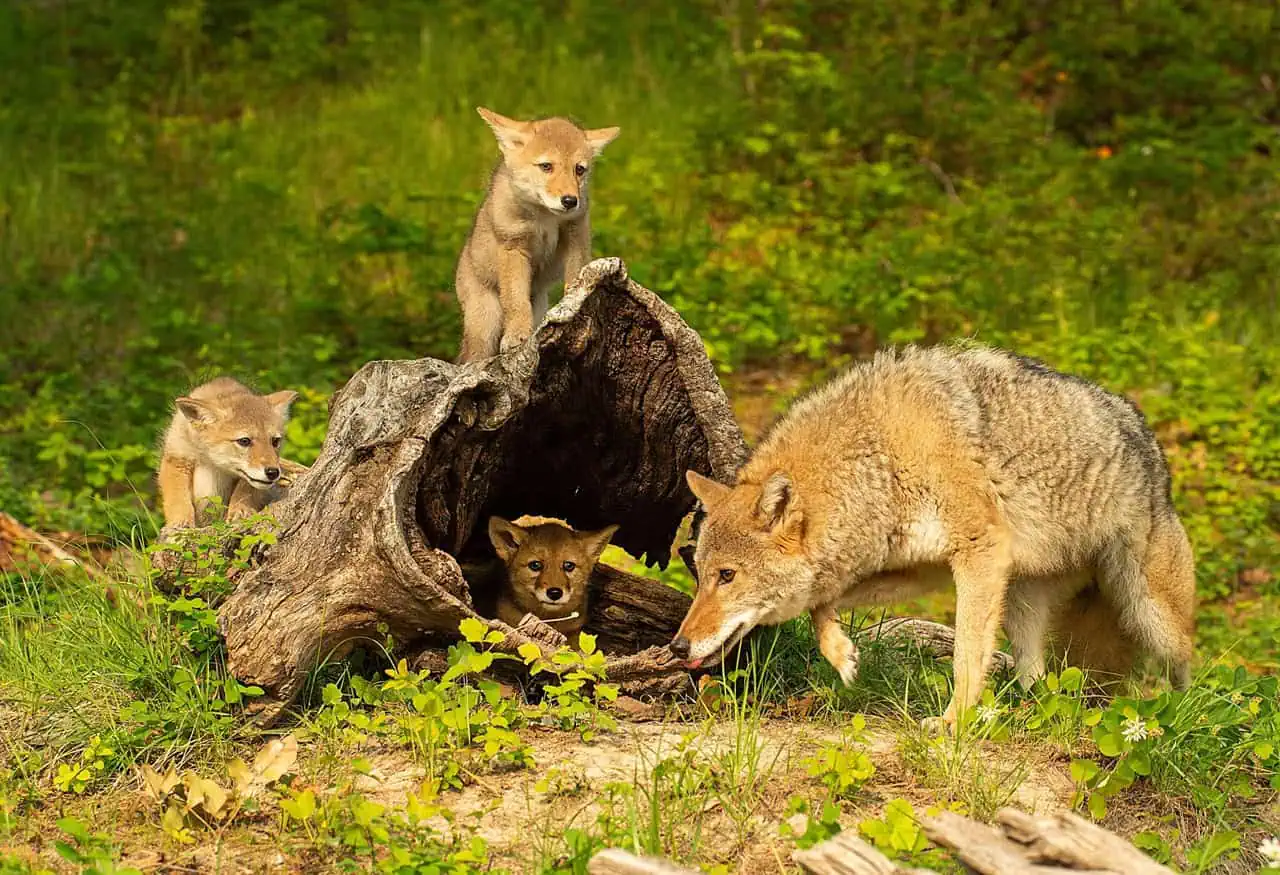
Mississauga residents can expect to see — and hear — more coyotes in the next month or so and city officials urge people to keep themselves and their pets safe if they do come across one or more of the wild animals.
“During coyote mating season in January and February, activity is expected to increase across Mississauga, with residents likely to notice more coyote sightings, howling and territorial behaviour,” the City of Mississauga said in a message to the public on Monday.
Coyotes play an important role in Mississauga’s ecosystem, city officials said, and while the critters typically avoid people, they are more visible during their mid-to-late-winter mating season.
“At this time of year, coyotes become more visible and protective of their territory, and residents may hear more howling or yipping as they communicate with one another,” city officials added.
To keep themselves and their pets safe, residents are encouraged by the city to:
Keep dogs on short, non‑retractable leashes.
Avoid den areas and wooded trails after dusk.
Recognize and safely respond to coyote “escorting behaviour.”
Report sightings using the city’s interactive coyote and fox sightings map, which helps Animal Services officials monitor activity and target any education or response efforts.
Coyote “escorting behaviour” can include the wild animal following people and/or their pets from a distance, hunching its back or making vocal sounds “such as barking or yipping to guide you away from its den,” the city said.


When confronted by a coyote displaying such behaviour, people are urged to:
Stand tall and face the coyote.
Wave your arms or open your jacket to appear larger.
Make noise by clapping, speaking firmly or jingling your keys.
Back away slowly and do not run.

Ward 10 Coun. Sue McFadden is calling on residents to report any sightings of people leaving food out for coyotes.
Coyotes are active during both daytime and nighttime hours and they’re easier to spot in winter months as trees and shrubs lose their foliage, city officials noted.
“If you see a coyote while walking or using local trails, stay calm and give it space. In most cases, the coyote will move away on its own. Slowly leave the area and avoid sudden movements,” the city’s notice to the public reads. “Never approach, feed or try to interact with a coyote. Feeding wildlife is one of the main reasons coyotes lose their natural fear of people and become comfortable around humans.”
Mississauga Ward 10 Coun. Sue McFadden issued a reminder — and warning — to residents this past December about the potential dangers of feeding coyotes and other wild animals.
Her caution to residents came in the wake of a recent increase in the unsafe — and illegal — behaviour at a west-end park.
The “ongoing problem” in the Friendship Community Park area of Churchill Meadows, north of Thomas Street and west of Tenth Line, prompted McFadden to call on residents to report any sightings of people leaving food out for the wild animals.
“If you see something, say something — for the benefit of all,” the councillor said in her December newsletter to the community, adding residents can call the City of Mississauga’s 311 line to report the illegal activity.
“Feeding wildlife is not good for you, the animals or the community. And it’s illegal,” the message to residents from McFadden continued. “Animal Services has noted an ongoing problem of food being left out for coyotes in the Friendship Community Park area of Churchill Meadows.”
In her newsletter, McFadden provided a link to the city’s website and a section on feeding wildlife.
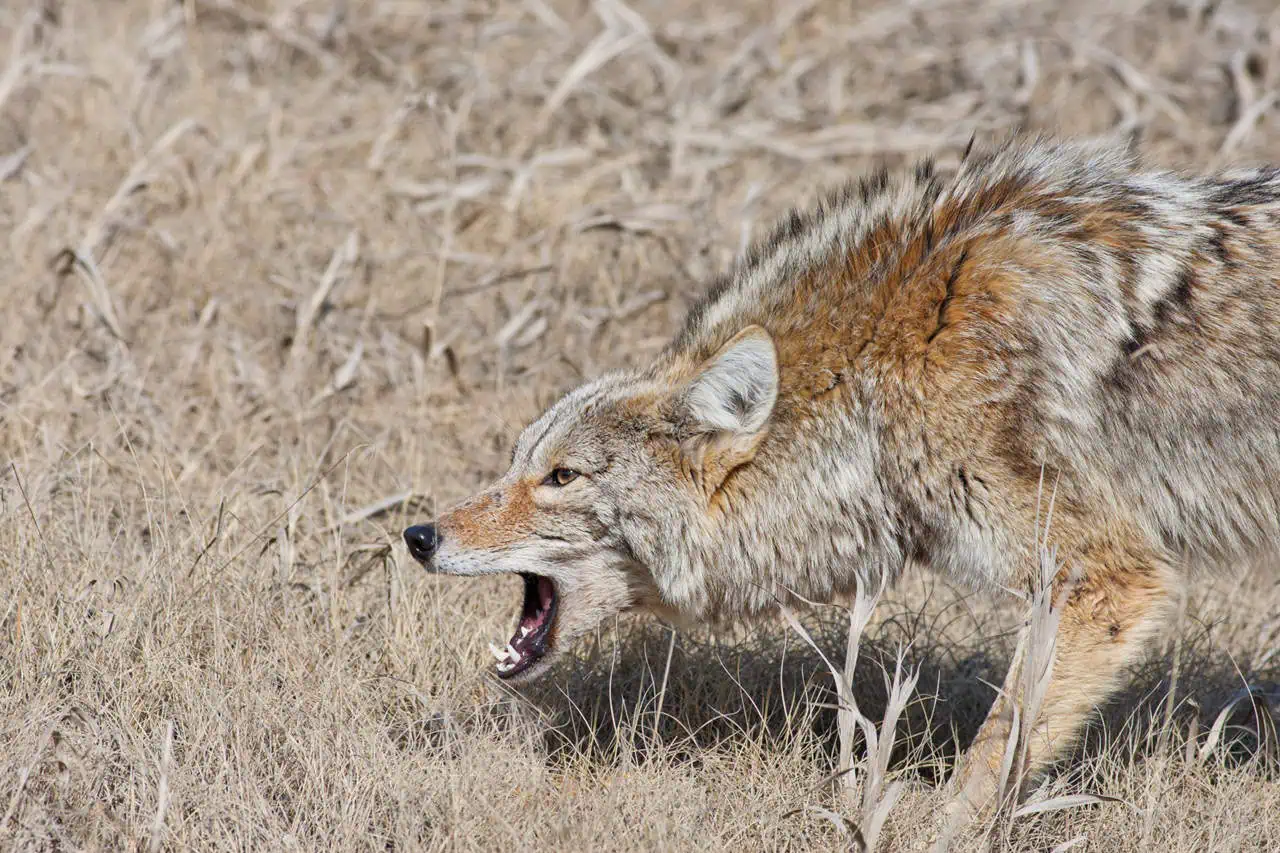
Coyotes, especially this time of year, will be more aggressive in protecting their dens, the city says.
Mississauga officials note in their online information that people, under the city’s Animal Care and Control Bylaw, “are not allowed to feed wild animals or leave out food to attract wild animals on public or private property … the maximum penalty for violations of this bylaw is $100,000.”
As far as family pets are concerned, city officials caution that coyotes may see them — especially dogs — as threats.
“Keep dogs close, avoid using retractable leashes and never leave pets unattended outdoors,” the city said, adding residents should also “keep your property clean to avoid attracting coyotes. Secure garbage and green bins, clean up fallen bird seeds and remove any outdoor food sources.”
Animal Services officials at the city say coyotes are especially defensive near their dens and young pups, noting dens are often hidden in wooded areas or near fallen logs.
“When walking pets, stay on open, marked paths and avoid walking after dusk whenever possible,” officials added.
Residents who spot coyotes are asked to report the location using the City of Mississauga’s online coyote sightings map. Reporting helps Mississauga Animal Services monitor activity, respond appropriately and provide education in areas where needed, officials say.
Those who see a coyote that’s sick, injured or not keeping a safe distance are urged to call Mississauga Animal Services at 905-896-5858.
Ongoing public education effort
City officials have been trying to get people to stop feeding coyotes and other wild animals in Mississauga for many years now, their public messaging campaign ramping up significantly the past three years or so.
In December 2024, the city noted coyotes in Mississauga and other urban locations across the Greater Toronto Area are eating more human food and litter these days. Those feeding habits, they warned, can prove dangerous to both the wild animals and people.
“Coyotes that eat human food may be more likely to act aggressively, become sick or die. Their search for easy meals results in more frequent and potentially dangerous encounters with humans,” city officials said at the time.
Officials added the situation is worsening, observing “nowadays, urban coyotes consume twice the amount of human food compared to coyotes living in rural areas, who still hunt for food.”
That caution from the city was among the latest in an ongoing social media and in-person education campaign that for the past several years has attempted to deliver the simple — and necessary, officials say — message to Mississauga residents: don’t feed the coyotes.
The city says it’s not only the intentional feeding of coyotes and other wild animals by some residents that poses a problem, but the unintentional provision of human food and litter as well.
Items of food and other waste not properly secured in residential compost, recycle and trash bins are easily accessed by the prowling critters, who over time learn it’s easier to grab human food in such ways rather than hunt their natural prey, officials explain.
(Cover and inside coyote photos: City of Mississauga)
Last 30 Days: 81,539 Votes
All Time: 1,208,225 Votes
21 VOTES
How often do you use Uber Eats a week?
INsauga’s Editorial Standards and Policies
WIN A $100 GIFT CARD
Subscribe to INsauga’s daily email newsletter for a chance to win a $100 Amazon gift card.