
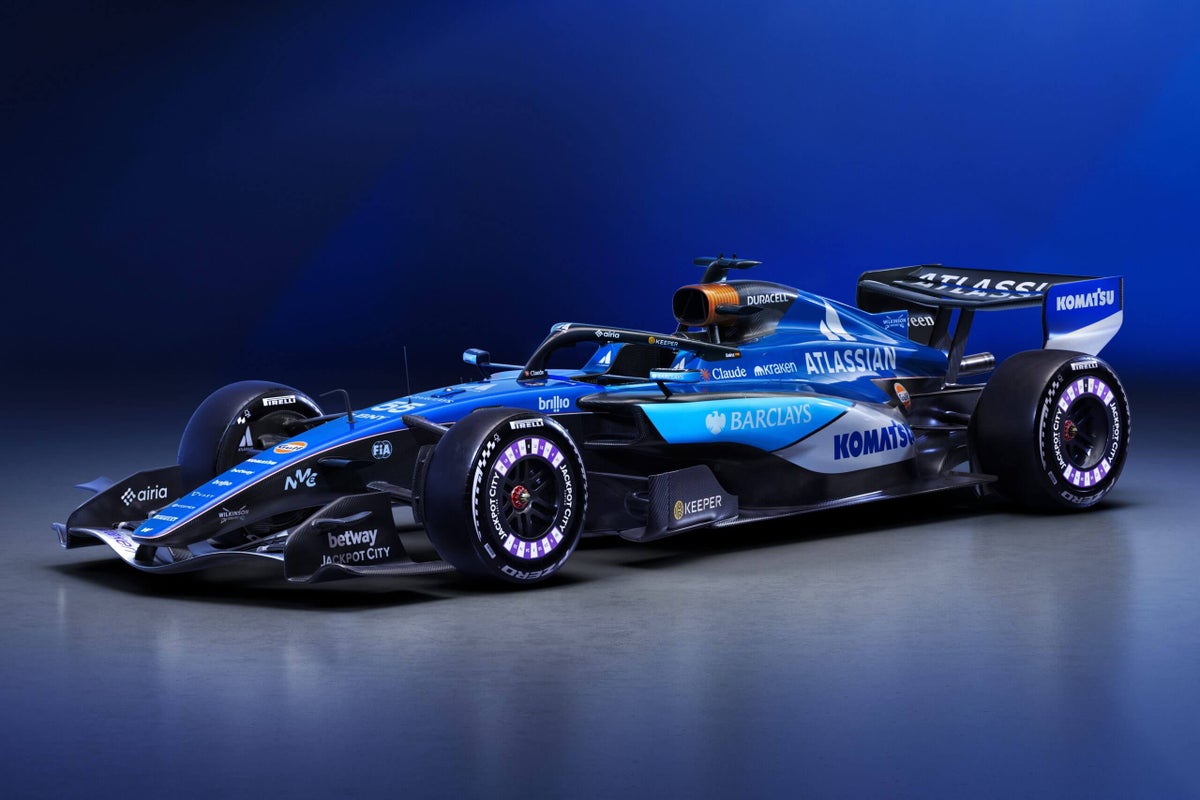
When James Vowles took charge of Williams three years ago, 2026 was a major landmark in his blueprint to lift one of Formula 1’s most successful teams out of its malaise.
The rewrite of F1’s car design and power unit rules offered an opportunity to change Williams’ fortunes and catch up with the competition. It’d spent many years prior trapped at the back of the grid.
Behind the scenes, the team moved to upgrade its factory facilities. Years of underinvestment had contributed to its lack of success. Items such as a new driver simulator – Vowles’ first request upon taking charge – and upgraded production tools would be integral parts for its future.
Vowles’ vision as team principal proved compelling. He attracted top talent in the form of Ferrari exile Carlos Sainz, who was slotted in alongside ex-Red Bull driver Alex Albon.
Despite putting its car development focus entirely on preparing for 2026 during the 2025 campaign, Williams scored two podiums courtesy of Sainz last year en route to its best championship finish for eight years. Momentum was building.
But Williams’ unveiled the livery of its new car, the FW48, on Tuesday in a more hushed fashion than anticipated. After missing last week’s private test in Barcelona due to production delays around the new car parts, the team scrapped plans for an event at its factory and revealed the car to fans online instead. It held a private unveiling for the team members, including Sainz and Albon, at the factory in Grove, UK, on Tuesday morning.
Vowles told reporters last week he was confident Williams would not be behind its expected upper midfield rivals of the 11 F1 teams in 2026, and quipped there were “zero points for running in a shakedown test” in cold conditions in Barcelona.
Yet Williams is now 500 laps behind on building knowledge of this new, more complicated car and engine package compared to the mileage leader, Mercedes. That’s equivalent to almost eight race distances.
Vowles claimed the team could have made the Barcelona test, but doing so would have compromised its spare parts accumulation and upgrade cycle for the upcoming Bahrain tests (more indicative of car performance as they will be held in the warmer conditions of the Middle East nation) and 2026’s opening races. The team felt it had to stay the course.
But focusing on right now at the cost of the future has never been how Vowles wanted to do things. “If you go back to focusing on just one year, you will fall behind,” he told The Athletic in an interview last month, prior to the decision to miss the Barcelona test. “That’s the nature of our sport.”
He still called 2026 “a key year” for Williams, because “it starts bringing together some of the key elements that we’ve been investing in for a long time.” But he made it clear that expectations now had to be kept in check: a key year, but not the year.
“We’re not here to fight for a championship in 2026,” Vowles said. “I’d love to make that the story. We’re not. We’re still far away in what we’re doing for facilities and otherwise.
“We’re on the right path. I think 2025 showed you that, and we’ll see in 2026, we have taken some enormous risks to really push the business further than we’ve ever been pushed before.”
Those risks were part of the broader transformation at Williams. But the production of an all-new car for this year stretched its capabilities, with three times the number of parts going through its factory floor than compared to the previous F1 era.
“(It’s) a world of difference,” Vowles said. “The time that we’ve been taking to it is starting to stress the business in a very different way to what we have before.
“But we still have a long way to go to be right at the front and in championship-winning potential. And then further beyond that into multiple world championships, where you can string them together. So I’m happy that we have made the sacrifices we’ve made.
“The bad news for the world is that we are continuing to make those sacrifices, and we’ll continue to do so until such a point that we’re on the top step continuously.”
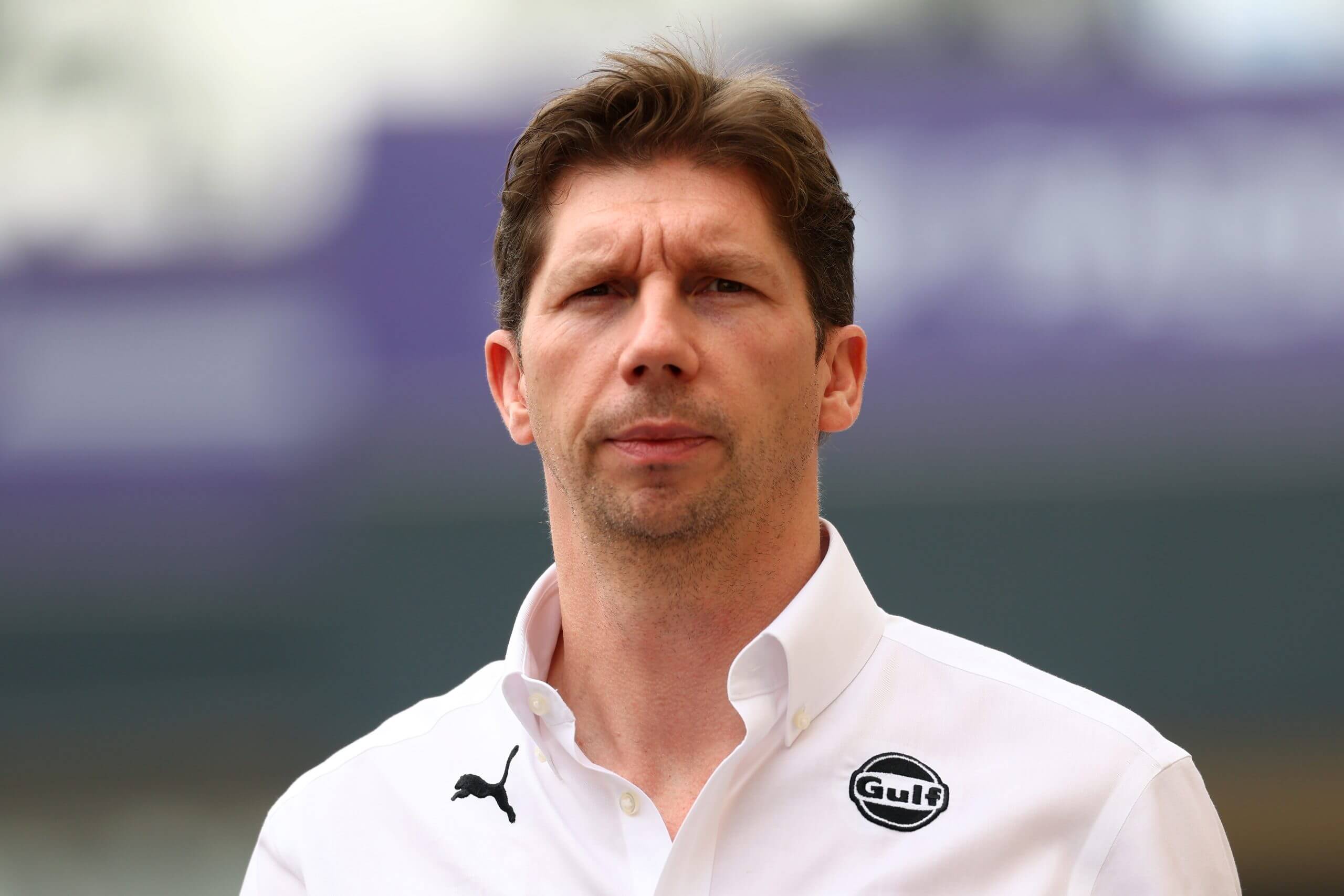
Williams team principal James Vowles at the 2025 Abu Dhabi Grand Prix. (Clive Rose / Getty Images)
When The Athletic visited Williams’ headquarters in early January, much of the team had just returned to work after the winter shutdown enforced by F1’s regulations. It was one of the shortest offseasons in recent F1 history due to the early test dates for the new cars, which combined with the seismic rule change to have a big human impact on the team.
“There are a lot of people that probably, if we would not try to protect them from themselves, would be working non-stop and on the weekends because there is so much to do,” said Sven Smeets, Williams’ sporting director.
The team was strict to ensure those who did the final triple-header of three races in three weeks in full last season were immediately sent on holiday after returning from the Abu Dhabi finale.
Williams has also expanded to operate three rotational shift crews for testing this year, up from two (day and night) in 2025, to further ease the burden on personnel. Acknowledging the increased risk of burnout or injury around the compressed offseason this time, the team wanted to look after its people.
“It’s going to be hard on the human side,” said Smeets. “What we saw from the triple-header, I think you will see now at the beginning of the season again.”
Smeets highlighted the additional preparation required across all parts of the team as the biggest change for Williams in 2026.
A minor official name change from Williams Racing to Williams F1 Team meant all branding had to be changed — across trucks, garage awnings and hospitality units.
All new car parts and updated tools required a change to the internal foam packaging for all freight boxes. Even pit stop preparation has changed because the tires are now different dimensions compared to those used in 2025. The new F1 world reaches far beyond the car alone.
But it is on the technical and production side where Williams has really stretched itself going into 2026. Having a blank sheet to design the car naturally excites F1 engineers, given the opportunities on offer to gain on rival teams. That doesn’t make up for the added demands it will place elsewhere in a team.
“It’s a massive task,” said Matt Harman, Williams’ technical director. “We are a team that is transforming, we are moving, we’re trying to develop our facilities, tools and techniques. For us, it’s a huge challenge.”
Williams took delivery of its engine from Mercedes on Jan. 9, which meant the team could begin its car build and prepare for Virtual Track Testing on its simulator. Although it did pass some of the crash tests required by the FIA before it could get its car on the track, it was short of one final nosebox test pass at the time it decided to call off going to Barcelona.
In announcing the decision, Williams highlighted its intention to focus on VTT running instead, with the chassis and engine connected to a static rig. Harman had explained in early January that even Williams’ VTT technology had come a long way thanks to its off-track investment efforts.
“That will be the first real sign of some of our advanced simulation techniques and technologies that we’ve used — that we’re now looking to simulate and engineer the car, and try and extract that marginal gain performance,” Harman said.
“We’re starting to see those things, and the way in which we’re even showing up at the VTT is at a much higher level.”
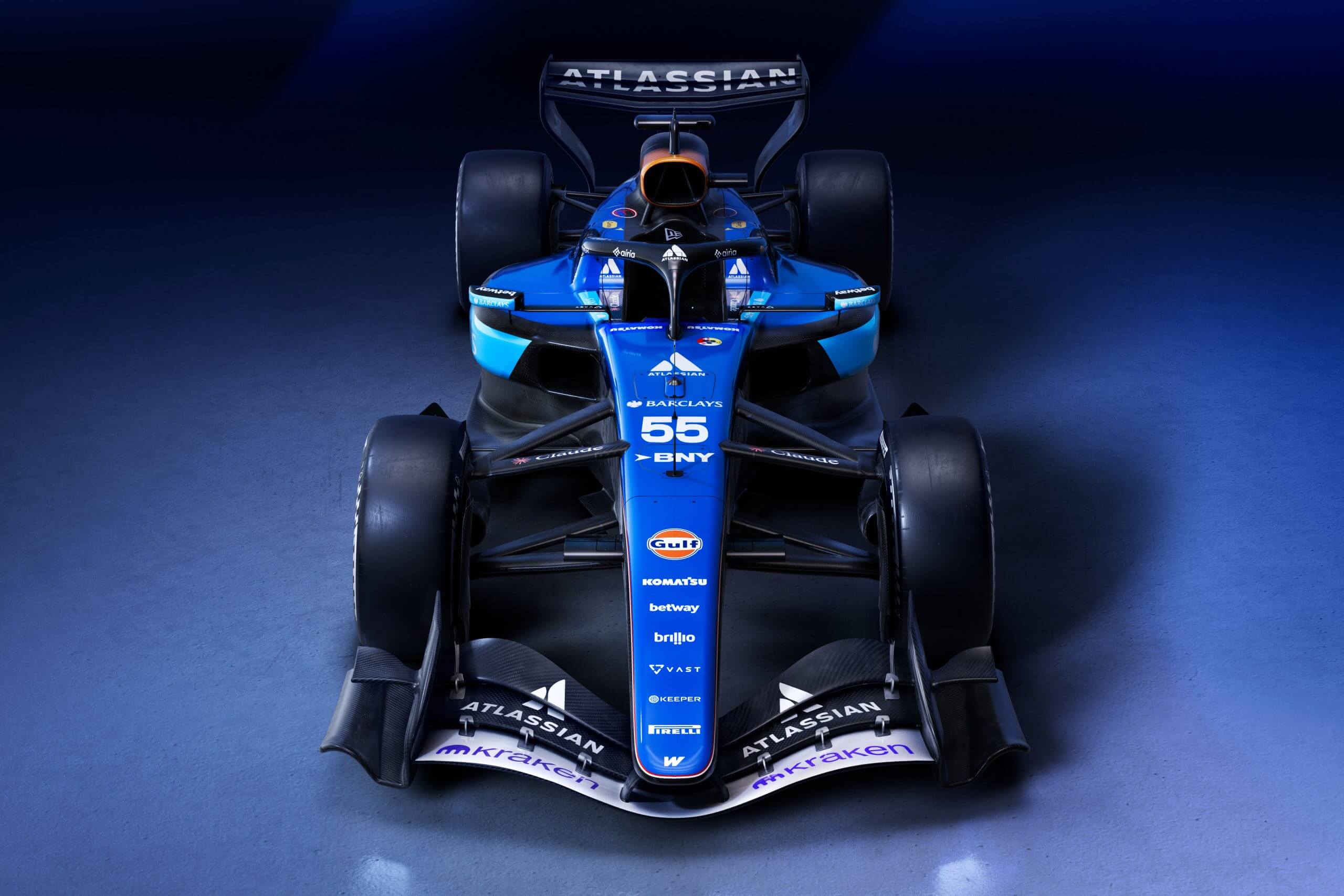
Williams presented its new car livery after missing the private first test of the 2026 preseason (Williams)
Harman laid out just how hard Williams’ technical group was working to extract maximum performance from the car and said regular gains were being found despite Williams starting the 2026 project earlier than many other teams. Such improvements to car parts are more common in the early stages of a new rules era.
Harman said these efforts were “wringing the neck of the organization,” given the degree of change at Williams.
But it had a carefully laid out development path for the FW48 for what he described as an “aerodynamic sprint” anticipated as the cars change through this season. In a new design era, upgraded components will be more influential compared to the smaller gains teams were finding as the old era ended in 2025.
Missing Barcelona pained Vowles and Williams as a whole. But there is a fundamental belief that wavering from its plan, one that has already stretched the team to its limit, would have caused further headaches down the road.
As Vowles told The Athletic last September, he isn’t interested in any shortcuts when it comes to the team’s revival.
That has led to some short-term pain. Although the now-unveiled FW48 will complete a filming day before the first Bahrain test, which will allow Williams to assess its basic systems are working as expected, there’s no clawing back the laps it has already lost to its rivals.
The other teams expected to make up F1’s midfield — Aston Martin, Racing Bulls and Audi — did not complete Mercedes’ amount of mileage either. But there’s still ground to make up in understanding how these cars operate over longer distances.
That also can’t undo the outward perception of Williams having conceded a huge own goal — arguably the first significant setback of Vowles’ tenure. Aston, which only completed 66 laps after hitting the track late on the penultimate day of the Barcelona test, is in a similar position.
Only at the season-opening Australian Grand Prix will the depth of any plight now facing Williams in 2026 truly become fully clear. The team hopes these are just growing pains in a time of rapid change, setting itself to be stronger in the future.
Discovering if that is Williams’ new reality could take much longer.