
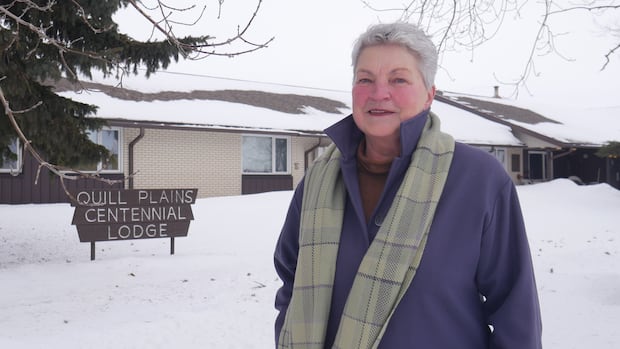
People living in and around the central Saskatchewan town of Watson were creative in their efforts to raise money for a new long-term care home.
Volunteers hung paper hearts in businesses for Valentines Day and held ‘mad hatter’ and Marie Antoinette-themed tea parties.
The town of roughly 700 people and its surrounding rural municipalities have been trying for years to replace its existing 52-bed care home, which serves 18 nearby municipalities and was built in the 1960s.
But with an estimated cost of $1.2 million per bed and a requirement that the municipalities contribute 20 per cent of the cost, it was a heavy lift. The town estimated it would need to pay $5 million itself.
“It would probably take us 100 years to pay off that,” said Lani Rae Best, Watson’s chief administrative officer.
With less than 450 taxable properties, the necessary tax increase of $11,000 per property would have been “very close to destroying” the community, she said.
“Nobody can afford that.”
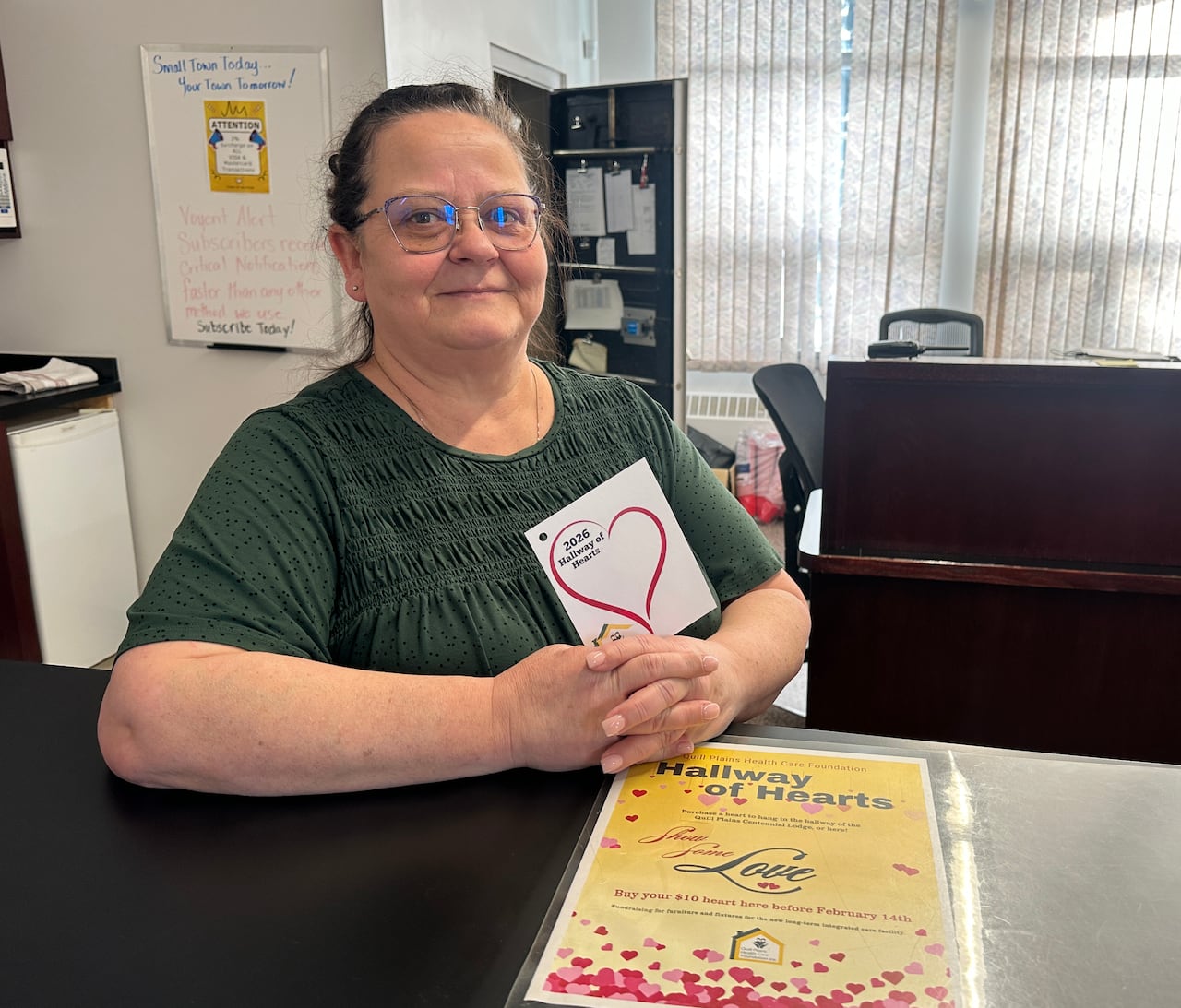 Watson’s chief administrative officer Lani Rae Best holds the Quill Plains Health Care Foundation’s Valentine’s Day campaign materials in the town’s administration office. (Katie Swyers/ CBC News)
To lend a hand, a small group of Watson residents established the Quill Plains Health Care Foundation as a registered charity in 2016. It has been fundraising for a decade, trying to collect $4.4 million to cover the cost of equipment and furniture for the new home.
In Estevan, a similar initiative began around 20 years ago in an effort to replace the existing 70-bed care home. It managed to raise $8 million in three and a half years, according to Don Kindopp, chair of the New Estevan Regional Nursing Home Committee.
“We had a farmer here who put a quarter section of land under grain and all that he harvested, he hauled to the elevator, the proceeds were given to our campaign,” Kindopp said.
Enthusiastic community support included children making bracelets to sell and over $300,000 raised in memorial donations from funerals.
But that money, raised when “Estevan was a boomtown” flushed with oil and gas money, has sat idle for 11 years, since January 2015, Kindopp said.
The provincial government contributed enough money to keep the planning going, but delayed construction, he said.
“I always thought this thing would be built, waiting for me, and there would be some worn chips in the paint by the time I get there, but that’s not the case.”
After all these years of effort in Watson and Estevan, the provincial government is taking a new approach: a request for proposals (RFP) on its procurement site, SaskTenders, seeking private companies to build and then operate care homes in both communities.
The municipalities no longer have to pay, and the RFP says both facilities will be bigger — eight more beds in Watson and 65 more in Estevan.
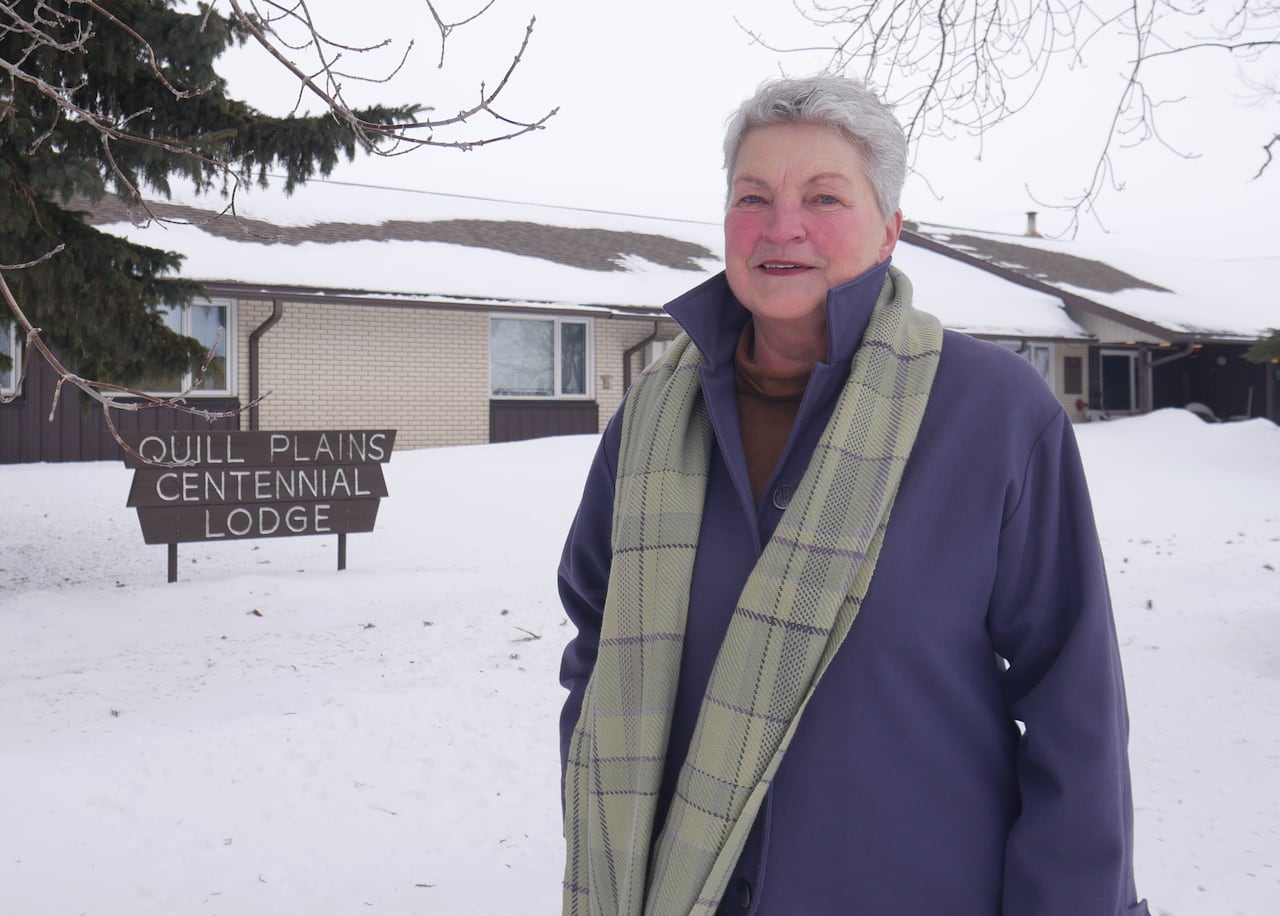 Quill Plains Health Care Foundation chairperson Norma Weber says the foundation has worked hard to raise $1.5 million to pay for equipment and furniture for a new long-term care home. (Katie Swyers / CBC News)
But some, including several health-care unions, are concerned about the private-public model.
“We know that when we take money out of the public system and give it to someone that’s there to make a profit, things are going to suffer. Care is going to suffer,” said Service Employees International Union-West president Lisa Zunti.
The province’s largest health-care union, the Canadian Union of Public Employees local 5430, issued a statement “raising serious concerns” about the move and calling on the province to commit to publicly build and operate the homes.
The privatized model “risks delays, higher long-term costs and negative impacts on resident care,” it said.
A private delivery model can also have a negative effect for staff, said York University professor Pat Armstrong, an expert on health-care policy who led a decade-long international study on long-term care.
“There is a lot of research showing a pattern of an unstable labour force, more part-time staff, staff with fewer benefits, staff with lower qualifications than in a public or a nonprofit system,” Armstrong said.
LISTEN | Private long term care homes not the answer, says researcher:
Saskatoon Morning6:46Private long term care homes not the answer, says researcher
Host Candice Lipski talks with by Pat Armstrong, research professor at York University and the principal investigator on an international study of long term care, about private care homes versus public or non-profit care homes.
Costly transfers to hospitals at public expense, bed sores and the use of psychotropic drugs to substitute for care also increase in privately-operated homes, Armstrong said.
The provincial auditor previously found nearly 35 per cent of Saskatchewan’s long-term care residents were given antipsychotic drugs without a diagnosis — well above Canada’s overall rate of roughly 25 per cent.
Profit-driven companies are in business to make money by “selling more or paying less,” Armstrong said.
“Your major cost in long-term care is staff,” and that’s one of the places companies focus on saving money, she said.
A major employer in Watson
The existing Quill Plains Centennial Lodge in Watson employs over 100 people, making it one of the largest employers in the town and surrounding areas.
It’s one of the reasons everyone in the region had been working so hard to keep the long-term care home in the area, Best said.
Watson was trying to find money anywhere it could for a care home, despite having an infrastructure deficit, like most municipalities across the country, that needs to be tackled as well, Best said.
“But it’s pennies when you need millions.”
When the Quill Plains Health Care Foundation started fundraising, chairperson Norma Weber said the original plan was for another public, SHA-operated care home in Watson.
But the foundation felt something had to be done about the cost, especially when other provinces could build homes for less money, so it asked the local MLA to find a way to get the number down, she said.
“That’s how this (request for proposals) came about,” Weber said.
 The Quill Plains Health Care Foundation’s 2024 high tea fundraiser had a Marie Antoinette theme of ‘let them eat cake.’ (Submitted by Norma Weber)
Both she and another foundation director, Cy Skinner, said they’ve heard concerns from the community about the new home being privately operated.
In his opinion, opening the new home had to be a priority over how it would be operated, Skinner said.
“We definitely needed something to happen. The lodge was kind of on its last step.”
The foundation had raised $1.5 million for the new facility’s equipment before the province announced a third party would foot the bill. Skinner said they will continue to fundraise to help the new privately-operated home with extra amenities and the money will be controlled by the foundation.
The community groups in Watson and Estevan will not get a formal say in how the new facilities will be operated.
The facilities will have to meet SHA standards and guidelines and will be inspected by the province, however.
“We are trusting that the people who are in charge are gonna take care of this,” Weber said.