
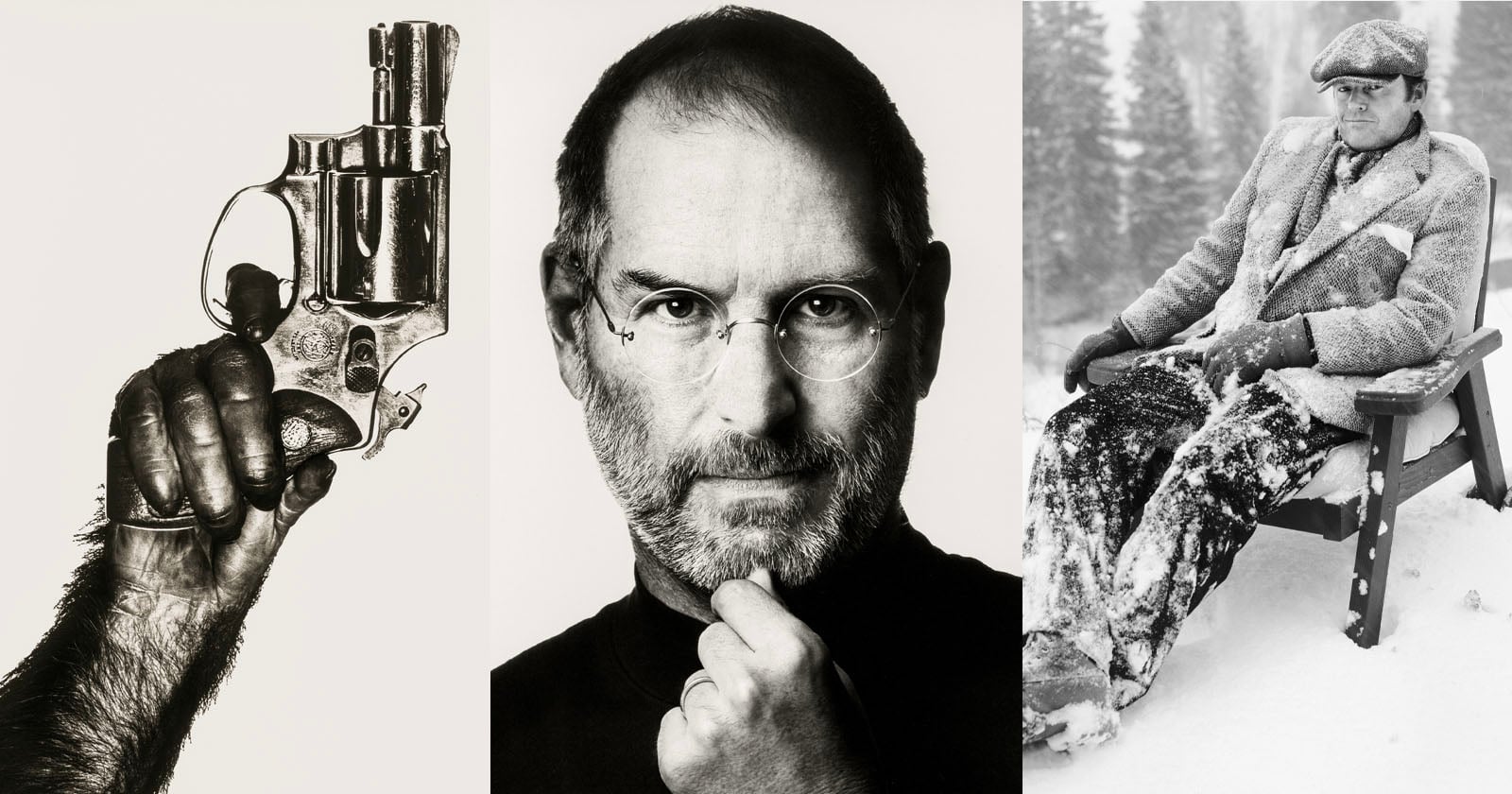
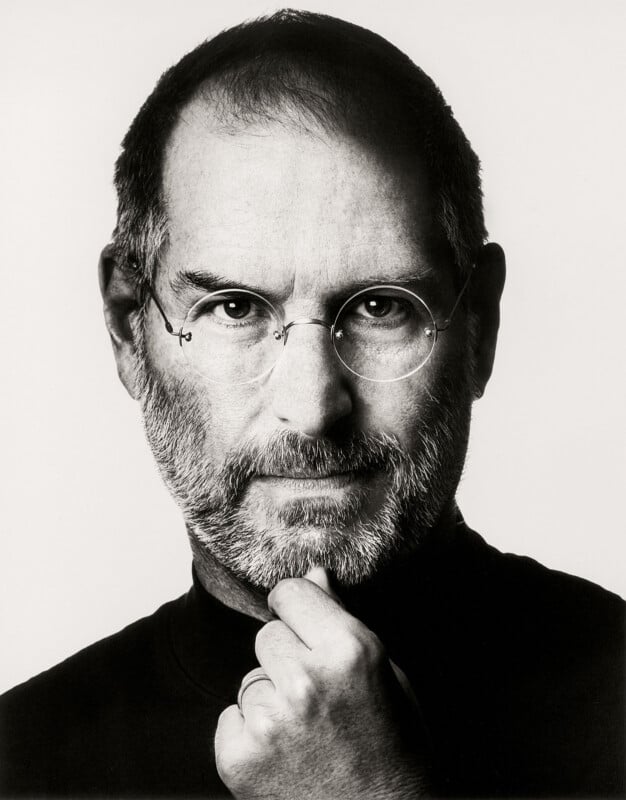
 Steve Jobs, Cupertino, California, 2006 © Albert Watson, 2025
Albert Watson is one of photography’s great image-makers. For more than five decades, his work has moved effortlessly between portraiture, fashion, fine art, and landscape. His work has now been brought together in a definitive monograph titled Albert Watson. Kaos.
From iconic portraits of Steve Jobs, David Bowie, Keith Richards, Kate Moss, Jack Nicholson, and Uma Thurman to stark landscapes, still lifes, and nudes, Watson’s photographs resist easy categorization.
 Keith Richards, New York City, 1988 © Albert Watson, 2025
 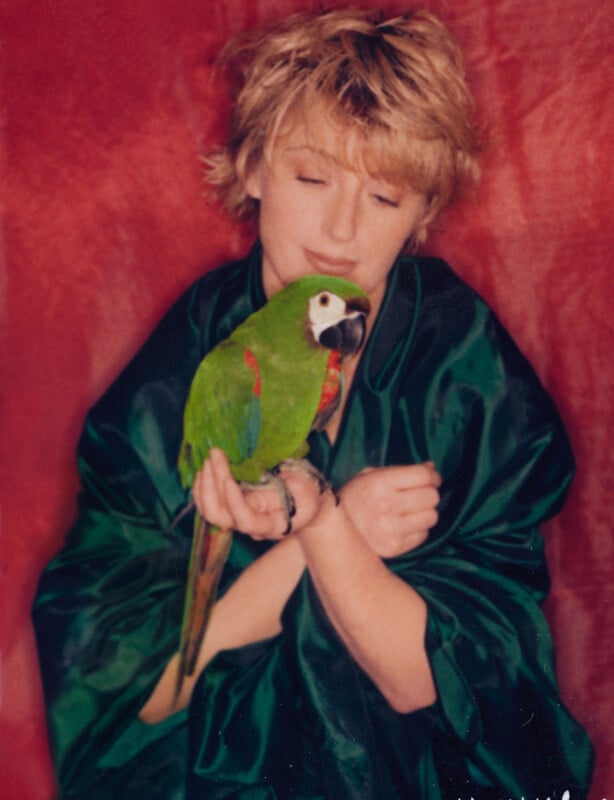 Cindy Sherman, Polaroid, New York City, 1994 © Albert Watson, 2025
 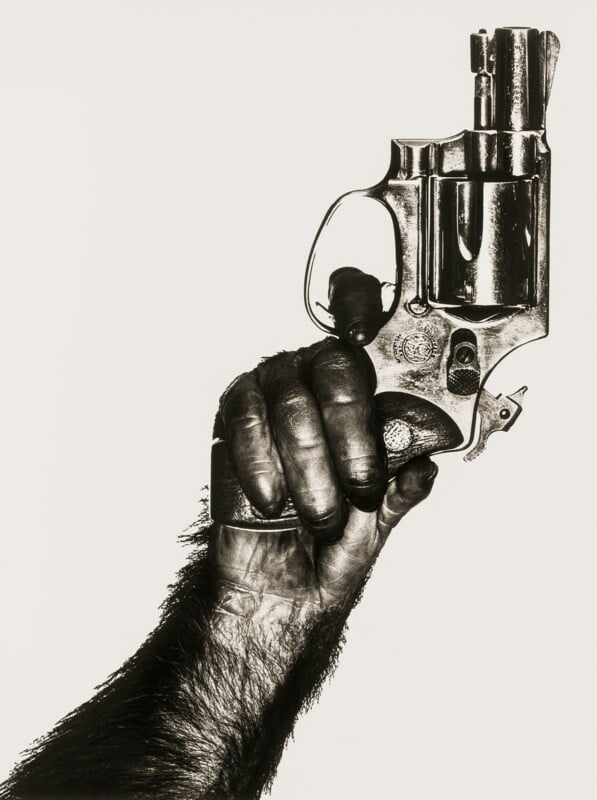 Monkey with Gun, New York City, 1992, © Albert Watson, 2025
Published by Taschen, the book presents a carefully curated overview of Watson’s work to date, spanning more than 55 years. Celebrities, statesmen, supermodels, and strangers appear side by side, moving through neon-lit cities, quiet backstreets, and elemental landscapes.
The collection opens with Watson’s breakthrough portrait of Alfred Hitchcock, shot for the Christmas 1973 issue of Harper’s Bazaar, an image that announced a new, unmistakable voice in photography.
“It was nice for me to have Hitchcock as a subject because I was just out of film school, and I was very excited to do the project as this was a very nice commission,” Watson told PetaPixel in 2023.
“Initially, they wanted Hitchcock, a gourmet chef, to hold the cooked goose on a plate, and I said it was better to hold the goose [by the neck] before cooking as though he strangled the goose.”
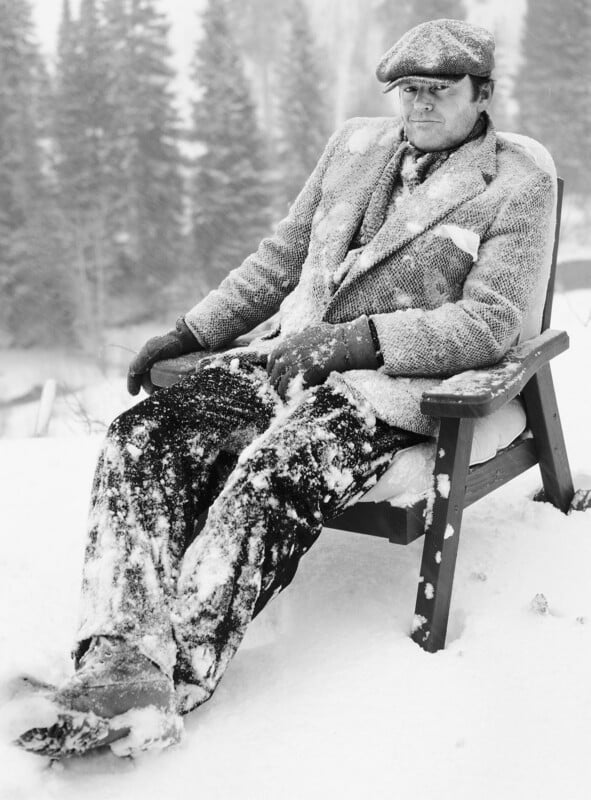 Jack Nicholson, Aspen, Colorado, 1981 © Albert Watson, 2025
  Tree, Fairy Glen, Isle of Skye, Scotland, 2013 © Albert Watson, 2025
 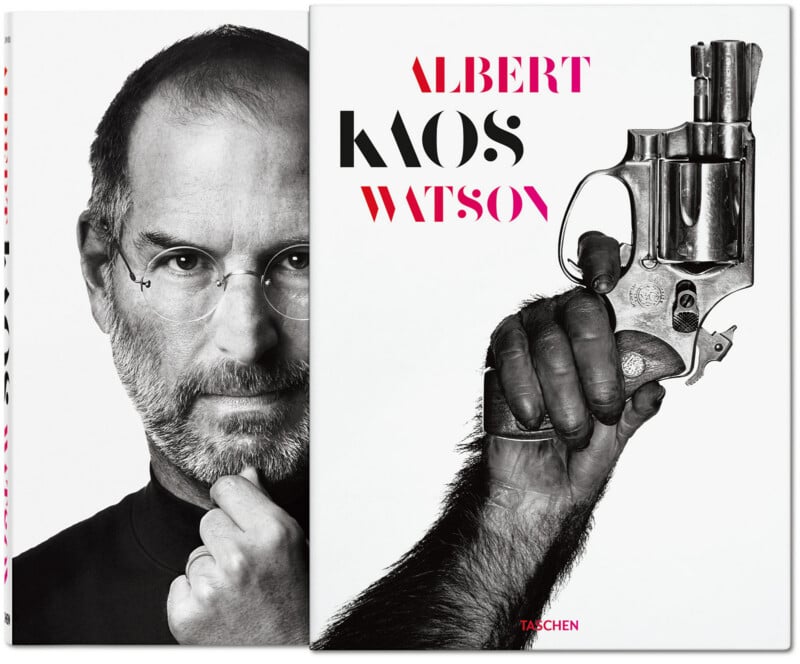 Front cover
Arguably, Watson’s most famous photo is of Steve Jobs, which wound up being used on the front cover of Walter Isaacson’s biography of the former Apple CEO.
Watson told PetaPixel the story behind the famous 2006 photo, which he shot on a Horseman 4×5 large format camera.
“The PR guy came and said to me ‘Thank you for being here… Steve hates photographers, he hates having his picture taken, really he doesn’t like the experience at all, and today he’s not in the best of moods,’” Watson recalled.
“So, I told the PR guy there’s nothing I can do about that if Steve Jobs is like this. I’m here to photograph him. But in those five minutes I spoke, I suddenly got an idea, and when Steve arrived, I said to him, ‘I have good news for you…I only need you for 30 minutes, not one hour.’
“He smiled and said, ‘Fantastic, I’m so busy. Is that enough time?’ I said ‘Yes,’ and he got onto the set. But then he was astonished that I was still shooting film because I had a 4×5 camera.
“He said, ‘You’re still shooting film? I said, ‘Because I don’t think digital is quite perfect yet,’ and he pointed his finger at me and said, ‘I agree with you…but we will get there, you know, and soon digital will have better quality than film.’
“I worked very quickly. I knew exactly what I would do, a change of lens, and so on, and the shooting went very smoothly. He was in a good mood, and at 9.30, I did a few situations with him close-up. The direction I gave him for the close-up was very simple, as I had it planned.
“I said, ‘Just imagine you are across the table from a lot of people who disagree with you, but [you know] you’re right.’ He said, ‘Well, that’s very easy for me because I do that every day. People are always disagreeing with me. I can do that.’
“He had a very strong, determined look on his face, and because of the time thing, I think, he was happy. We finished just after 9.30, and as he left, he saw the Polaroid I had taken on the 4×5 camera. He said, ‘That’s maybe the best picture ever of me,’ [and requested the print].
“I thought he was just being nice and polite because I finished the shooting quickly. But a few years later, when he died, Apple requested that image of him and said that the Polaroid had always been on his desk. They used that as his memorial shot, which was later on the book’s cover.”
Albert Watson. Kaos is accompanied by an essay from Philippe Garner, former Head of Photographs at Christie’s, alongside extensive quotations from Watson and dozens of previously unpublished Polaroids from his personal archive.
Signed Art Editions (No. 1–255) are also available, each accompanied by a signed print.
Additional reporting by Phil Mistry