
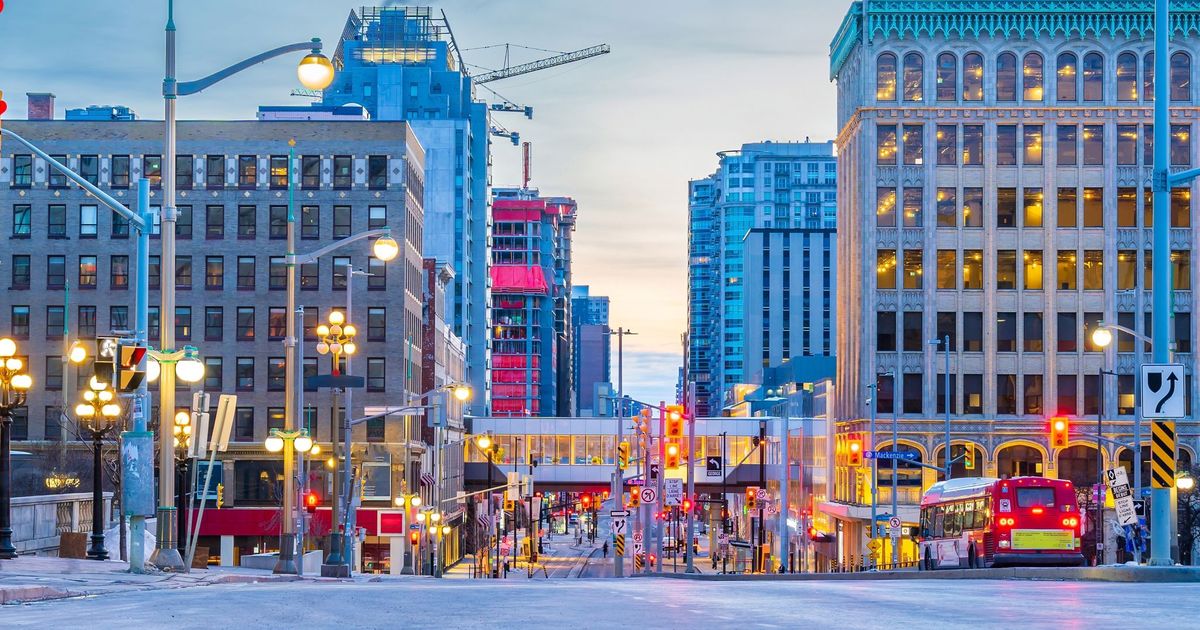
One spot was crowned the most livable major city in Canada, and it may surprise you.
When you think of Canada’s major cities, places like Toronto, Vancouver, and Montreal are likely the first ones to come to mind. But their popularity and notoriety don’t necessarily make them the most livable destinations in the country.
The Globe and Mail released its third edition of Canada’s Most Livable Cities report last week. The ranking evaluated 454 cities using 58 variables across 10 key categories that matter to people considering relocation. This includes economy, housing demographics, health care, safety, education, community, amenities, transportation, and climate.
This year, the report introduced a population filter after receiving feedback from readers wanting to know the size of the community.
“Big cities may offer better jobs and access to public transit, while smaller ones have more space and a slower pace,” reads the ranking. “Our readers noted that previous editions did not offer a way to compare places by size.”
The population filter split the most livable cities into four categories: major (population of 500,000+), large (population of 100,000 to 499,999), mid-sized (population of 30,000 to 99,999), and small (population of 10,000 to 29,999).
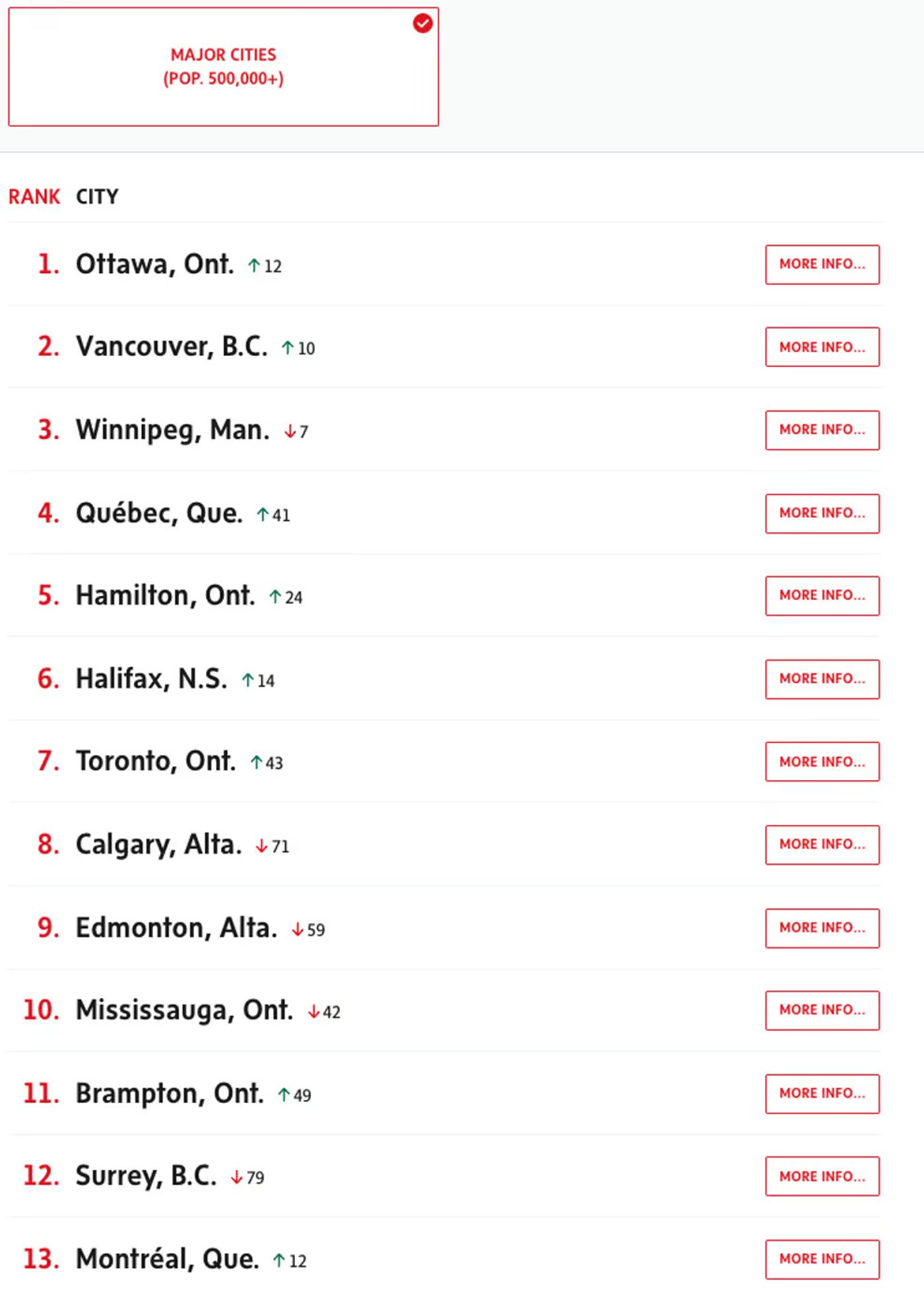
Ottawa was named the most livable major city in Canada, moving up 12 spots from last year’s ranking.
It beat out Vancouver, Toronto, and Montreal, which took the second, seventh and 13th places, respectively.
The Globe and Mail
Globe and Mail Ottawa staff reporter Emily Haws wrote that despite low rankings in categories like safety (296), housing (387), and climate (408), the city’s overall rankings across all categories pushed it to the number one spot.
The most livable major city in Canada ranked 12th for education, 18th for amenities, 27th for demographics, 35th for health care, and 48th for transportation.
Ottawa Mayor Mark Sutcliffe told Haws that the large geographic size of the city allows residents to choose if they want an urban, suburban, or rural lifestyle.
“We’re not too big, and we’re not too small,” he told The Globe and Mail. He also noted how Ottawa has the amenities major cities have, with fewer challenges.
The report highlights the city’s outdoor activities, including the Rideau Canal, Gatineau Park, and its extensive multi-use trail system.
The National Capital Commission, which runs the Rideau Canal skateway, is also planning on introducing a sauna and cold plunge on the Ottawa River, The Globe and Mail reported.
For those who prefer indoor activities, the city boasts plenty of museums and galleries, including the National Arts Centre.
“The city also ranked highly on the connection its residents feel with their community — something Rideau Canal skater Sonia Desharnais appreciates,” wrote Haws. “She said she met a lot of people in her neighbourhood thanks to a buy-nothing group on Facebook.”
The downsides of living in this major city in Canada include its transit system, OC Transpo, which the report says “continues to frustrate commuters.”
“Other people, meanwhile, voice concerns about the downtown because of issues related to drug use and homelessness. Housing affordability is also an issue,” it reads.
Check out where cities in B.C. and Alberta ranked on the list. You can view the full ranking on The Globe and Mail.