
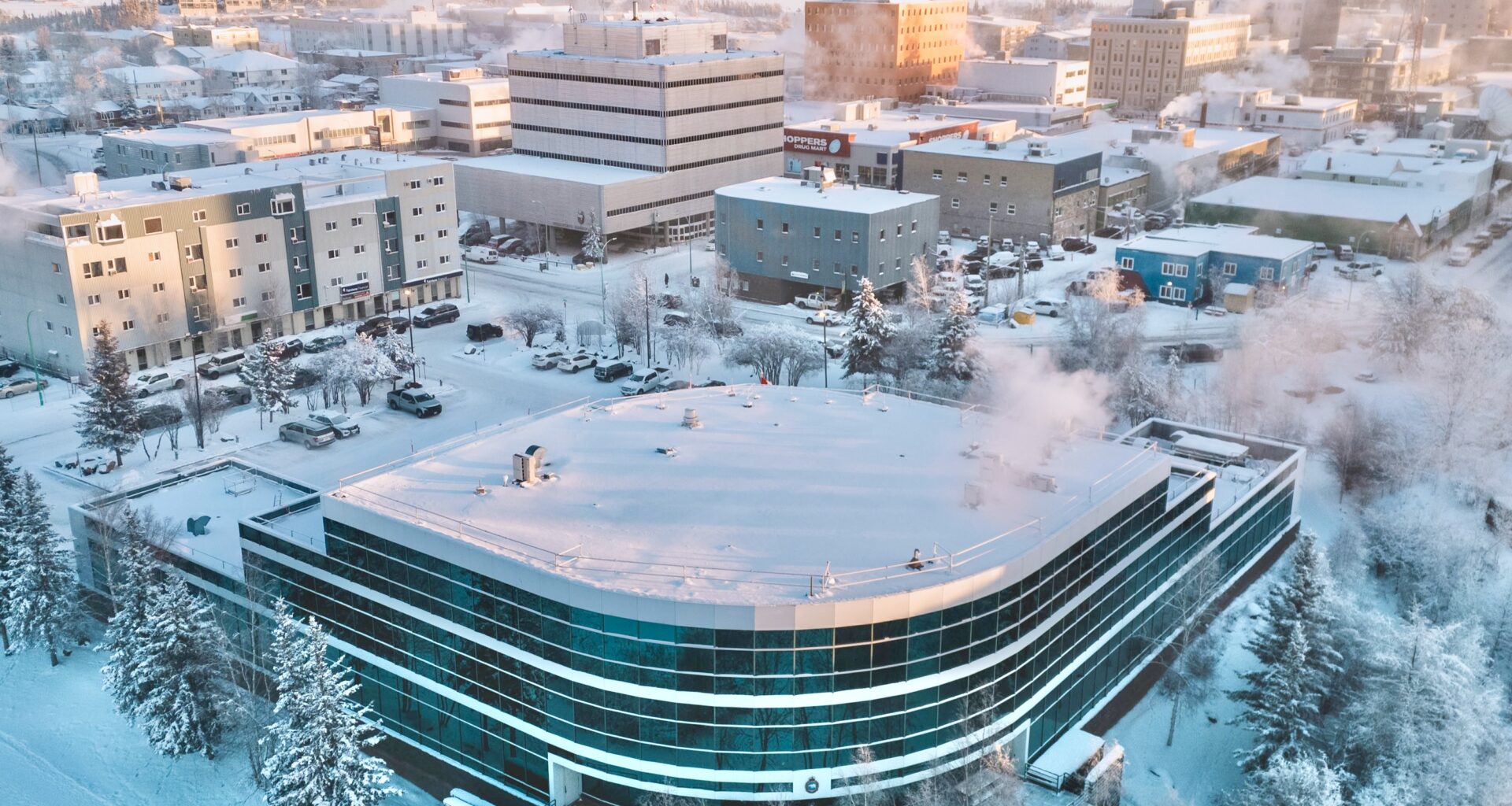
On January 28, in a corner of the internet, a notice appeared that sets in motion billions of dollars of spending in two Northwest Territories communities.
The notice advises contractors that later this year, procurement begins for work in Yellowknife and Inuvik associated with upgrading their military installations.
Last year, Ottawa announced the two communities would become northern operational support hubs, a step up from their current status as forward operating locations.
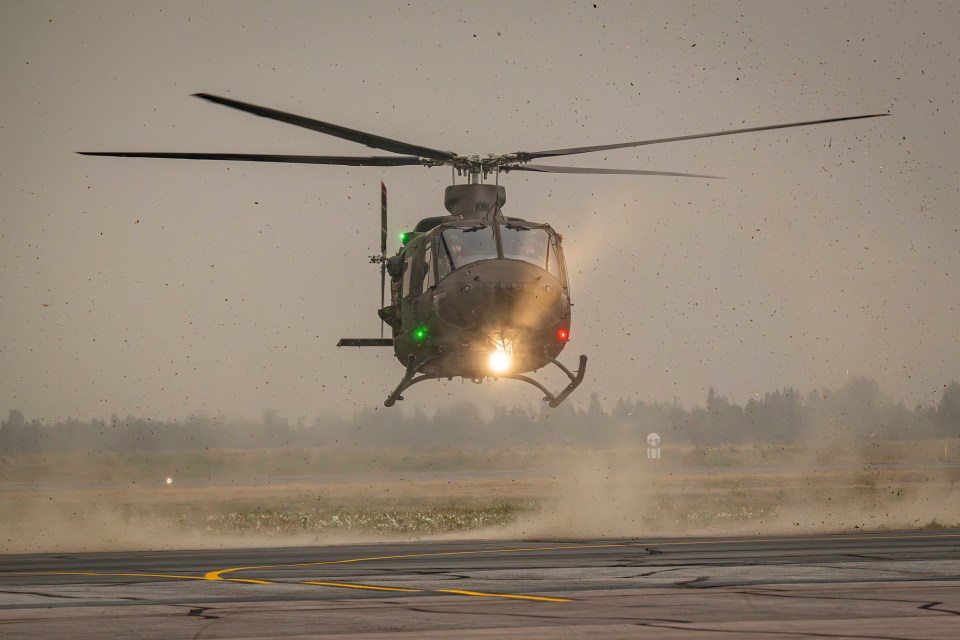 A CH-146 Griffon helicopter lands at Yellowknife Airport during the city’s 2023 wildfire crisis. Alana Morin/Canadian Armed Forces
Last week’s notice begins to turn that promise into reality.
The estimated total contract value “may exceed $5B for each location,” the notice states, listing tasks ahead like:
Advertisement.
Advertisement.
airfield improvements, including new or repurposed hangars;
ammunition compounds and fuel facilities; and
“multi-purpose facilities,” accommodation and warehouses.
“It’s a big deal. It’s a big responsibility now for Yellowknife and northerners, for us to meet the moment,” said Mayor of Yellowknife Ben Hendriksen on Friday, two days after the notice came out.
For him, “seeing something tangible” started to bring home what this level of investment could mean for the NWT’s capital.
The $5-billion figure in the notice is extremely preliminary. Assigning a contract of that value doesn’t mean Yellowknifers or northerners will see all or even most of it. The Department of National Defence, approached for comment, did not immediately provide a more detailed breakdown of where that figure came from.
Even so, to place these two projects and that associated $10-billion sum in context, the NWT government’s annual spending is just over $2.5 billion. The Diavik diamond mine, a bedrock of the territory’s economy for more than two decades, says it has spent between $7 billion and $8 billion in the North since 2000.
Advertisement.
Advertisement.
“The city and city council have been preparing for a moment like this for quite some time,” said Hendriksen.
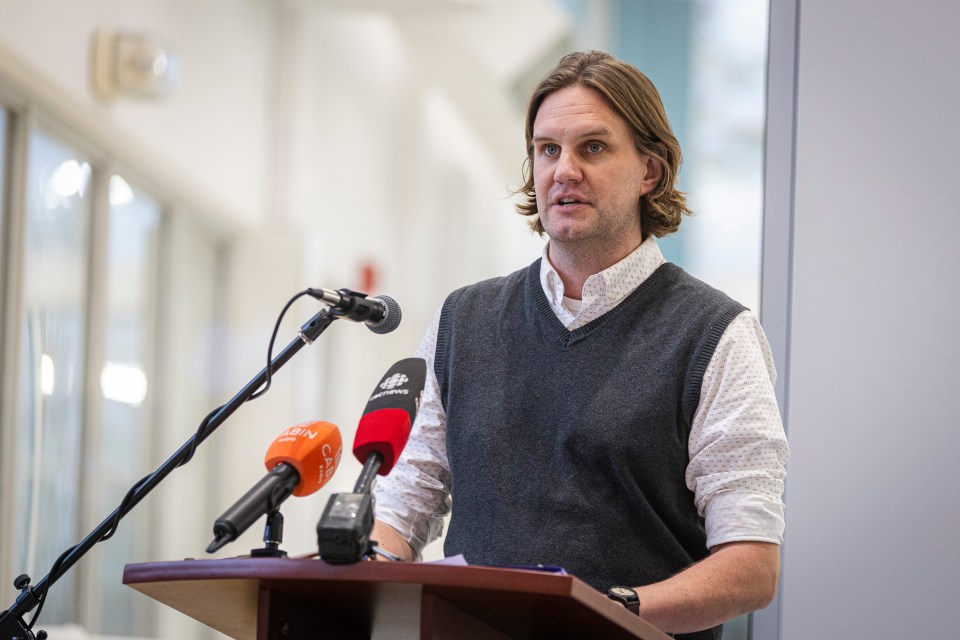 Ben Hendriksen. Ollie Williams/Cabin Radio
He pointed to a December 2024 motion pressing the federal government to “look to the North and look to Yellowknife to invest,” and an agreement signed with Inuvik to work together in attracting this kind of cash.
“It’s an exciting opportunity for Yellowknifers and northerners to see at a time when there’s not a host of great news on the economic front,” he added. The NWT’s diamond mines are closing – Diavik ceases operations in March – and the general atmosphere in the territory is one of economic worry, despite the knowledge that some big military spending is on the way.
“This is $5 billion – potential, at the moment – in terms of federal government spend. That creates spin-off requirements, spin-off jobs, spin-off investments,” said Hendriksen.
“People will see us as a place to start families, start to invest, create new businesses themselves. We need to look at this not as something to just fill a gap. It’s creating new opportunity for the North and for Yellowknife.”
‘Akin to somebody opening a mine’
Inuvik has spent years trying to recapture the mood of its oil and gas boom that unfolded in the 1970s and early 1980s.
By the late 1980s, that boom had ended. The town’s military base closed in 1986 (though a small presence remained), at the time a marker of Inuvik’s entry into economic decline.
Now, Mayor Peter Clarkson is watching as the military’s return promises to reignite his town’s prospects.
Advertisement.
Advertisement.
“It’s huge for Inuvik. I think it’s huge for Yellowknife,” Clarkson told Cabin Radio.
“They do say in the information we’ve received that this will be over the next 20 years. So some of it will come right away and some will be longer.
“This latest notice on procurement is basically a heads-up to say, ‘OK, if you’re going to be interested in DND procurement, make sure you have all the clearances in place.’ … To wake up the contracting world that DND will be moving forward in the next few years.”
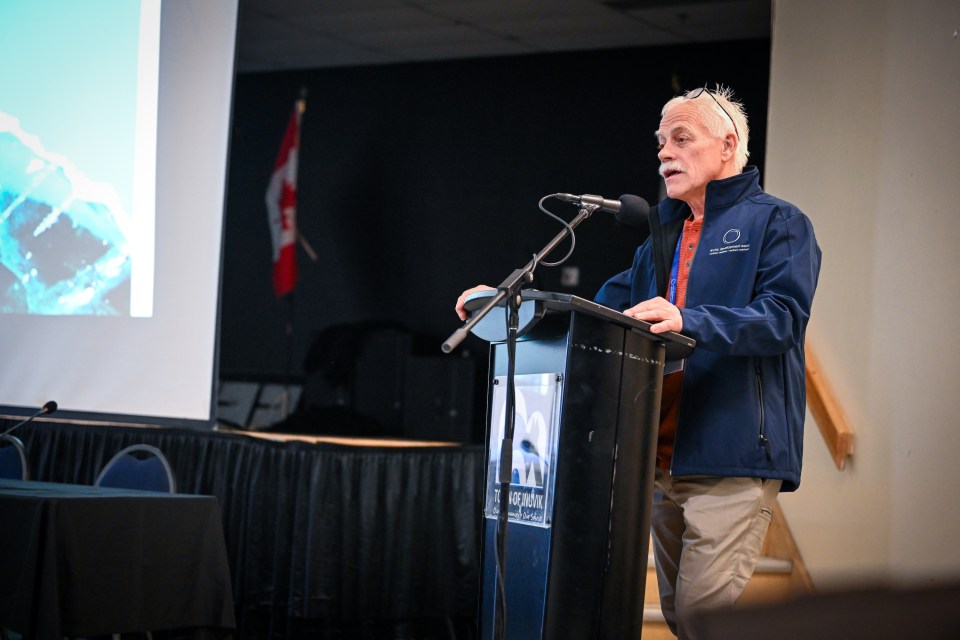 Peter Clarkson, mayor of Inuvik. Tony Devlin/Arctic Development Expo
Clarkson has been doing the math. If the federal spend in Inuvik comes in at even a fraction of the $5 billion in the procurement notice, the consequences would be significant at the town hall.
“If DND did $1 billion-worth of infrastructure in Inuvik – within the municipal boundaries, at the airport – that equates to $20 million in grant in lieu of taxes,” he said. (The federal government is legally exempt from paying property taxes but makes grants in lieu of taxes across the country to ensure it shares local costs.)
“Our current annual budget for capital and operating is about $20 million a year,” Clarkson continued, joining the dots.
“This is akin to somebody opening a mine or several large facilities within municipal boundaries.
“There are some longer-term benefits to the municipal government. I mean, there’s going to be additional work – you’ve got water and sewer to deal with, you’ve got roads to deal with – but there are additional benefits that will help with the operations of the community.”
Advertisement.
Advertisement.
Premier looks forward to ‘major construction’
DND told Cabin Radio it may have more information to provide later this week that addresses specific questions about its plans, like commitments to northern spending.
A timeline for the work is already public.
In late 2024, Ottawa said it wanted to reach “initial operational capability” in the two communities by 2034 and full operations by 2039. Calls for speedier investment in Arctic sovereignty have only grown since then, and it’s not clear whether those timelines have since been moved up.
Hendriksen and Clarkson each said they had little detail about the dollar values associated with the various aspects of the work, but both are in talks with DND over things like infrastructure that can be used by the community as well as DND.
“Things like a shared heated garage, heated storage and cold storage,” said Clarkson, “that DND would be able to use but also that the Rangers, Coast Guard Auxiliary and ground search and rescue would be able to operate out of – instead of, you know, someone’s backyard.”
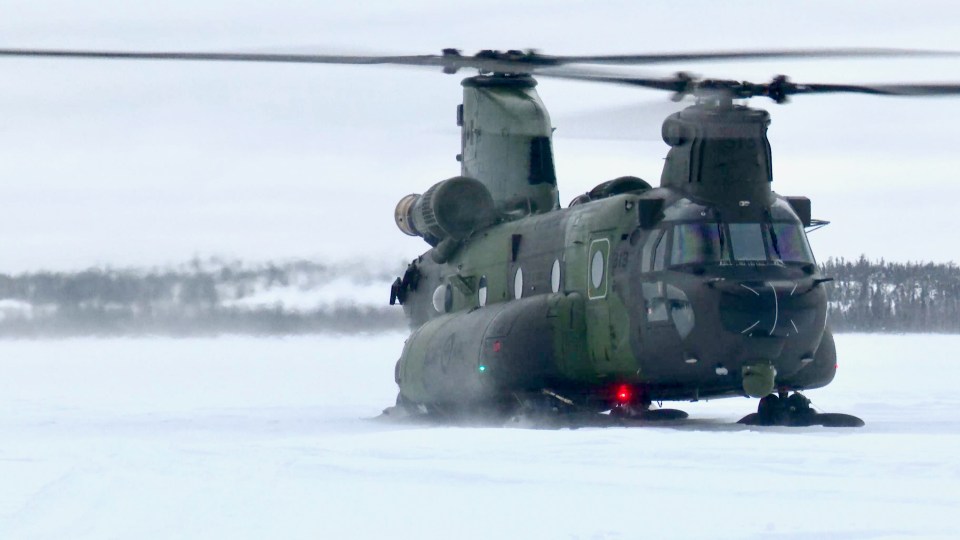 A Chinook helicopter during an Operation Nanook military training exercise in March 2021. Meaghan Brackenbury/Cabin Radio
“That’s one of the things we’ve been messaging to the federal government,” said Hendriksen regarding the detail of DND’s plans.
“It’s important that they come and work with the communities and speak with the communities, and talk about those specifics as much as they can, when they can.
“We’ll be continuing to ask them to come and do those types of conversations as well within the community, because I think it can help us understand what’s coming and what that means – from a housing side, from an infrastructure need.”
Advertisement.
Advertisement.
In a statement, a DND spokesperson wrote: “The planning process is underway to ensure that this infrastructure will meet NORAD and broader Canadian Armed Forces military requirements, and we will consider multi-purpose opportunities where practical through engagement with Indigenous and Northern governments and partners.”
NWT Premier RJ Simpson called the appearance of the procurement notice “the first time figures of this scale have been referenced publicly.”
“I am confident that investment at this level will mean major construction over several years, creating lasting economic opportunities in the territory,” he told Cabin Radio in a written statement.
“For years now, we have been clear that strengthening Arctic security starts with investing in basic northern infrastructure, including in hub airports like Inuvik and Yellowknife.”
Asked if he had received any guarantees to ringfence some of the billions of dollars for northern firms, Simpson said he had “always advocated to federal partners that reconciliation must be a priority in all that we do, and that such commitments need to be upheld in visible, tangible ways.”
“I hope that these investments will reflect northern realities,” he stated.
“The businesses and residents of the NWT are ready to take this opportunity to step up, build our economy, and contribute directly to Canada’s Arctic security. After all, a strong Canada depends on a strong North.”
Related Articles