

Listen to this article
Estimated 3 minutes
The audio version of this article is generated by AI-based technology. Mispronunciations can occur. We are working with our partners to continually review and improve the results.
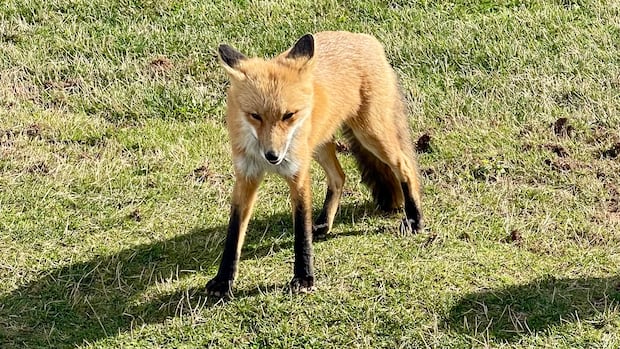
Don’t feed the foxes: it’s a simple message, but one that experts say too many Islanders fail to heed.
Garry Gregory, a conservation biologist with P.E.I.’s forests, fish and wildlife division, warned about the potential pitfalls that come from humans giving food to foxes, and wild animals in general.
“Islanders love their foxes, of course. They’re a very charismatic species, very easy to love and … people operate from an empathetic place and they often feel like the foxes need their help,” he said.
“Sometimes it’s not helpful at all to the foxes to be participating in the feeding and, in fact, can be detrimental to their long-term health.”
 ‘Foxes have survived for a very, very long time on Prince Edward Island and elsewhere in the absence of human food,’ says Garry Gregory, a conservation biologist with P.E.I.’s forest fish and wildlife division. (Zoom)
While he said specific data on the issue is not available, the province believes people are feeding foxes in urban areas.
“A fox is a very adaptable animal, very efficient animal in securing its own food,” Gregory said.
“They are able to exploit any food resources in and around an area. And even in the harshest conditions, foxes are able to find food.”
‘It changes their whole lifestyle’
Candy Gallant, founder of P.E.I. Wildlife Rescue and Rehabilitation, said an incorrect diet can cause stress and digestive problems for the animal.
She said feeding wild animals can also change their entire mentality.
“They don’t have to go hunting anymore. They just wait for us to put food out. So it changes their whole lifestyle. They’re no longer wild foxes,” Gallant said.
“They’ll eat anything, but they can’t handle processed food. They can’t handle bread. They don’t go to the grocery store and buy ham and cheese sandwiches.”
 Candy Gallant, founder of P.E.I. Wildlife Rescue and Rehabilitation, says humans feeding foxes can change their natural instincts. (Jessica Doria-Brown/CBC)
Gregory agrees that getting food from humans could cause foxes to lose their natural hunting skills. It could also lead to an emboldened animal in an area frequented by humans, he said, because the fox will begin to associate people with food.
He said foxes can harbour parasites — namely sarcoptic mange, a disease caused by a mite that burrows itself into surface layers of skin, causing itching and irritation — that could cause problems for people and domesticated animals.
There is evidence that suggests the presence of mange on P.E.I. has decreased since its outbreak, he said, but foxes are still impacted by the infectious disease.
Gregory said Islanders should report any animal that looks unwell to the forests, fish and wildlife division.
But he noted that as seasons change, a fox’s appearance does too. Come spring, they start to lose their coat and can look scraggly and thin.
“Foxes have survived for a very, very long time on Prince Edward Island and elsewhere in the absence of human food,” Gregory said. “They will do quite well relying only on natural food.”