

Listen to this article
Estimated 5 minutes
The audio version of this article is generated by AI-based technology. Mispronunciations can occur. We are working with our partners to continually review and improve the results.
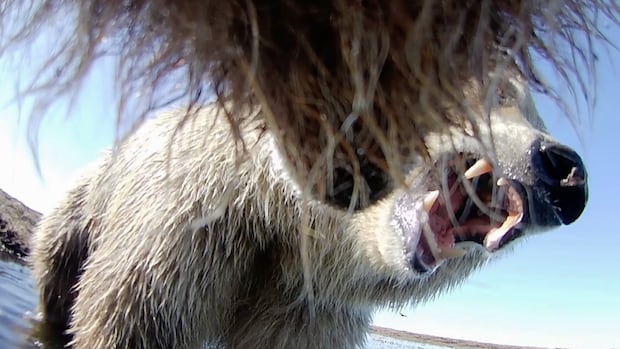
The life of one of the most remote grizzly bear populations in the world is being documented by the animals themselves, with collar cameras that provide a rare glimpse of how they survive on Alaska’s rugged and desolate North Slope.
Twelve of the 200 or so grizzlies that roam the frigid, treeless terrain near the Arctic Ocean have been outfitted with the cameras as part of a research project by Washington State University and the Alaska Department of Fish and Game.
The videos they record — many partially obscured by the undersides of whiskery muzzles — show the bears playing or fighting with companions, gnawing on a caribou, snarfing up berries, napping on a beach, and swimming in a pond looking for fish.
Packing on the pounds for winter
The bears hibernate about eight months of the year.
“They really have a really short window to obtain enough food resources to pack on enough fat to survive that period,” said Washington State doctoral student Ellery Vincent, who is leading the project with state wildlife biologist Jordan Pruszenski.
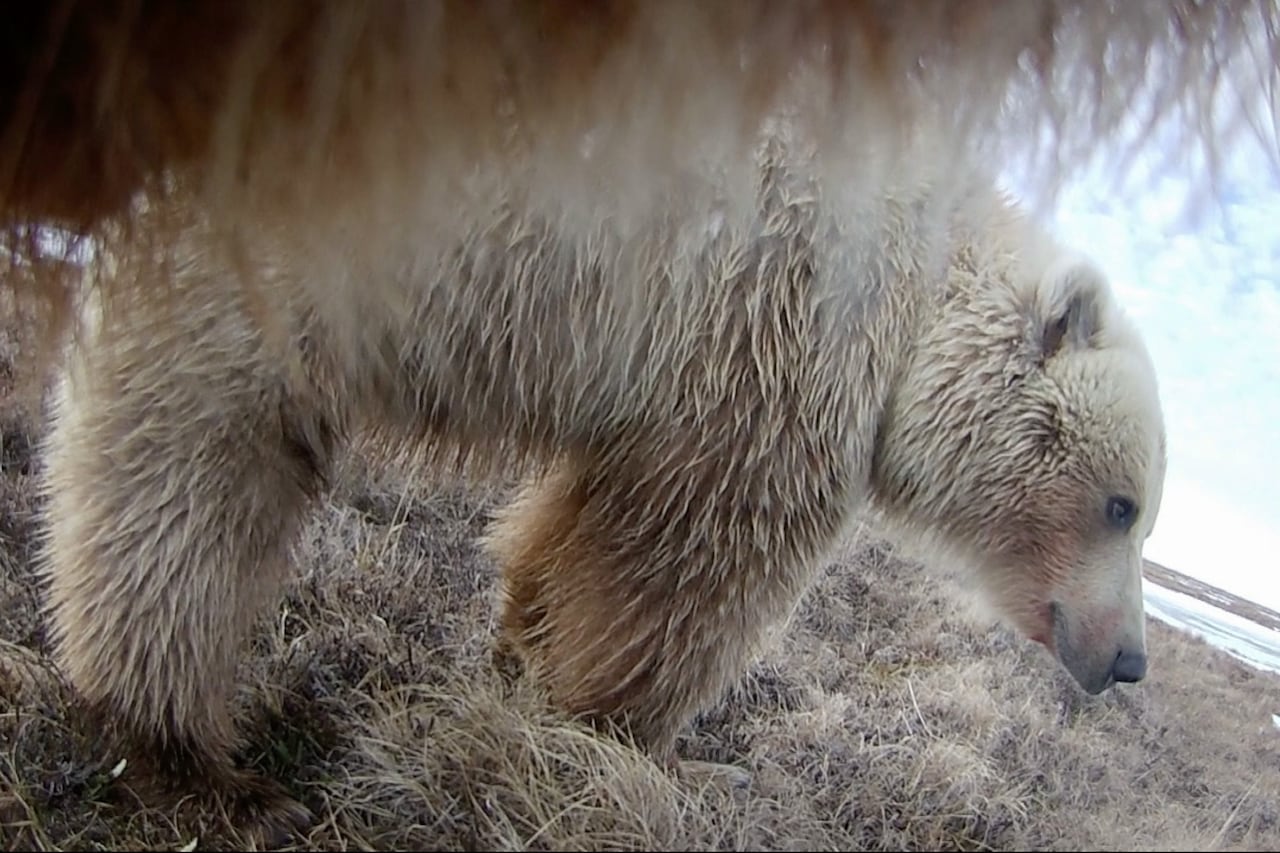 Twelve of the 200 or so grizzlies that roam the terrain near the Arctic Ocean have been outfitted with the cameras. (Washington State University/AP)
“We’re interested in looking at kind of a broad scale of how they’re obtaining the food that allows them to survive through the year and what exactly they’re choosing to eat,” Vincent said.
Among other things, the state is interested in learning to what extent the bears hunt musk oxen. There are about 300 of the shaggy ice-age survivors on the North Slope, according to Pruszenski, but the population is not flourishing.
Eating carcasses, caribou calves and berries
Videos from the first year of the project show that after emerging from hibernation, the bears eat the carcasses of caribou or musk ox that have died over the winter. Then they attack caribou calves. As soon as the tundra greens up, the bears shift their menu toward vegetation, especially blueberries and soapberries, also called buffaloberries.
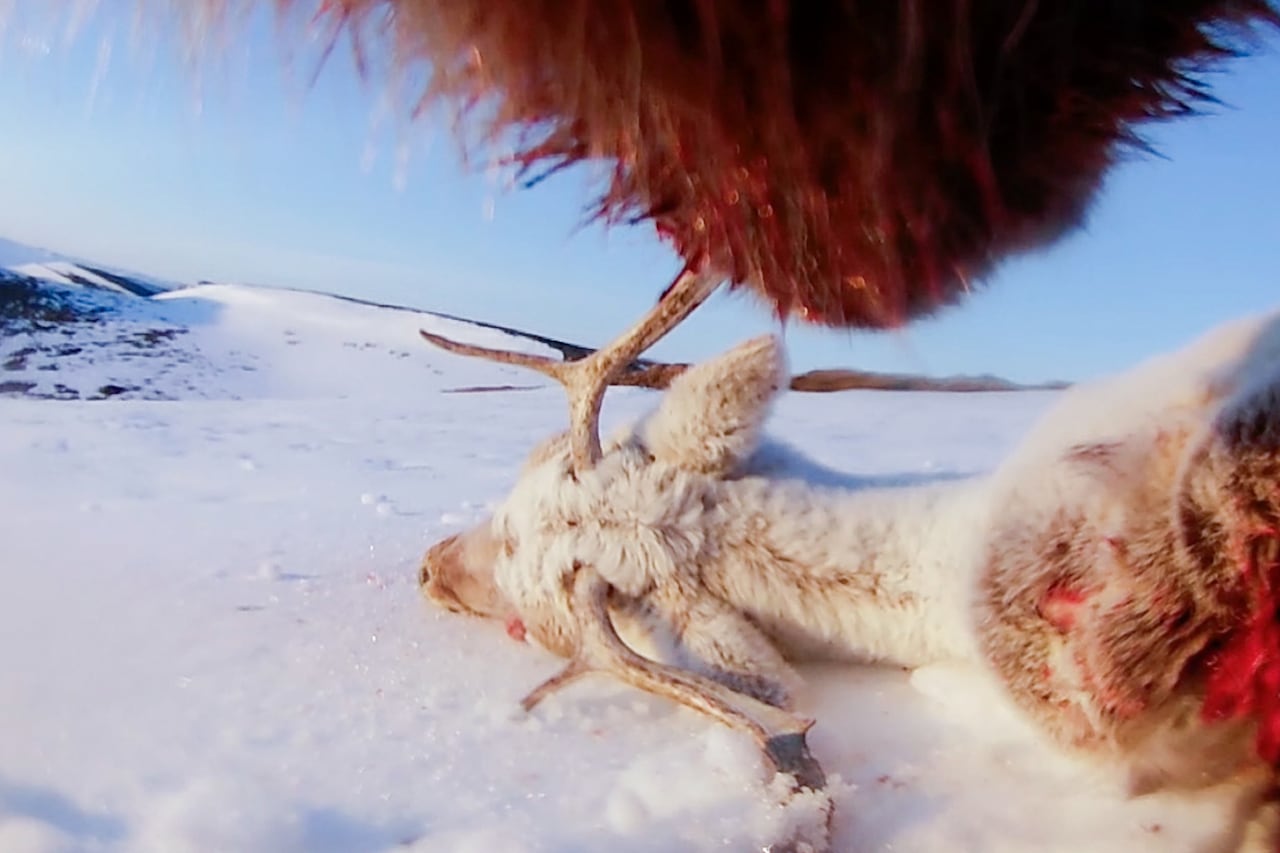 This image shows a bear approaching a caribou carcass on the snow-covered tundra. (Washington State University/AP)
They don’t fatten up the way salmon-eating bears do. Those bears can reach up to 450 kilograms. These Arctic grizzlies are small in comparison, reaching up to 150 kilograms, Vincent said.
To initially fit the bears with the collar cams, the researchers tracked them through the snow by helicopter last May.
Pruszenski fired tranquilizer darts from the air, with Vincent keeping track of injection times and helping determine when the bear was safe to approach on the ground.
They placed the collars on the bears, keeping them loose enough that the bears could grow into them as they put on weight, but not so loose that they would fall off as the bears go about their rough-and-tumble lives.
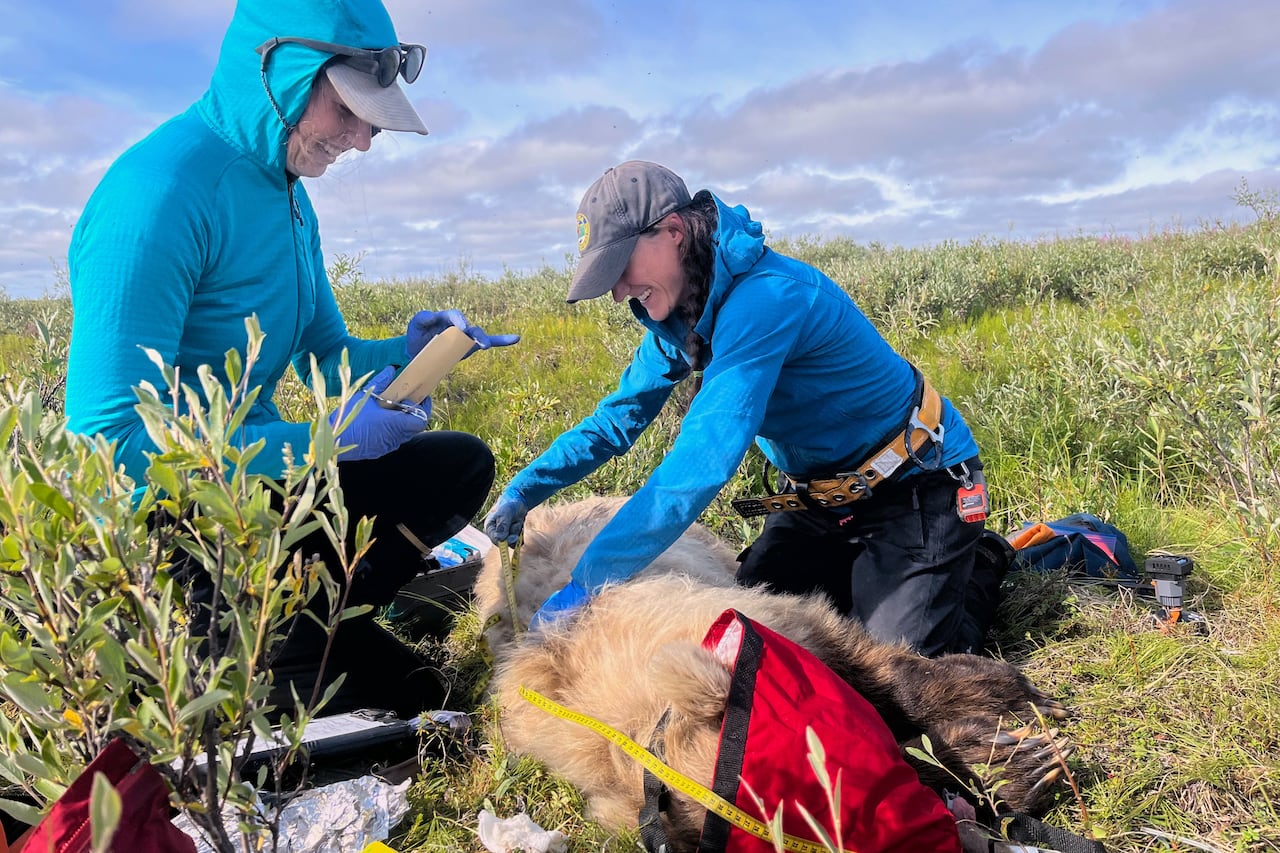 Washington State University doctoral student Ellery Vincent, left, and Alaska Department of Fish and Game Wildlife Biologist Jordan Pruszenski taking measurements and samples of an anesthetized grizzly bear prior to affixing a video collar on it last August. (Rob Kozakiewicz/AP)
“It is not difficult, but there is a lot of thought that goes into making sure the collar is adjusted properly,” Vincent said.
The researchers darted the bears again in August to replace the collars and in September to download data. The researchers also measured the bears’ weight gain and body fat.
When those collars came off, the state wildlife department replaced them with GPS collars.
That data could determine how oil-field development is impacting bears and help identify where they den during the winter, areas that oil companies must avoid when they build winter roads between drill sites.
Short clips, but deep insight into bear life
The cameras can record up to 17 hours of video. In the spring and summer, they took a short video clip — four to six seconds — every 10 minutes. In the fall, due to the encroaching darkness, they recorded clips every five minutes during daylight.
Despite their brevity, the clips provide a rare perspective of how the bears thrive on the desolate North Slope, an area that covers about 243,459 square kilometres but is home to only about 11,000 people. Nearly half of the residents live in Utqiagvik, the U.S.’s most northern community, formerly known as Barrow.
“One thing that’s really nice about these bears is that when they’re foraging on a particular food they tend to do that one thing for a long period of time, so these bears will spend pretty much their entire day eating, so the chances of us actually seeing what they’re doing are pretty high,” Vincent said.
The cameras also caught an encounter between a bear and pack of wolves.
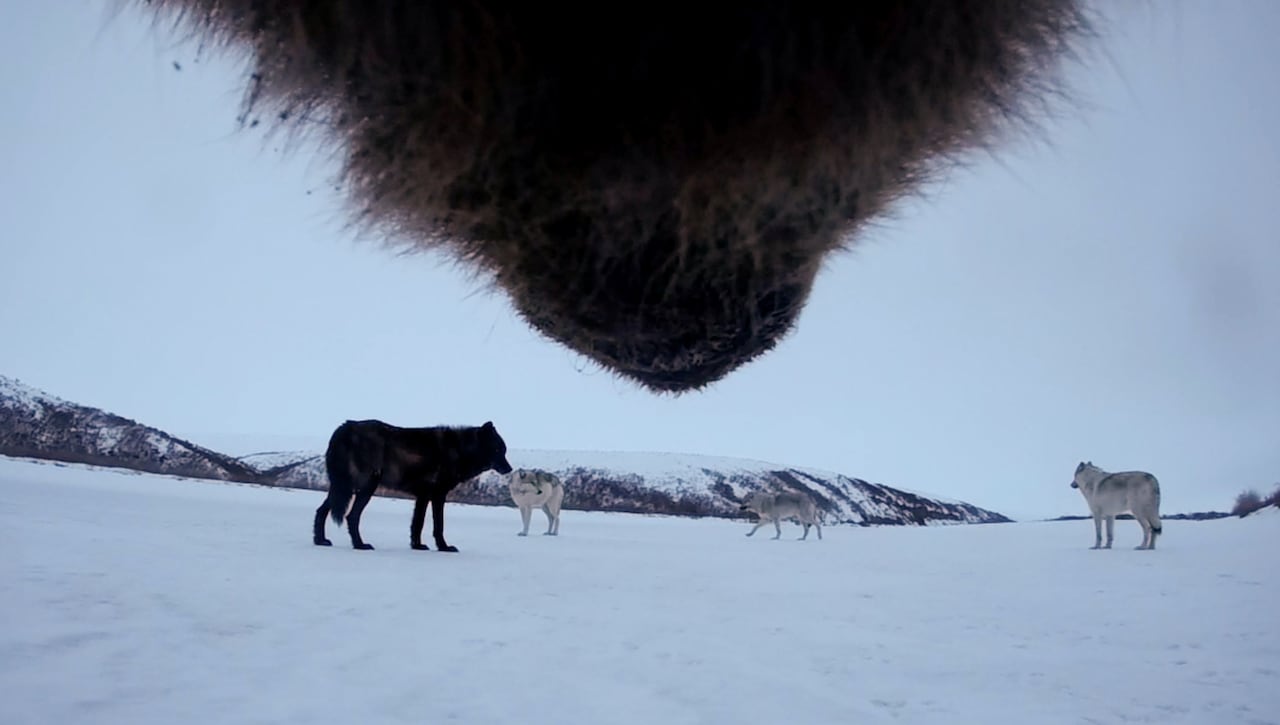 This image taken from a bear’s collar camera shows the bear encountering a wolf pack. (Washington State University/AP)
It occurred after the bear had emerged from hibernation in May. He was not eating yet, so there was no adverse interaction with the wolves over food, she said. There were no wolves visible in the next clip, indicating it was a peaceful exchange.
“I think they both decided that it wasn’t worth it, so they just looked at each other, then moved on,” Vincent said.
The study will continue for another two years, with plans to add collars to 24 more bears.