

The competition
At the time of writing, a 256GB/8GB Redmi Note 15 5G (not to be confused with the Redmi Note 15 Pro 5G or the Redmi Note 15 4G) will run you around €300. That’s about €80 less than the same memory tier of the Redmi Note 15 Pro 5G. That’s pretty much what we would call higher budget or mid-range pricing on today’s market, and there are plenty of good alternatives out there to consider.
From within Xiaomi’s own ranks, the Poco X7 Pro instantly comes to mind. Its main claim to fame is the excellent MediaTek Dimensity 8400 Ultra chipset. Paired with fast UFS 4.0 storage, it offers performance on a different level. There is a lot more battery to go around on the Poco as well, and much faster charging. The Redmi has a slightly larger display and an arguably better main camera, though.




Xiaomi Poco X7 Pro • Xiaomi Poco M8 Pro • Samsung Galaxy A56 • Honor 500
Also from Xiaomi’s lineup, there is the new Poco M8 Pro, which is rapidly gaining popularity within our database and with good reason. It offers even better ingress protection than the Redmi Note 15 5G, also a bigger and Dolby Vision certified display, a more modern and more potent Snapdragon 7s Gen 4 chipset, a noticeably bigger 6,500 mAh battery with much faster charging and generally better connectivity. Honestly, we can’t see ourselves recommending the Redmi Note 15 5G over the Poco M8 Pro.
If Samsung is more your speed, you can definitely fit a Galaxy A56 within budget. To be perfectly frank, the Redmi Note 15 5G has it beat in some obvious ways, like display and battery. Still, the Galaxy A56 is a solid all-rounder that does not disappoint. Its biggest draw is arguably One UI, which is accompanied by a whopping six-year software update promise.

Honor has its number series to put up as contenders. The older Honor 400 currently retails for a bit under €300 for the 256GB/8GB variant while offering perks such as a better Snapdragon 7 Gen 3 chipset and a more dependable and generally higher-quality camera setup. However, if you are going with team Honor, the Honor 500 is just around the corner in Western markets. For a few bucks over €300, you can get a brighter display, a more potent chipset and a much bigger battery, while the excellent camera setup is largely carried over.
Our verdict
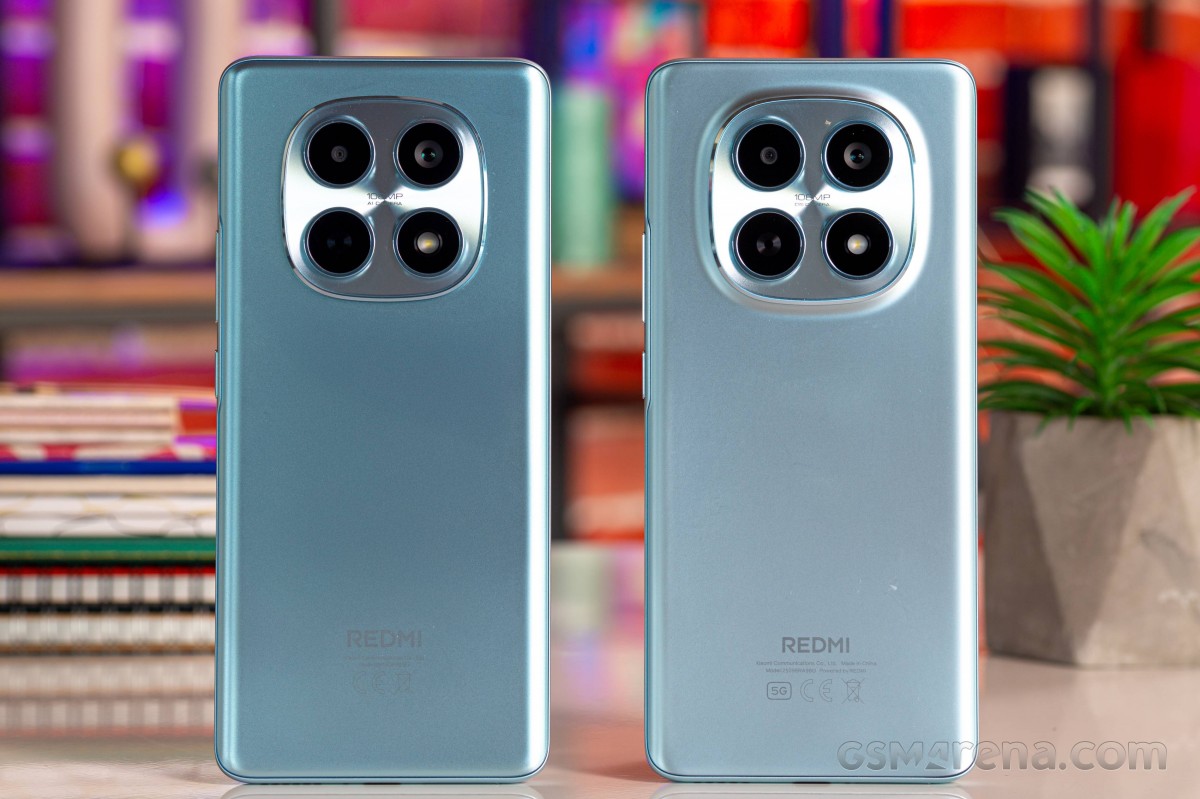
The Xiaomi Redmi Note 15 ends up being exactly what it looks like on paper – a very sensible, very balanced midranger that doesn’t try to wow you with a single standout feature, but also avoids any major blunders.
Its strongest aspects are the display, battery life and overall day-to-day usability. The AMOLED panel is bright, smooth and HDR-capable, making it one of the nicer screens you can get around this price. Battery endurance is comfortably above average, and while the 45W charging isn’t class-leading, it’s fast enough to keep range anxiety at bay. Add to that the great thermal behavior and stable performance of the Snapdragon 6 Gen 3, and you get a phone that feels reliable and predictable – two qualities that matter more than raw benchmark numbers in this segment.
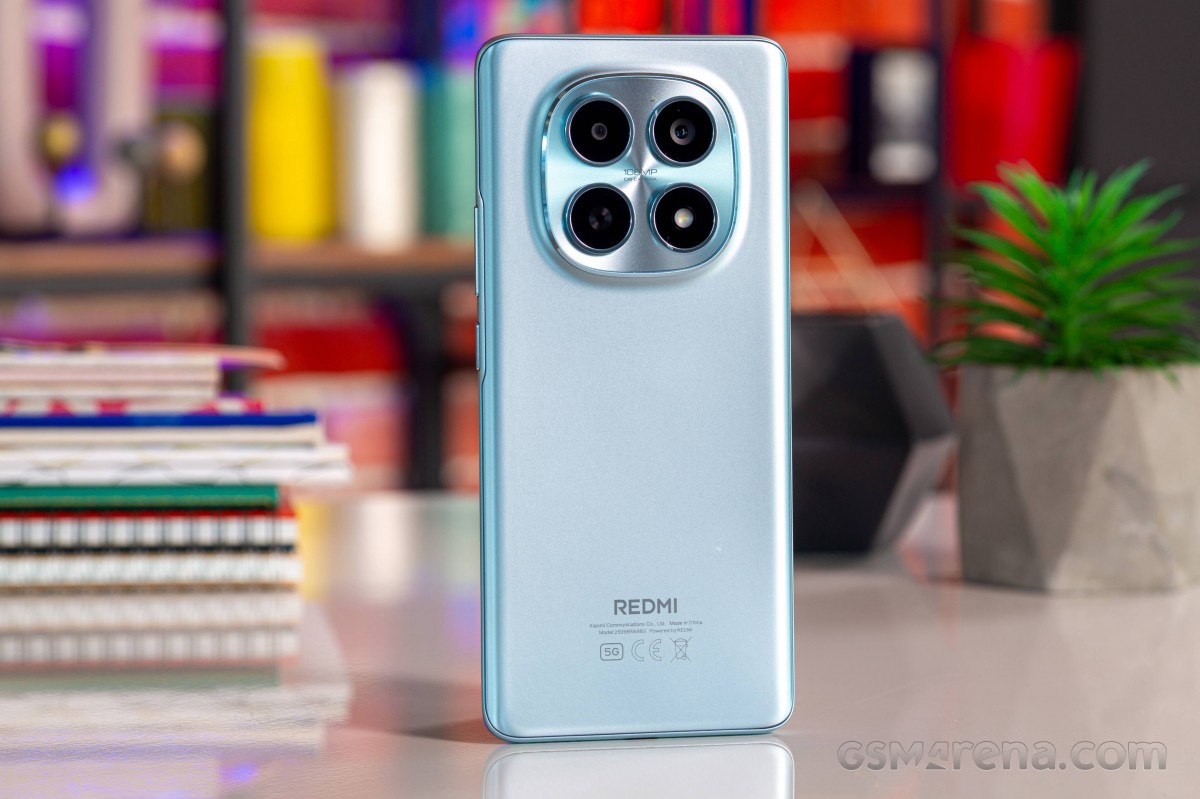
The main 108MP camera also pulls more than its weight. In good light, it captures detailed, lively photos with dependable dynamic range, and it remains competent after dark. The ultrawide and selfies are merely okay, and video is a bit of a mixed bag due to the lack of stabilization in 4K, but stills are where this Redmi does most of its convincing.
Where the compromises show is in the details. The lack of a telephoto camera, modest GPU performance for gaming, and the somewhat cut-down feature set in HyperOS (including the missing AI tools on some units) remind you that this is not a “Pro” model. Charging is only mid-pack, the speakers favor loudness over finesse, and connectivity is missing a few modern extras like Wi-Fi 6.

At roughly €300, though, the Redmi Note 15 5G still makes a strong case for itself. It’s a safe pick for anyone who wants a big, high-quality display, long battery life, and a dependable main camera, all wrapped in a durable body with solid software support. Power users and mobile gamers can find faster options, and camera enthusiasts may want a more versatile setup, but for the average user, this Redmi hits a very agreeable sweet spot.
Pros
IP66 rating and advertised drop resistance.
Bright, high-quality 120Hz AMOLED with HDR10+ support.
Excellent battery life.
Very good main camera photos, day and night.
Stable performance and excellent thermal control.
Pretty long software support promise.
Cons
No telephoto camera; ultrawide is only average.
No 4K video stabilization.
Gaming performance is modest for the price.
Wi-Fi 5 only; feature set varies by market (eSIM, NFC, AI tools)
Speakers get loud, but sound quality suffers at higher volumes.