

HyperOS 2 on top of Android 15
The Redmi Note 15 5G runs HyperOS 2 based on Android 15 out of the box. It’s hard not to feel a little underwhelmed, as some other Xiaomi models have already made the jump to HyperOS 3 and Android 16, setting a higher bar in this regard.
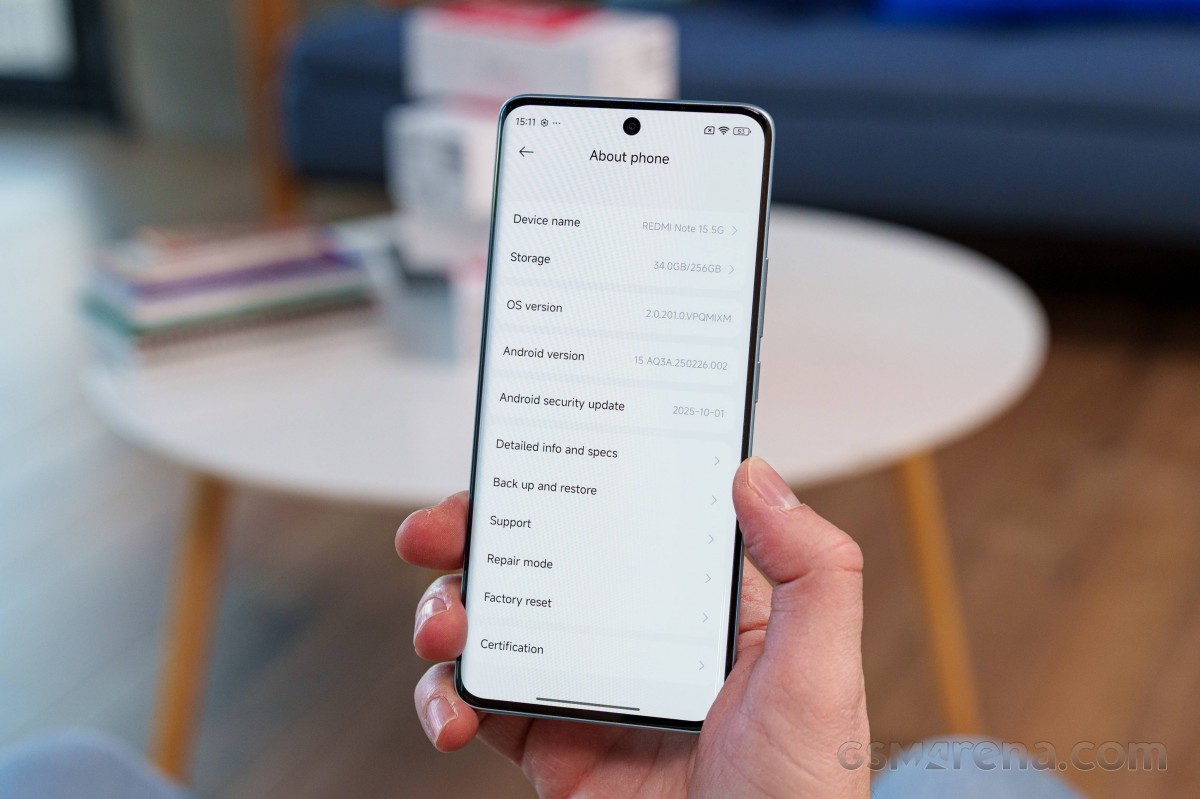
As far as support goes, Xiaomi has announced that the Redmi Note 15 series will receive 4 major OS updates and 6 years of security patches, which is in line with the most up-to-date software policy for the Redmi Note 14 family.
HyperOS 2 will feel instantly familiar to anyone who has used a HyperOS 1 device or a Xiaomi handset from the MIUI era. The interface has received some extra polish, along with a handful of new AI-powered features, while Xiaomi also promises various under-the-hood optimizations.

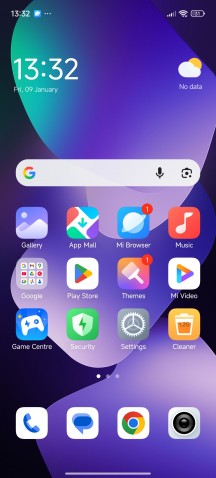
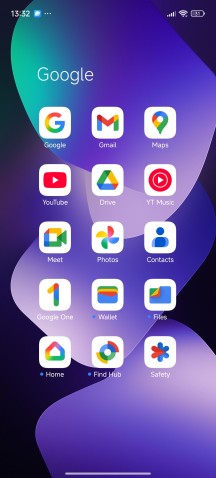
HyperOS 2 on the Redmi Note 15 5G
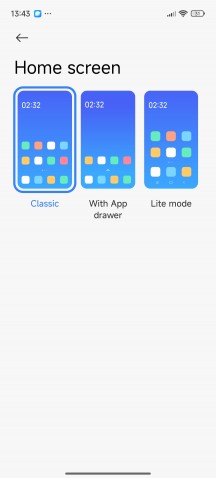
On our Redmi Note 15 Pro unit, you get the choice between using an app drawer or keeping all apps directly on the home screens, which is something we always appreciate. Some HyperOS branches omit the app drawer altogether, so it’s nice to see the option present here. There’s also a third, “light” interface mode on offer, which enlarges icons and simplifies access to certain features.
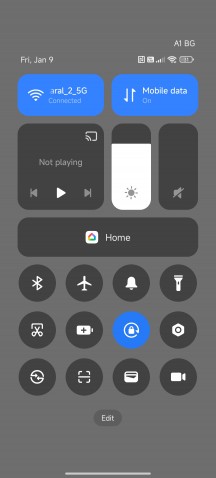
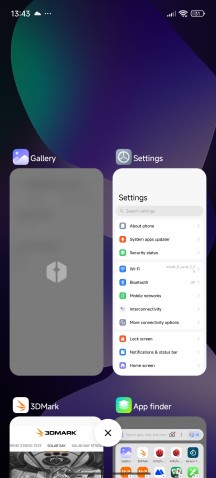
HyperOS 2 sticks with its split approach to notifications and controls, offering separate Notification and Control Center pages with no option to merge the two into a single view. The home screens themselves support the usual mix of apps and widgets, along with two different styles of large folders.
More HyperOS 2.0
Our Redmi Note 15 5G unit is a bit light on AI features. Google Gemini comes preinstalled, and you also get Circle to Search, but that’s about where the list ends. Xiaomi’s own AI tools, such as AI Writing, AI Interpreter, AI Translate, or AI Speech Recognition, are notably absent.


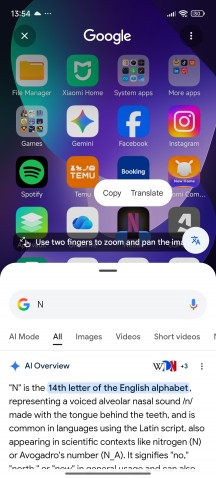
Gemini • Gemini • Circle to Search
You still get some AI image editing features in the gallery app, but again, not nearly the full set. Things like AI beauty filters and a basic erase and expand tool are present, but nothing fancier like an advanced object or reflections remover.

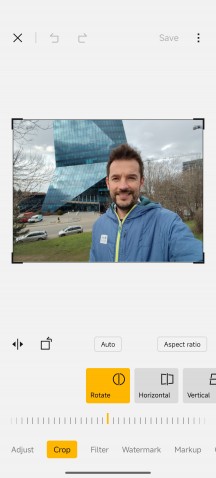

Image editing in Gallery app
It’s also possible that this limitation applies only to our review unit, as Xiaomi’s official promotional materials paint a different picture. The company explicitly lists an “AI Creativity Assistant,” complete with features like AI Erase Pro, AI Remove Reflection, AI Image Expansion, AI Sky, AI Bokeh, AI Cutouts, AI Image Enhancement, AI Beautify, AI Film, and more.
If those tools are indeed absent on certain units, the omission is likely a deliberate cost- or segmentation-driven decision rather than a technical one. After all, most of Xiaomi’s current AI features rely on cloud processing and would run just fine even on more affordable Redmi hardware.
The Redmi Note 15 5G is based on the Snapdragon 6 Gen 3 chipset. While not a chart-topper in any way, it is notably more potent than the MediaTek Helio G200 Ultra found inside the Redmi Note 15 Pro 4G, especially in the GPU department.
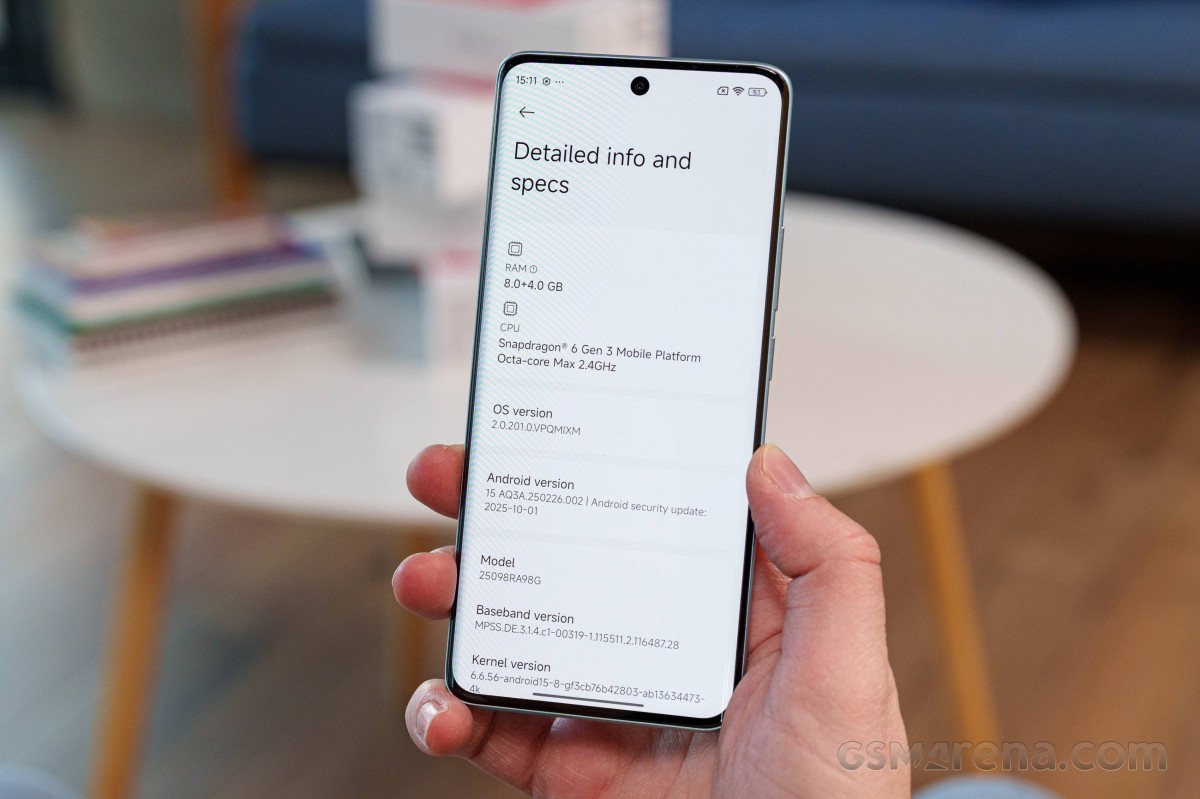
The Snapdragon 6 Gen 3 is a modern Qualcomm chip, based on a 4nm Samsung manufacturing process. It has a symmetrical CPU setup with two four-core clusters. One with four Cortex-A78 cores, clocked at up to 2.4GHz and another with four Cortex-A55 cores, working at up to 1.8GHz. The latter cores date back to 2017, so they are definitely not the latest and greatest. In the GPU department, there is an Adreno 710.
The Snapdragon 6 Gen 3 is paired with LPDDR4X RAM – anywhere between 6GB and 12GB of it. The Redmi Note 15 5G uses UFS 2.2 storage chips. The available memory tiers are: 128GB 6GB RAM, 128GB 8GB RAM, 256GB 8GB RAM, 512GB 8GB RAM and 512GB 12GB RAM. However, not every spec is equally easy to find or even available on every market. Our review unit is a 256GB/8GB one.
Looking at some actual benchmark scores, the Snapdragon 6 Gen 3 appears to be on par in the CPU department with the MediaTek Dimensity 7400 and 7300. As we mentioned, it is notably better than the MediaTek G100 and G200. Still, you can get much better CPU performance at this price. The same goes for the GPU. This is where the Snapdragon 6 Gen 3 really excels compared to the Helio G100 and G200.
In more practical terms, the Redmi Note 15 5G runs smoothly and without hiccups or slowdowns. It is not exactly a powerhouse, but if you temper your gaming expectations, it is more than capable of pretty much every other task. This is more than what can be said of the Redmi Note 15 Pro 4G, which does lag and stutter.
Thermal-throttling
The Snapdragon 6 Gen 3 is not a particularly powerful chip, but consequently, it doesn’t run hot either. Whatever heat it does put out is masterfully handled by the cooling solution inside the Redmi Note 15 5G, so much so that thermal throttling is practically not a thing here, even with extensive torture testing.
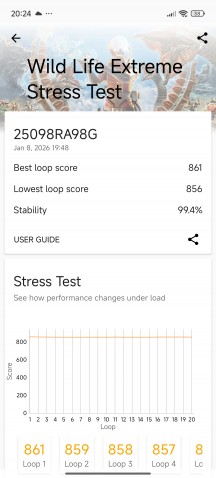
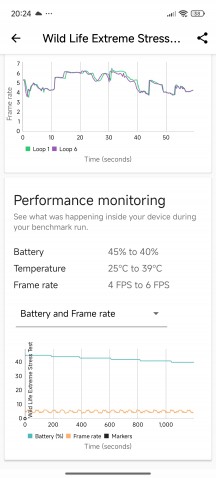
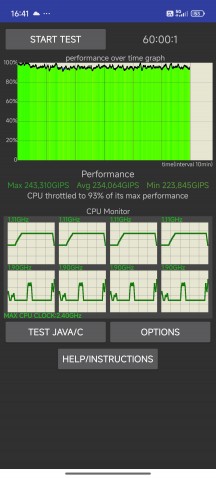
Thermal-throttling
The phone’s surface barely gets lukewarm and remains perfectly comfortable to touch and hold.