
NEED TO KNOW
A great white shark has surfaced unusually close to the Alabama shore after traveling over 3,000 miles
The female shark, Ernst, has drawn attention for her journey, which is tracked with pings
Researchers shared what the shark’s unusual journey can teach us
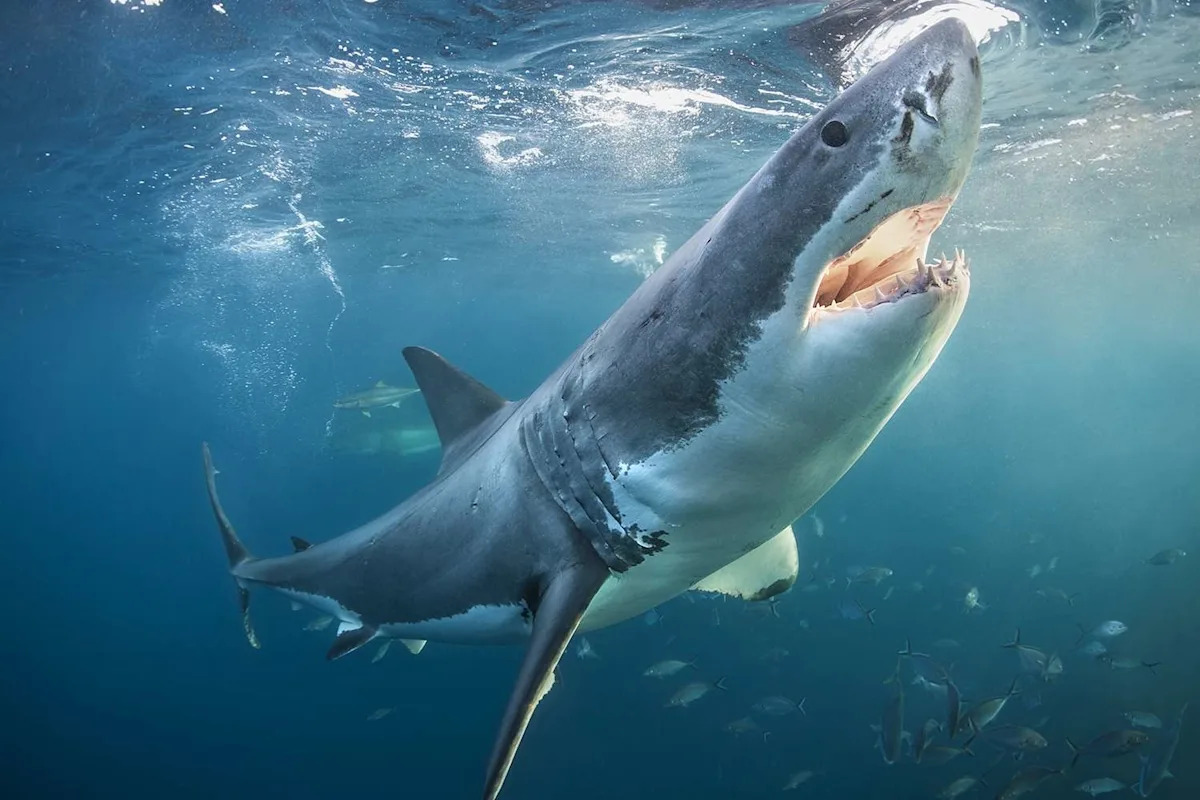
A massive great white shark is captivating public attention for her long and unusual journey to warmer waters.
Researchers have been tracking the 12-foot, 1,009-pound female shark, whom researchers named Ernst, since Fall 2025. She was first tagged in Mahone Bay, Nova Scotia, on Oct. 4, 2025, according to data shared by Ocearch, a non-profit organization dedicated to tagging and tracking sharks.
The shark, which Ocearch says is a “sub-adult” (the stage in between juvenile and adult), has since trekked the entire Eastern coast of the United States — and she didn’t stop there.
Ernst arrived in the Gulf of Mexico in November and has continued westward, according to satellite pings — which register when the shark surfaces — recorded by Ocearch. She has traveled 3,217 miles in 118 days, according to data, and last surfaced off the coast of Mississippi in the early morning of Friday, Jan. 30.
But it’s not the length of her journey that has drawn attention; it’s her proximity to land. Researchers say it is uncommon for a great white shark to swim so close to shore.
The shark’s surfacing close to the Alabama shore is “kind of unusual,” Ocearch founder Chris Fischer told SWNS, citing the organization’s past data. “She has really moved into one of the farther parts of where we see them as moving west,” Fischer told the outlet.
While it’s not exactly unprecedented, the researcher clarified to the outlet, for “the majority of the sharks, this is pretty far reach.”
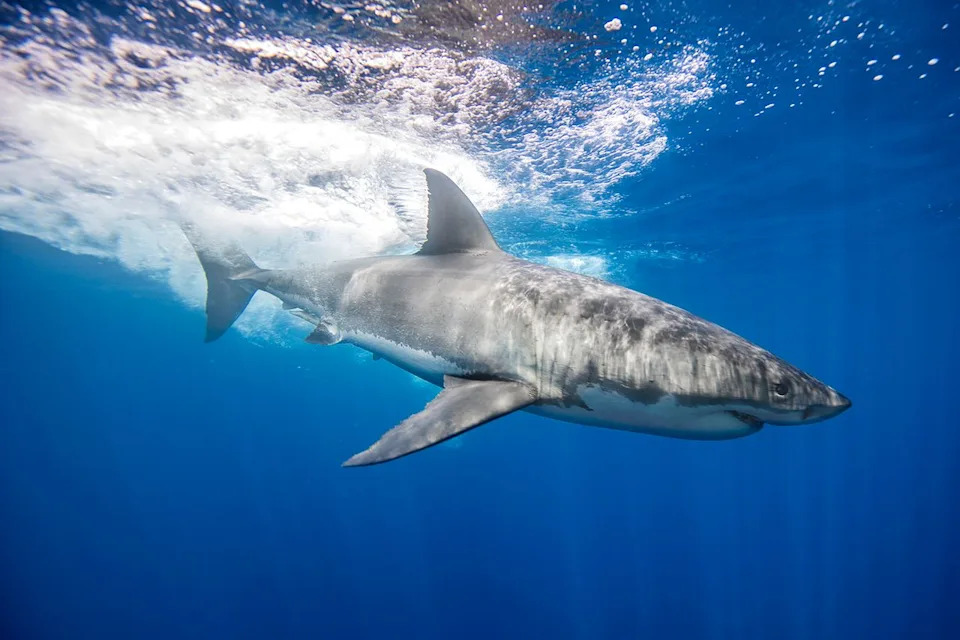 Stock image of a great white shark
Getty
“It’s kind of unusual to see her so tight to the beach there,” Fischer said of Ernst’s stint off the Southern U.S. coast.
John Tyminski, a data scientist with Ocearch, echoed this in an Instagram post shared by the official Ocearch account. Throughout her journey, the great white has amassed fans online, where the organization has kept followers looped in on her lengthy expedition.
“We’ve noted tagged white sharks utilizing this part of the northeastern Gulf in other years – most commonly well offshore and near the continental slope,” Tyminski said in the post. “Seeing one move within a few miles of shore is certainly less common and highlights our need to better understand the drivers of this apex predators’ movements in the Gulf.”
Speaking with SWNS, Fischer also offered some insight about the shark’s unusual appearance so close to shore, stating that it is a positive sign for the area.
Ernst’s surfacing, the non-profit founder told the outlet, is “a great sign for the region because this is a signal that there’s a lot of life and a lot of biodiversity.”
“These white sharks don’t come where the ocean is highly compromised,” he added.
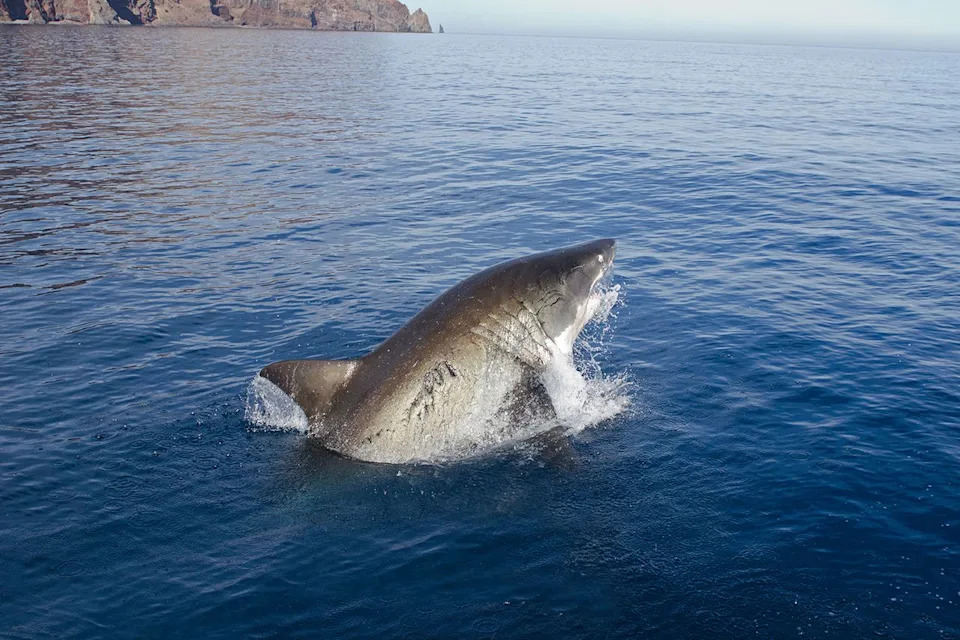 Stock image of a great white shark
Getty
Never miss a story — sign up for PEOPLE’s free daily newsletter to stay up-to-date on the best of what PEOPLE has to offer, from celebrity news to compelling human interest stories.
Fans of the great white can keep an eye out for new pings on Ocearch’s Global Shark Tracker, which also offers more insight into where researchers got the shark’s moniker.
“The name Ernst was chosen by Team Tancook in honor of the ferry William G. Ernst, which has connected the communities of Big and Little Tancook Islands to the mainland since 1982,” referring to Canadian islands off the coast of Nova Scotia, where the great white was first tagged in 2025. “For more than four decades, this vessel has served as a lifeline for residents—providing vital transportation, fostering connection, and representing the strength of coastal communities.”
“Dedicated to the ferry’s hardworking crew, many of whom call Big Tancook Island home, Ernst the shark carries forward that same spirit of connection, resilience, and teamwork that keeps both island life and ocean research moving forward,” the website states.
Read the original article on People