
NEED TO KNOW
A powerful X-class solar flare triggered a fast-moving CME, increasing aurora chances across up to 11 northern U.S. states on Wednesday night Best viewing is after dark, low on the northern horizon, from Alaska and northern border states, with possible sightings farther south if the storm intensifiesTo take photographs, use Night Mode or long exposures on your phone to capture colors invisible to the naked eye
A powerful burst of solar energy is setting the stage for a potential northern lights show across parts of the U.S. tonight!
After an intense X-class solar flare erupted from sunspot AR4366 on Feb. 1 — the strongest solar event of 2026 so far — a coronal mass ejection (CME) reached Earth sooner than expected, prompting upgraded aurora forecasts for Wednesday night, Feb. 4, into early Thursday, Feb. 5.
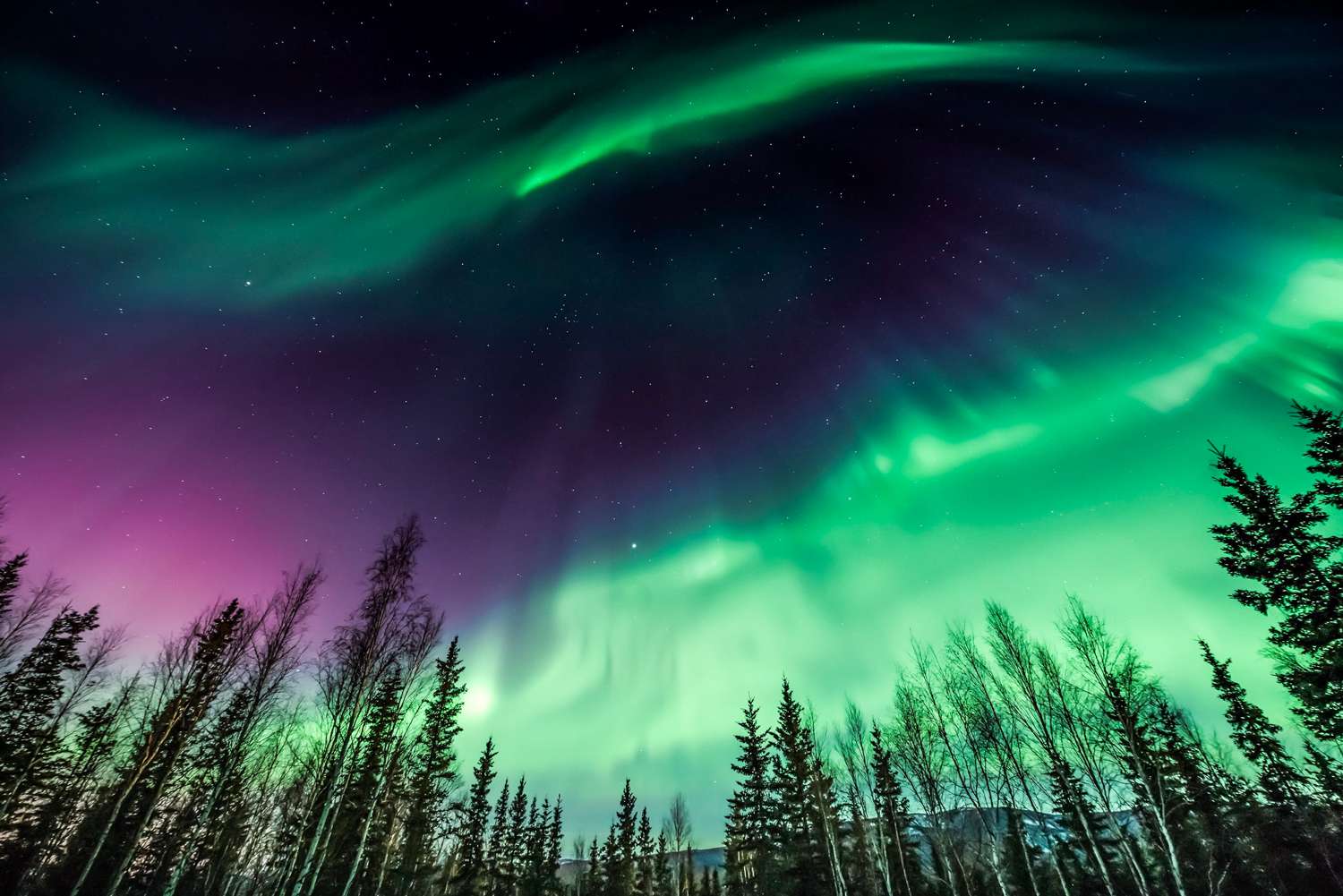
The northern lights (aurora borealis) is a result of geomagnetic storms, which occur when charged particles from the sun collide with gases in the Earth’s atmosphere, creating brilliant waves of light in the sky. Still, their visibility depends on several factors, including intensity and location.
According to the National Oceanic and Atmospheric Administration, even a partial impact from this CME could spark G1–G2 geomagnetic storm conditions, pushing auroras farther south than usual.
To add to the excitement, satellites also detected another powerful solar flare on Feb. 4, increasing the chances of additional activity through the weekend.
With AR4366 — a sunspot region — now rotating directly toward Earth, positioning our planet in what scientists call the “strike zone,” skywatchers in up to 11 U.S. states near the Canadian border could catch shimmering curtains of green, purple and red after dark.
If conditions intensify, the northern lights display may stretch even farther south!
Here’s everything you need to know about when, where and how to watch.
When will the northern lights be visible?
Multicolored sky during the Northern Lights.
Roberto Moiola/Sysaworld/Getty
Look up, stargazers!
The best viewing window begins after sunset tonight, Wednesday, Feb. 4, extending into the early hours of Thursday, Feb. 5. However, the exact timing depends on solar wind speed, which can change quickly.
For real-time updates, be sure to monitor NOAA’s 30-minute aurora forecast, SpaceWeatherLive or aurora apps like Aurora Now and My Aurora Forecast.
Where will the northern lights be visible?
Northern Lights.
Getty
Forecast models show auroras potentially dipping into up to 11 states near the Canadian border, including Alaska, northern portions of Washington, Idaho, Montana, Wyoming, North Dakota, South Dakota, Minnesota, Wisconsin, Michigan and Maine.
Still, if the CME delivers a more direct hit, sightings could extend farther south!
Look towards the lower northern horizon from a dark location. The darker the sky, the better your chances, even during moderate geomagnetic storms.
How to watch the northern lights?
Aurora borealis display near Fairbanks,.
Gallo Images ROOTS Collection/Getty
Find a spot away from city lights using a light-pollution map or dark-sky finder.
You’ll need a clear northern sky and patience! Remember, auroras are unpredictable by nature and often come in waves.
Keep checking live forecasts throughout the evening, as conditions can shift minute by minute.
How to photograph the northern lights?
You don’t need professional gear to capture the moment!
Use your phone’s Night Mode or Pro Mode with the main lens (not ultra-wide). Stabilize your device on a tripod or solid surface, and shoot in RAW if available for easier editing later.