The United States is no longer the only country to see avian influenza in dairy cattle. It’s now popped up in Europe.
The news came after disease investigations in the Netherlands, according to a Jan. 23 article published on Science.org. Officials found antibodies — evidence of prior infection — in a dairy cow’s milk. Officials thought to test cattle after a dead cat on a farm in the northern province of Friesland was found to have been killed by the H5N1 bird flu virus.
Read Also
CCIA prepares to make traceability transition
The Canadian Cattle Identification Agency may not be proposing regulatory changes for traceability, but it’s the one delivering the program.
Veterinarians collected blood and milk samples from cattle. They did not find the virus itself, although the antibody finding suggested a recent flu contraction in that animal.
So far, there’s been no evidence cattle from other farms have been infected, the Netherlands agriculture minister said.
WHY IT MATTERS: Dairy cases of bird flu spread rapidly through the U.S. starting in 2024, infecting animals and leveling an economic hit to American dairy farms. Canada has not found any cases in its dairy herd so far.
Canada continues to be spared from dairy bird flu, despite proximity of the U.S. where, at one point in 2024, the U.S. Food and Drug Administration did a survey in which one in five retail milk samples sampled found killed remnants of the virus.
Containment efforts have since gained considerable ground. The U.S. Department of Agriculture has reported no new cattle cases in the last 30 days.
But the recent Dutch infection is a reminder that bovine bird flu isn’t flapping its way into the history books just yet.
Cases haven’t quite cut off in the U.S. — there was one in Wisconsin as recently as December, although summer 2025 saw a distinct slowdown. In total, the U.S. outbreak has spanned 1,084 cases across 19 states since March 2024.
“It was quiet over the summer, which is expected with influenza viruses. This started to change in the fall, again this is typical for influenza viruses,” says Stacey Schultz-Cherry, of the St. Jude Children’s Research Hospital in Memphis, Tenn., in an email to the Co-operator.
Schultz-Cherry and her fellow investigators are learning more about the virus and how it mutates. The HPAI strains in question — belonging to avian flu clade 2.3.4.4b — appear to differ from other bird flu types in their ability to infect and replicate in respiratory and mammary cells from cows and other species.
“The reasons appear to be a mix of changes in the viruses as well as what happens to the cells during infection,” she says.
“For example, our studies suggest that the bovine strains rapidly kill the respiratory, but not mammary epithelial cells. We are trying to better understand why this is happening.”
The research has split off into several avenues, including how humans are infected and how immune history to other kinds of influenza may protect people if exposed to the new bird flu strains.
Could have been worse
Bovine bird flu’s footprint has been sizable, but it could have been far worse, says University of Guelph veterinary professor Shayan Sharif.
The main reasons it didn’t, Sharif said, is a credit to the U.S. veterinarians and agencies who identified, studied and contained the virus as securely as possible. However, he added, it may have been a miracle it was discovered in the first place. Dairy cattle in the southern U.S. had been getting sick for some time before anyone thought to test for bird flu.
“I don’t know if it was serendipity that they connected clinical science in dairy cows to HPAI, because that would not have been he first thing that would come to anyone’s mind, because what they saw wasn’t anything very specific for a disease,” Sharif noted.
“What they saw was that cows were experiencing lack of appetite, dropping their milk production (and the) milk looked funny.”
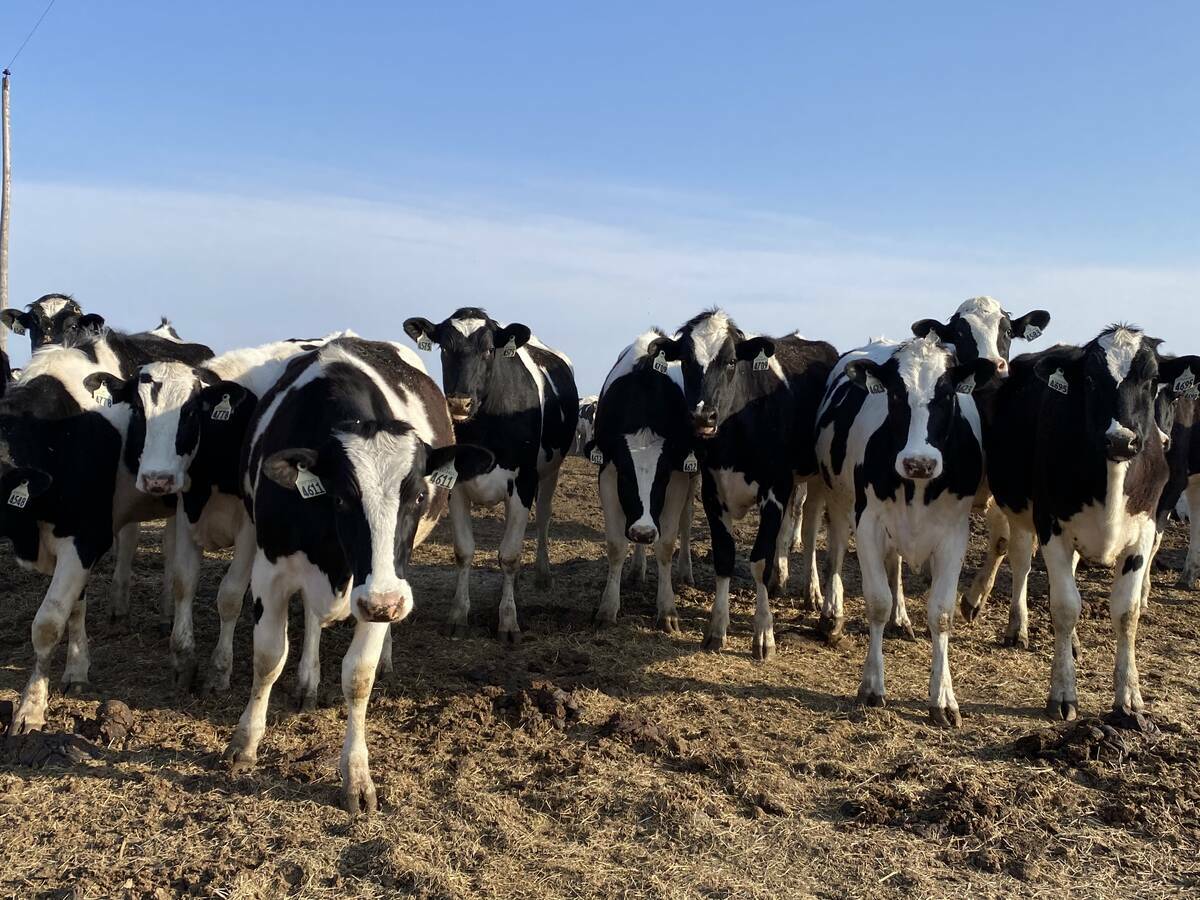 North America’s dairy bird flu problem slowed significantly over summer 2025, which experts note is typical of influenza viruses. Photo: File
Sharif calls the virus “unique” and — strong containment protocols by the U.S. Centers for Disease Control and Prevention, Animal and Plant Health Inspection Service (APHIS) and the Canadian Food Inspection Agency (CFIA) aside — he still wonders why it never slipped across the Canada-U.S. border to Canadian dairy cattle.
Wild birds are a known vector of the disease. Such migratory birds don’t recognize borders and, depending on species, travel back and forth between the U.S. and Canada on a biannual basis.
“It became something that was predominantly present in U.S. flyways and it seems to have been something really specifically in the U.S., because there is no mention of it (infecting dairy cattle) in any other parts of the globe (or) in Canada,” said Sharif — at least until the evidence from the Netherlands was found.
“It wasn’t because we didn’t look for it hard enough. We did actually look for it very carefully, but it was nowhere to be found,” he said.
Key bird flu discoveries
Sharif also commends USDA, APHIS and others involved in the response for quickly identifying risk factors, including possible animal-to-animal transmission vectors such as cow-to-cow, cow-to-calf and cows to other animals, such as barn cats and birds.
To name one example, they learned it could be spread from cow to cow through milking machines and other dairy barn equipment.
“That was, I would say, one of the best sets of studies that were done in the U.S. that led to the discovery that the virus can be spread from cow to cow,” Sharif says.
Transmission from cows to humans was also determined to be a low-level possibility, although it was reported in those exposed to dairy cattle and other livestock.
“It also became clear that humans that are in contact with the virus usually catch the virus through their conjunctiva (pink eye),” explains Sharif.
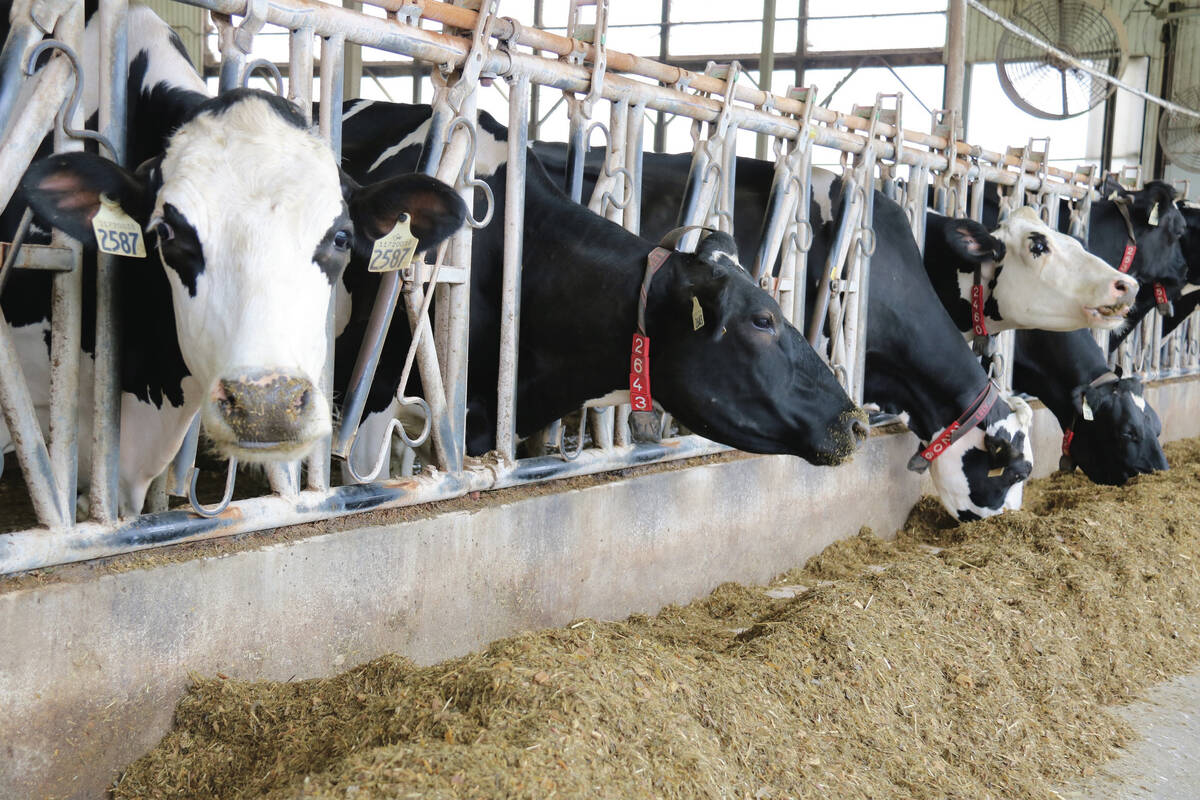 No Canadian dairy operations have been found infected with the bovine HPAI to date. Photo: John Greig
“Some of them become infected through the respiratory system, but it’s primarily because of the conjunctiva in in their eyes that they become infected.
“So if you have PPE (personal protective equipment) — for example goggles, gloves, coveralls and so on — you could actually protect yourself.”
Another component — one confirmed by the CFIA during the outbreak — was the role of pasteurization in preventing the spread of the virus to human consumers.
”They did a whole series of studies looking at milk and its capacity for harbouring the virus and what can be done in order to reduce the risk of virus transmission through milk such as … through pasteurization,” Sharif notes.
Finally, he commends U.S. and Canadian authorities for taking a risk-based approach to the outbreak.
Canada’s response included tightening the border for U.S. dairy cattle. Livestock fairs and exhibitions were also cancelled in the U.S. and greater scrutiny was placed around animal movement to reduce spread.
“They did it based on risk assessment of what this could pose to both human and also animal populations. So I think overall, it was a job well done, and I think that in Canada, the CFIA has done a really good job to ensure that the virus doesn’t come to Canada,” Sharif says.