
Published on Feb. 5, 2026, 11:00 AM
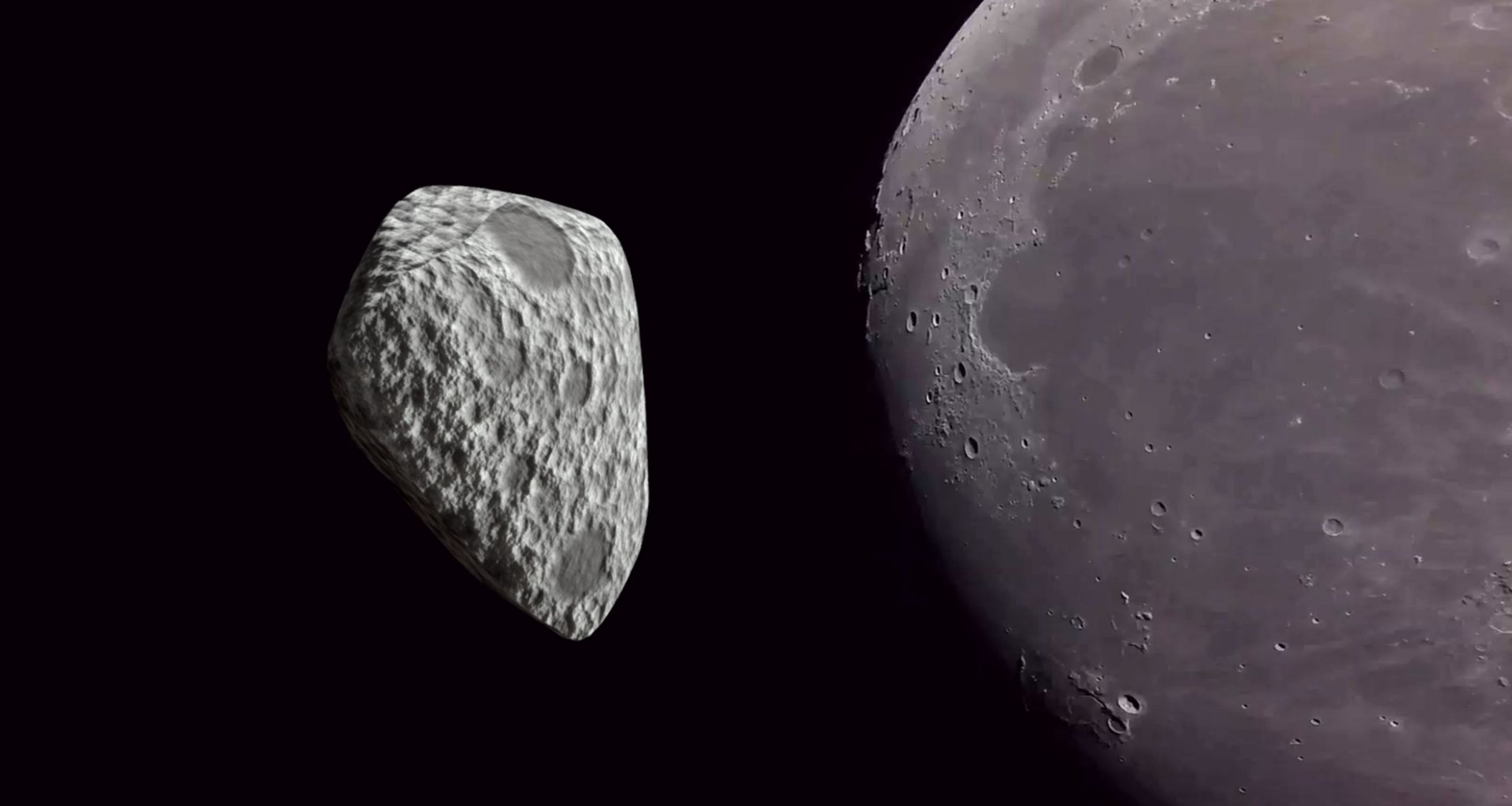
If 2024 YR4 strikes the Moon in 2032, we would not only witness the event, but we could also see the aftermath for decades to come.
On December 22, 2032, a sixty-metre-wide asteroid may strike the Moon. If this happens, it will not only produce a visible flash, easily spotted from Earth, but will likely be followed by periodic meteor storms streaking across our night skies.
Known as 2024 YR4, this space rock was discovered in late 2024 and initially caused some alarm, as it had a small chance of hitting Earth. Using observations of the object in the months following its discovery, astronomers narrowed down its potential orbital paths. This allowed them to completely rule out the possibility of an Earth impact, which is for the best. At around 60-metres wide, 2024 YR4 is roughly three times the size of the one that exploded over Chelyabinsk, Russia, in February 2014. If it were to hit somewhere populated, the damage would be catastrophic.
However, as safe as we are from that scenario, there remains the possibility that this asteroid could hit the Moon, instead.
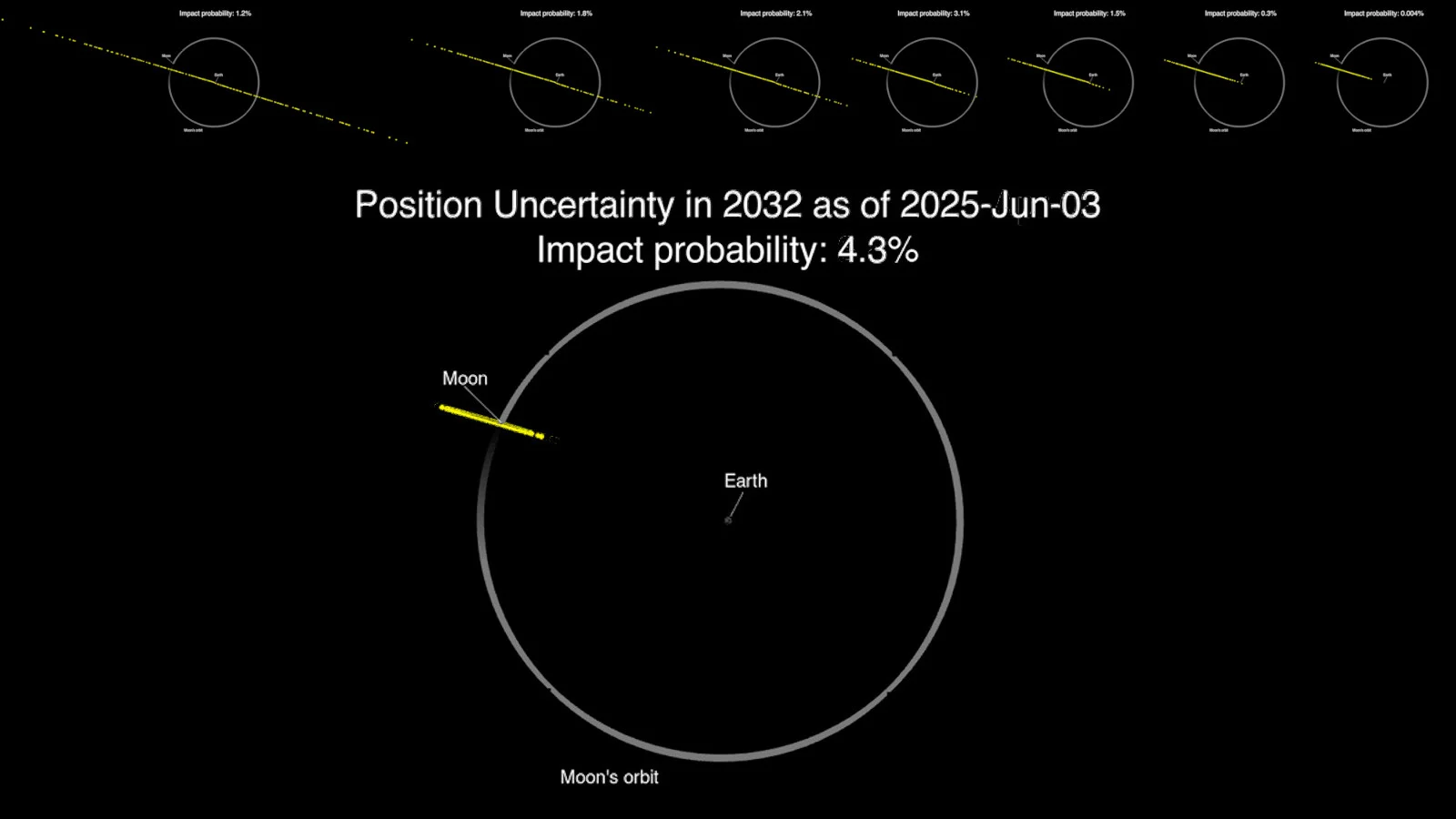
The latest plot for 2024 YR4’s trajectories through the Earth-Moon system on December 22, 2032, with a 4.3 per cent chance of striking the Moon on that date. Along the top, past computations show how the plots initially included potential Earth impacts, but refined over time. (NASA)
The probability of that impact is only 4.3 per cent. So, that means there is a 95.7 per cent chance that it will completely miss the Moon, and just continue on, harmlessly, into space.
Even with such low odds, though, the potential effects of such an impact make it worth studying. After all, we’re talking about a rock with a mass of around 280,000 metric tons slamming into the lunar surface travelling at a speed of over 46,000 kilometres per hour.
According to a team of Canadian researchers, led by Paul Wiegert from Western University, that impact would release the same energy as detonating 6.5 megatonnes of TNT. Based on that same study, which was published in August 2025, such a blast would carve a new crater into the Moon’s surface, roughly 1 kilometre in diameter, while launching an estimated 200,000 metric tons of lunar material into space.