
BOB MORAN AND THE DESEGREGATION OF THE ARGONAUTS
by James Fraser
March 30, 1950, was a landmark day in the history of the Toronto Argonauts. On that day, the club’s new president, Bob Moran, who had been in office for about four months, held a press conference at which he announced the signings of three new players. What made these signings especially newsworthy was the fact that these three young men had all been named by the Pittsburgh Courier, the biggest black-owned newspaper in the United States, as members of the Negro All-American football team for 1949.
Bob Moran deserves a more prominent place in Toronto’s sports history than he currently enjoys. He joined the executive committee that ran the Argos on behalf of the Argonaut Rowing Club in 1947, coming on board as the team’s treasurer. Two years later, in November 1949, Tommy Alison stepped down as team president after more than twenty years in office, and Moran was named his successor.
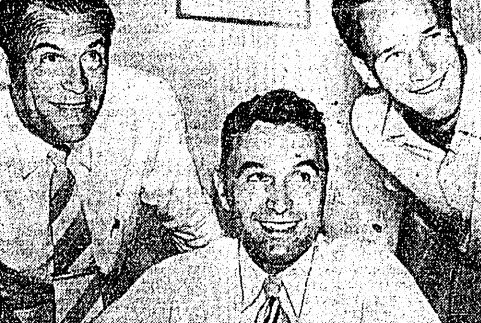
The Double Blue had finished the 1949 season out of the playoffs, missing the postseason for the first time in club history. In his first few weeks as president, Moran signalled his intentions to shake things up by securing the resignation of manager Earl Selkirk, removing popular head coach Ted Morris by giving him Selkirk’s job, and hiring University of Buffalo coach Frank Clair as the team’s new head coach.
Unknown to the press and the public, Moran also paved the way for his announcement of March 30, 1950, at an executive committee meeting held on January 5. Towards the end of the meeting, the minutes record that “it was the unanimous decision of the Executive that there was no objection to Mr. Moran contacting and obtaining the services of Negro players”.
The three Negro All-Americans whose signings Moran announced in March were Southern University quarterback Warren Braden, Florida A&M halfback Ulysses Curtis and Morgan State College tight end Marvin Whaley. The president also announced the signing of a fourth black player, former Montreal Alouettes fullback Billy Bass, whose fascinating story must wait for another time. They were not the team’s first black players, but they were well-known college stars whose signings served as a clear declaration that the Argos had left segregation behind forever.
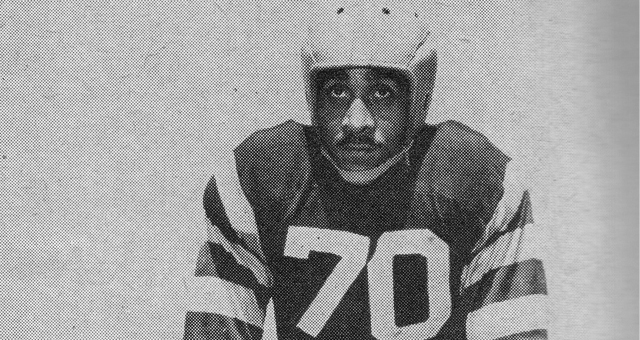
Warren Braden was in tough trying out at quarterback. Clair wanted an American starter at that position, but the league quota of seven Americans made a backup pivot from south of the border a luxury he could not afford.
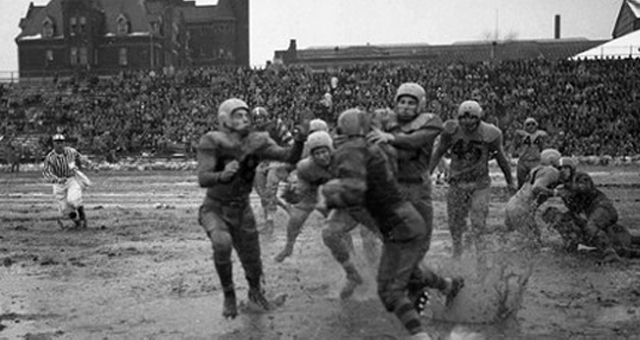
Unfortunately for Braden, the off-season merger of Hamilton’s Wildcats and Tigers had left the new Tiger-Cats with a large surplus of American players. When they released the Wildcats’ starting quarterback Al Dekdebrun, Braden’s days in Double Blue were numbered. “Dek” not only had a season of experience in Canada, but he and Frank Clair were friends. He signed with the Argos, won the starting job and, that November, led Clair’s team to victory in the “Mud Bowl” to claim a ninth Grey Cup.
Uly Curtis and “Stretch” Whaley were different stories. Standing six-foot-four and weighing over two hundred pounds, Whaley had a strong presence that attracted press attention. He also possessed the stereotypical “soft hands for a big man” and ended up playing two full seasons in Toronto, catching five touchdown passes.
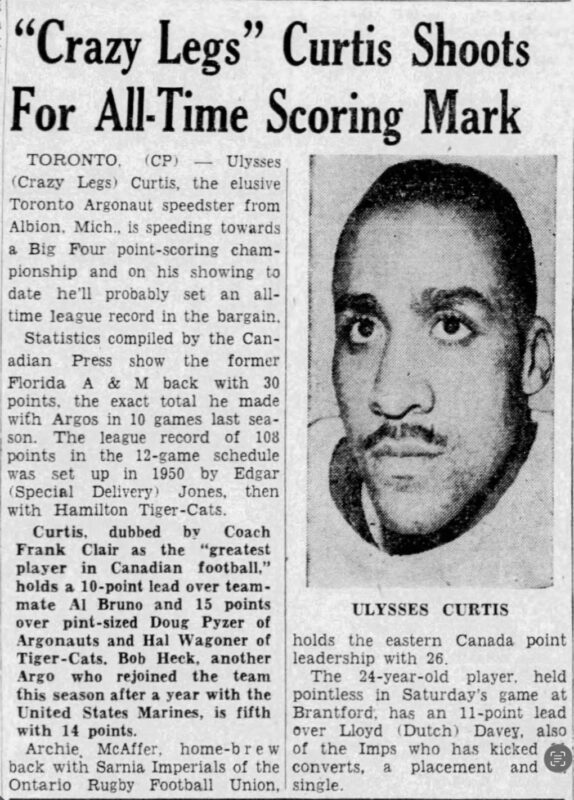
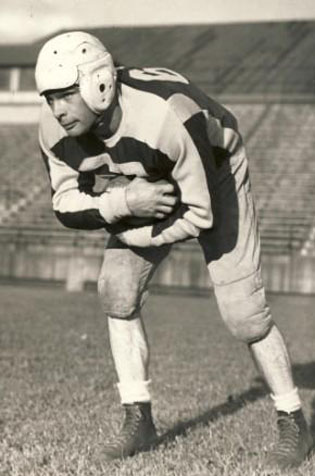
By comparison with Braden and Whaley, Curtis was having a quiet training camp until he dominated the intrasquad scrimmage game. He had the speed to excel at wide and open-field running — his distinctive gait earning him the nickname “Crazy-Legs” — and to get downfield to make the most of his excellent receiving skills. From 1950 to 1952 he was the biggest offensive star in the league, rushing for more total touchdowns than any other player and leading all receivers in touchdowns in 1950 and 1952, helping the Argos to win two Grey Cups.
Frank Clair’s predecessor Ted Morris was the first Argonaut head coach to invite black players to training camp, starting with local multisport athlete Bev Carter, whom he included in the starting lineup for two games in 1945. In 1948, Morris and Moran, then the team treasurer, brought Virginia State halfback Ken Whitlock and his wife to Toronto for a try-out, the coach’s mother Nellie putting the Whitlocks up at her own home. The next executive committee meeting, after “a good deal of discussion” about “the American player”, instructed president Tommy Alison “to speak to Mr. Morris about this matter”, but Whitlock made Morris’s team and played four league games before deciding to go back to school in Virginia.
A year and a half later, Moran was president himself and free to sign black players without interference from the executive committee. “I don’t know how they’ll fit into our game,” he said of Braden, Curtis and Whaley on March 30, 1950. “But they’re all exceedingly anxious to play for us.”