
With NASA’s Artemis 2 mission set to return humans to the moon for the first time in over 50 years, the stakes have never been higher. While the Artemis 2 crew won’t actually land on the lunar surface, the Artemis 3 and Artemis 4 missions that come after will help usher in a new era of moon exploration, if all goes to plan.
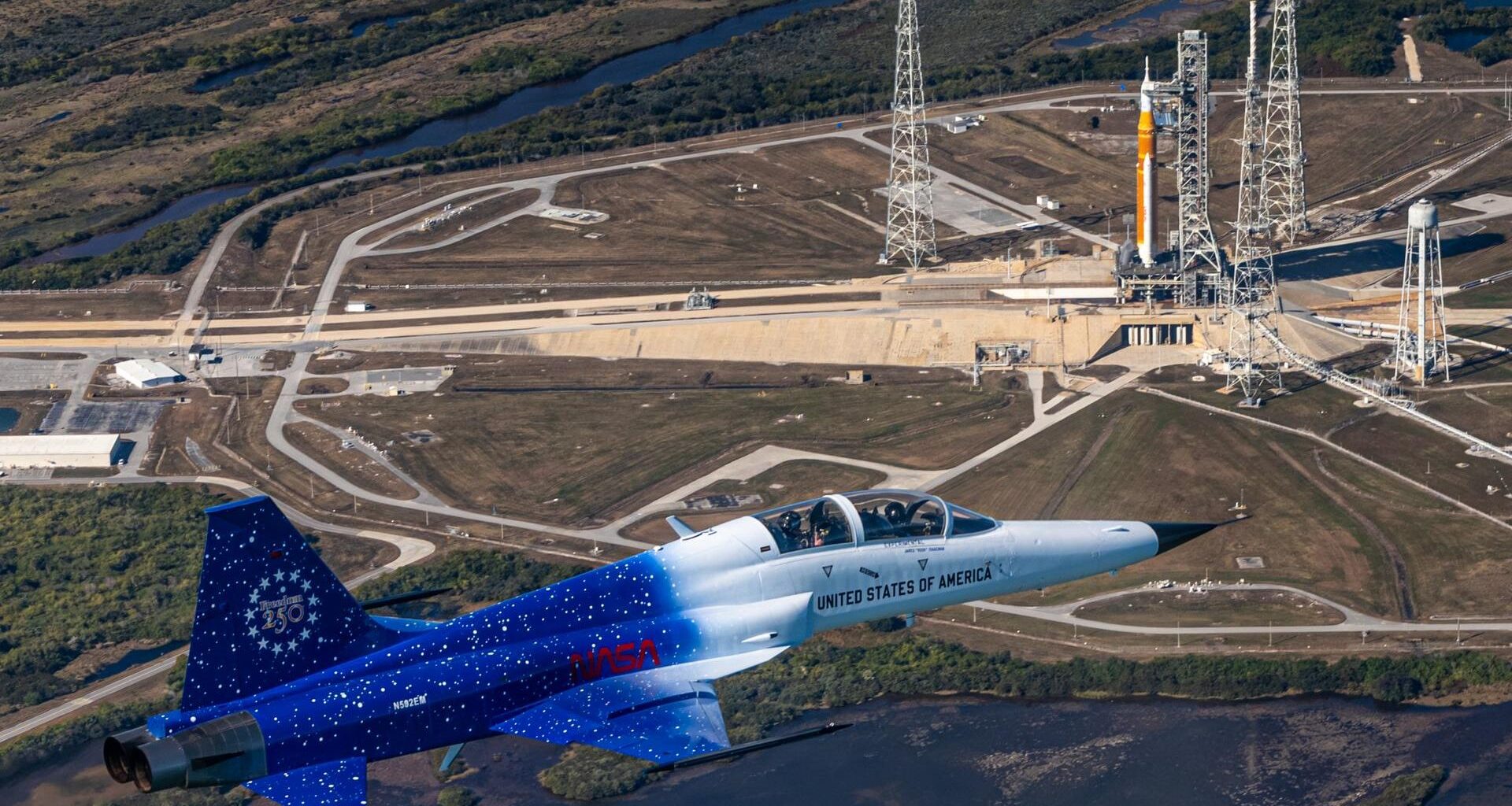
To get a new perspective on the historic Artemis 2 mission, newly confirmed NASA Administrator Jared Isaacman recently took Secretary of Defense Pete Hegseth up in Isaacman’s personal F-5 aircraft to get a bird’s-eye view of the moon rocket on the launch pad.
What is it?
NASA’s Artemis program is designed to return humans to the moon, building experience operating much farther from Earth than the International Space Station (ISS) and laying groundwork for longer-duration exploration that ultimately supports future missions to Mars.
You may like
After the uncrewed Artemis 1 test flight to lunar orbit proved the basic integrated performance of the Space Launch System rocket and Orion spacecraft in deep space in late 2022, Artemis 2 is the next, and far more consequential, step: the first crewed flight of Orion.
The mission will be a roughly 10-day journey carrying four astronauts on a free-return trajectory around the moon and back to Earth. That flight profile intentionally uses the Earth-moon system’s gravity as a “natural” path home, while giving NASA a full-up chance to validate Orion’s life-support and deep-space operations with a crew onboard.
Where is it?
The SLS-Orion stack is located on Launch Pad 39B at the Kennedy Space Center in Florida.
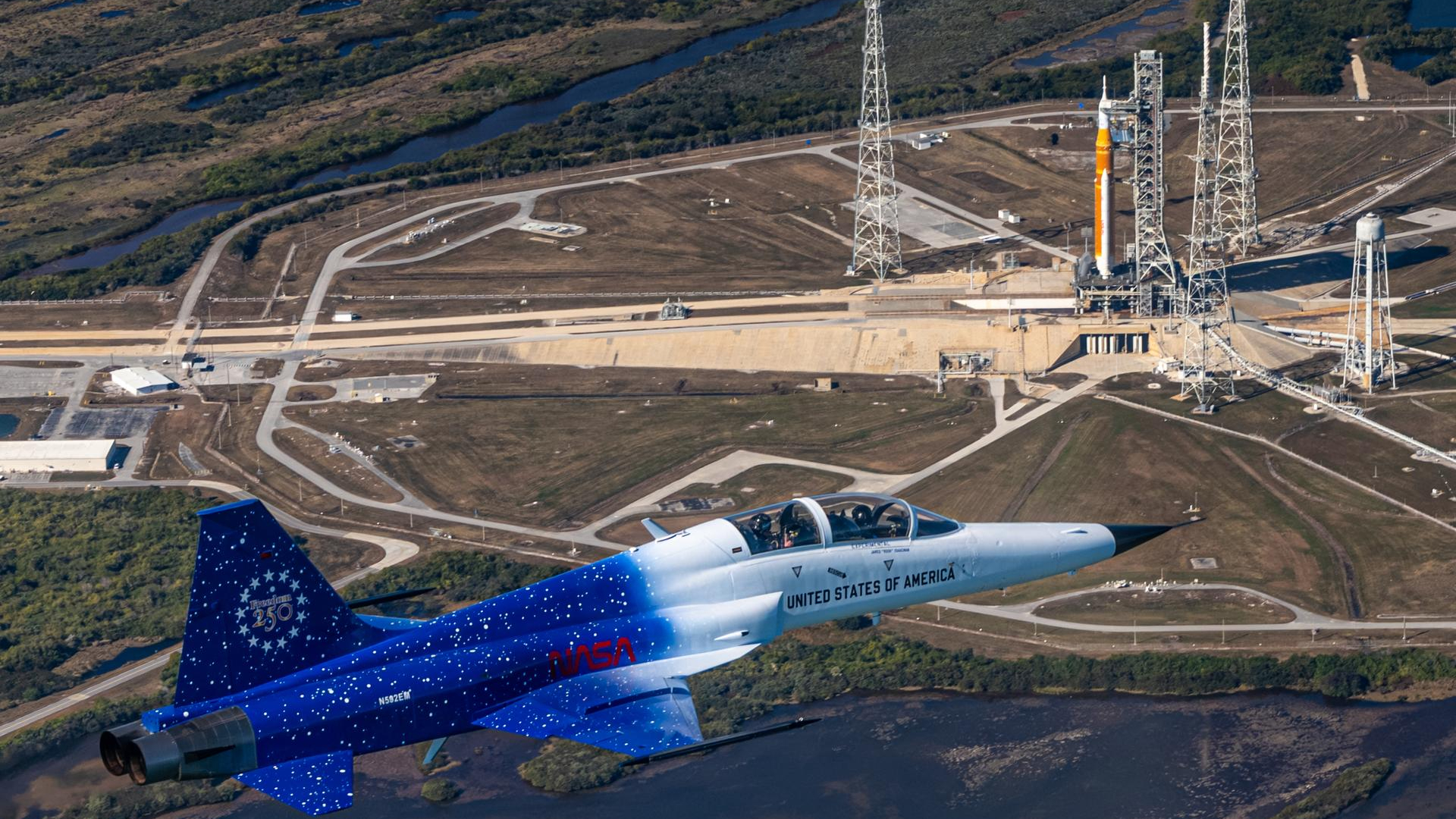
Isaacman’s personal F-5 plane views the Artemis 2 rocket from above. (Image credit: NASA/John Kraus)Why is it amazing?
As part of the journey to launch, the rocket system recently underwent a “wet dress rehearsal,” in which a full countdown was simulated and the cryogenic propellants for the rocket were loaded. This test allows for the choreography between the rocket, spacecraft and ground systems to sync, working through communication loops and fueling timelines.
The wet dress is also designed to identify potential problems — and some were found in the recent Artemis 2 test. NASA announced that the Artemis 2 launch will be delayed to March at the earliest, due to a liquid hydrogen leak found during SLS fueling.
Want to learn more?
You can learn more about Artemis 2 and missions to the moon.