
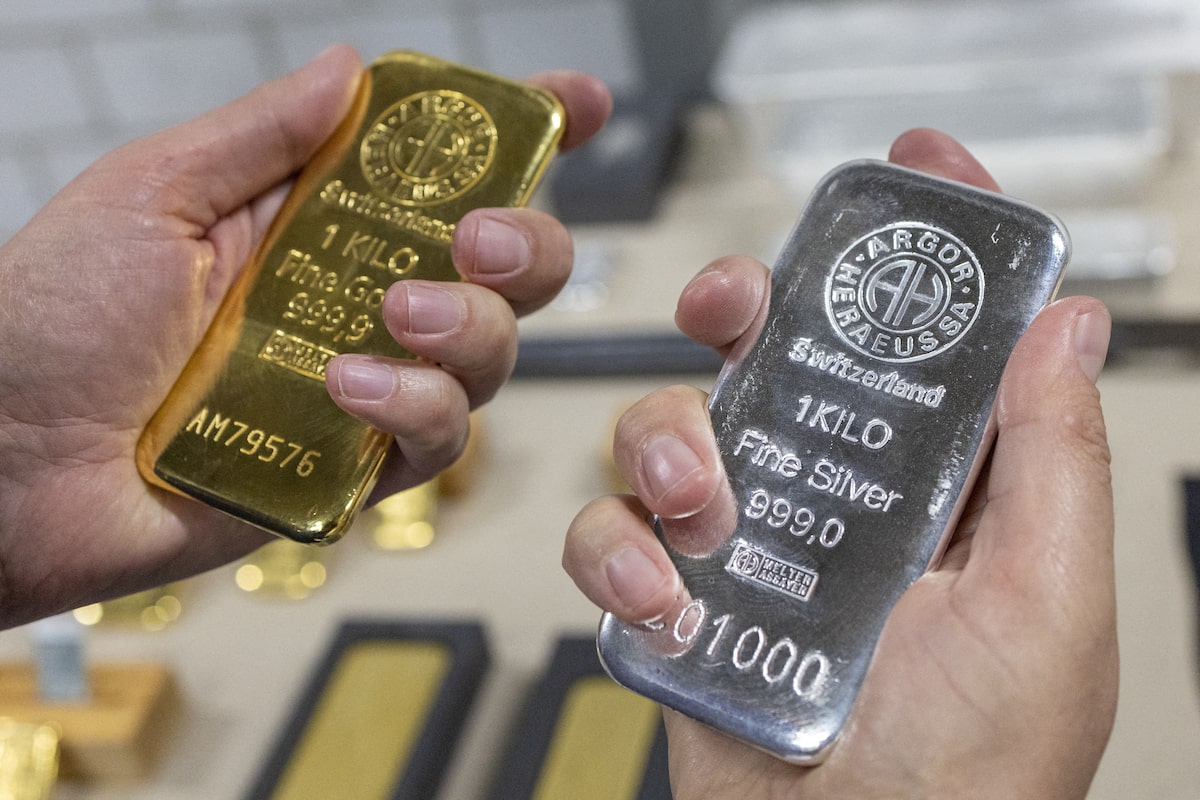
Commodities prices slid on Thursday, led by silver, part of a broad market sell-off as investors reversed an earlier rush for hard assets after global geopolitical tensions eased.
Silver tumbled as much as 15 per cent and oil prices fell more than US$1 a barrel after the U.S. and Iran agreed to hold talks, and after a positive telephone call between the leaders of the U.S. and China.
Commodities joined other financial markets such as shares in lurching lower as some of the speculative heat came out of markets that had been propelled to record peaks.
“Sentiment (has) turned soggy across most asset classes…, with losses feeding into one another and creating a self-reinforcing feedback loop amid thin market liquidity,” said Christopher Wong, a strategist at OCBC.
Adding pressure to commodities was a stronger dollar, which climbed to a two-week high.
A firmer dollar index makes commodities priced in the U.S. currency more expensive for buyers using other currencies.
Spot gold retreated from a near one-week high and spot silver plummeted. Last week, gold climbed to a record US$5,594.82 an ounce and silver to an all-time high of US$121.64.
“We saw extreme volatility in precious metals and other commodities this week, and what we are witnessing today are some aftershocks,” said Tony Sycamore, an analyst at broker IG.
Oil prices fell, but held close to multi-month highs as investors kept a close eye on the progress of Iran talks, worried that a military conflict could disrupt supply from the key Middle East producing region.
Copper moved further from record highs hit last week on concern over demand and rising stocks in warehouses registered with the London Metal Exchange.
The metal widely used in power and construction had rebounded from a two-session slump, supported by China’s plan to expand its copper strategic reserves.
Soybeans bucked the trend, climbing to a two-month high, boosted by comments by President Donald Trump that China is considering buying cargoes from the U.S.
Iron ore fell 2 per cent, weighed down by high inventories.