
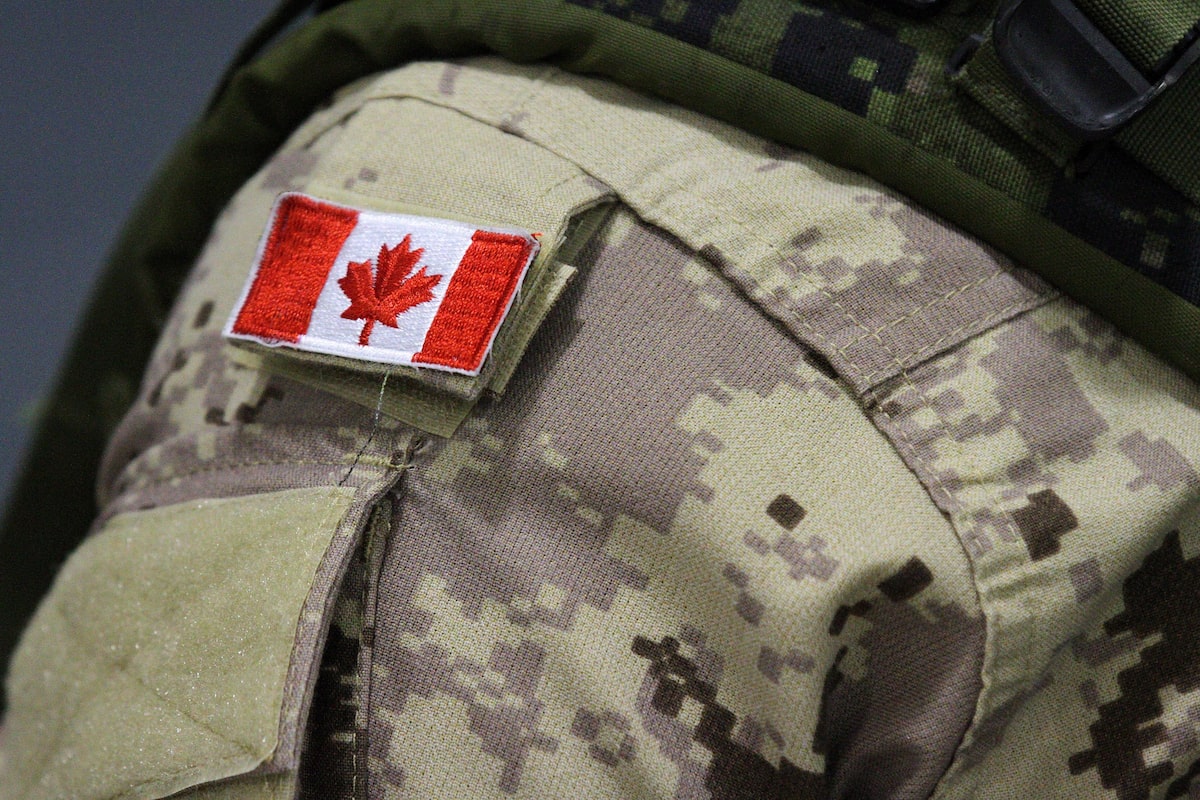
The Trump government’s open hostility to allies makes it irresponsible not to think through worst-case scenarios, writes Paul Kershaw.Lars Hagberg/The Canadian Press
Canada’s Armed Forces have reportedly begun modelling responses to a U.S. invasion. Among the ideas said to be under consideration is a civil defence corps – potentially a million residents trained and organized to strengthen national resilience.
A few years ago, this may have sounded alarmist. Today, it sounds prudent. The Trump government’s open hostility to allies and repeated threats to weaponize trade, borders, and resources make it irresponsible not to think through worst-case scenarios.
I’m willing to contribute to the militia. Friends and family know I’ve long worried that American forces might one day cross our border in search of water, and I’ve always been frustrated by how little prepared I am to help defend my community or property.
But I’m 51. Although fit and active on my small farm, my body isn’t what it used to be, especially as I manage autoimmune issues. I’m no military expert, but it seems likely that if Canada ever forms a civil defence corps, the burden of risk will fall disproportionately on younger bodies than mine.
That reality forces a conversation we can no longer avoid.
Opinion: In an uncertain climate, Canada needs a civil defence corps
Before we ask Millennials and Gen Z to shoulder yet another obligation of national service, we must acknowledge the many ways we already oblige them to sacrifice.
They protect my housing wealth by enduring higher rents, larger mortgages, and often the loss of any realistic hope of ownership, because politicians prioritize high home prices that deliver windfall gains to older homeowners.
They are expected to absorb large and persistent deficits accumulated by both provincial and federal governments – deficits driven not only by capital investments, but by unpaid operating bills.
They are asked to send annual Old Age Security cheques worth roughly $18,000 to retired couples with household incomes of $182,000, while income supports for families with children are clawed back once household income exceeds just $81,000.
They watch as spending on child care, education, housing, and youth employment remains modest compared with the growth in spending on Old Age Security and medical care for the aging population.
They do so even as they pay roughly 20 to 40 per cent more income tax to subsidize healthy retirements by comparison with what boomers paid at the same age.
Most of that money flows to medical care, because Canadians over 64 consume as much health care as four patients under age 50. Governments were warned decades ago that the share of seniors would double. They failed to build a revenue system to match that predictable shift, and now younger people pay more.
On top of all this, governments offload the costs for environmental damage onto younger generations as they abandon the principle that pollution should not be free.
Taken together, these pressures reveal systemic ageism in fiscal policy – a political expectation that younger generations will serve and sacrifice to protect gains for earlier ones, unlike the instinct of parents and grandparents to shield their offspring from harm.
As Canada enters a period of heightened geopolitical instability, that instinct to protect our children must travel from the family table to the cabinet table – especially now, when the demands of national defence are likely to grow, falling most heavily on younger citizens.
That reality inevitably raises a practical question: if we are going to ask more of young people in the name of security, how might that service also support their economic prospects? Perhaps a citizen defence corps could help address frightening levels of youth unemployment. A youth climate corps has been proposed for similar reasons, but funding so far is too modest to be more than symbolic.
Yet focusing only on potential benefits misses a more serious risk. If the call to serve grows louder while economic insecurity deepens, many young Canadians may reasonably ask: Why am I asked to risk more, while those with greater housing wealth and financial security are rarely asked to reciprocate?
It is this danger – disengagement born of imbalance – that makes the connection between Canada’s security and sovereignty, on the one hand, and intergenerational tensions in our public finances, on the other, impossible to ignore.
If we hope younger generations will offer more protection in the face of rising international threats, older Canadians must reciprocate by rebuilding fiscal policy to be fair across generations, and future-oriented.
Only then can we credibly promise millennials and Gen Z that Canada is worthy of their continuing sacrifice, because hard work still offers them a realistic chance at the financial security many of their parents and grandparents enjoy.
Dr. Paul Kershaw is a policy professor at UBC and founder of Generation Squeeze, Canada’s leading voice for generational fairness. You can follow Gen Squeeze on X, Facebook, Bluesky, and Instagram, as well as subscribe to Paul’s Hard Truths podcast.