

Listen to this article
Estimated 4 minutes
The audio version of this article is generated by AI-based technology. Mispronunciations can occur. We are working with our partners to continually review and improve the results.
Some northern B.C. First Nations and conservationists are concerned that a project to connect the Yukon to B.C.’s power grid could help fuel a wave of development in pristine boreal forests and wetlands.
The Yukon government has said the Yukon-B.C. grid connect project could bring up to $7.6 billion a year in economic growth, create up to 36,000 jobs and help electrify six diesel communities.
The proposed project would install 800 kilometres of high-voltage transmission line between the territory and northern B.C.
Yukon’s grid — which is not currently connected to the rest of North America — is under increasing strain to meet the local demand for power, and territorial politicians have pointed to the connect project as a potential solution.
‘It’s an incredibly biodiverse area’
Nikki Skuce, director of the B.C. environmental group Northern Confluence and co-chair of the B.C. Mining Law Reform Network, said she would support the grid connect project “if it was really for residents of the Yukon and we could have more distributed energy systems.”
“But I’m not sure that’s exactly what’s going to unfold,” she said.
She described the northern B.C. region as incredibly biodiverse with a “a lot of conservation opportunities.”
“So there’s concerns about punching in new transmission lines and roads that would just further enable the whole critical minerals rush,” she said.
The Yukon Development Corporation has identified 19 proposed mining projects that could benefit from the grid connect, including the Red Chris expansion and the Eskay Creek revitalization project in B.C., and the Kudz Ze Kayah, Casino and Mactung projects in Yukon.
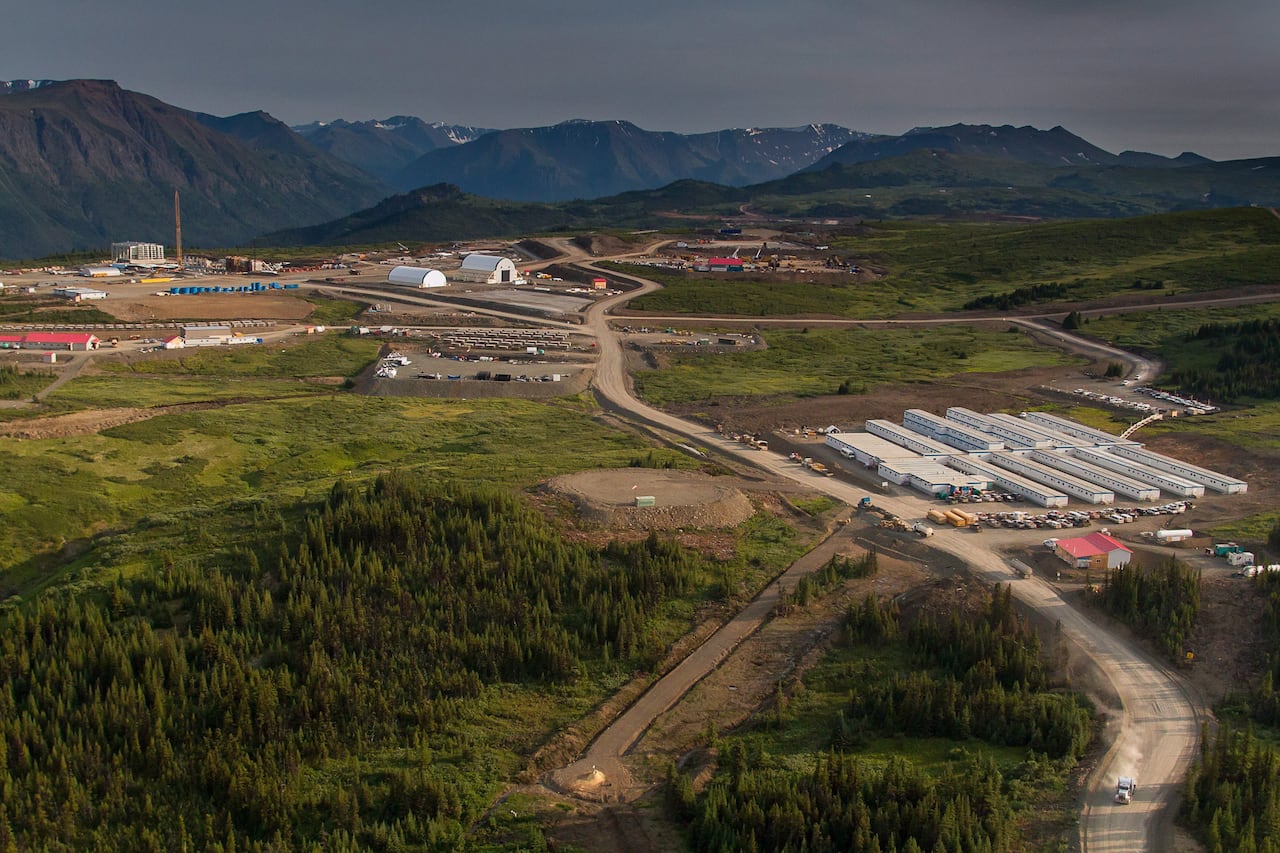 The Red Chris Mine site in northwestern B.C. (Daniel Henshaw/B.C. government)
The grid connect project is currently in the pre-feasibility phase, with work being funded through the Yukon Development Corporation and the Government of Canada’s Critical Mineral Infrastructure Fund.
Terry Teegee, regional chief of the B.C. Assembly of First Nations, said the project would open “the economy and places that perhaps are quite isolated.”
“And with that, it opens up potential mining projects,” he said.
He worries about what that sort of increased development could mean for local waterways and water quality.
“Some of these places are also quite beautiful, quite sacred … there’s a real connection to some of these places,” he said.
‘Possibilities are endless’
Lower Post in northern B.C. is powered by diesel energy from nearby Watson Lake, Yukon. According to Harlan Schilling, deputy chief of the Daylu Dena Council, Lower Post is “one of the largest communities in Canada that relies on diesel generation.”
Schilling believes the project could help address his community’s unstable grid and power outages, and also create jobs and partnerships.
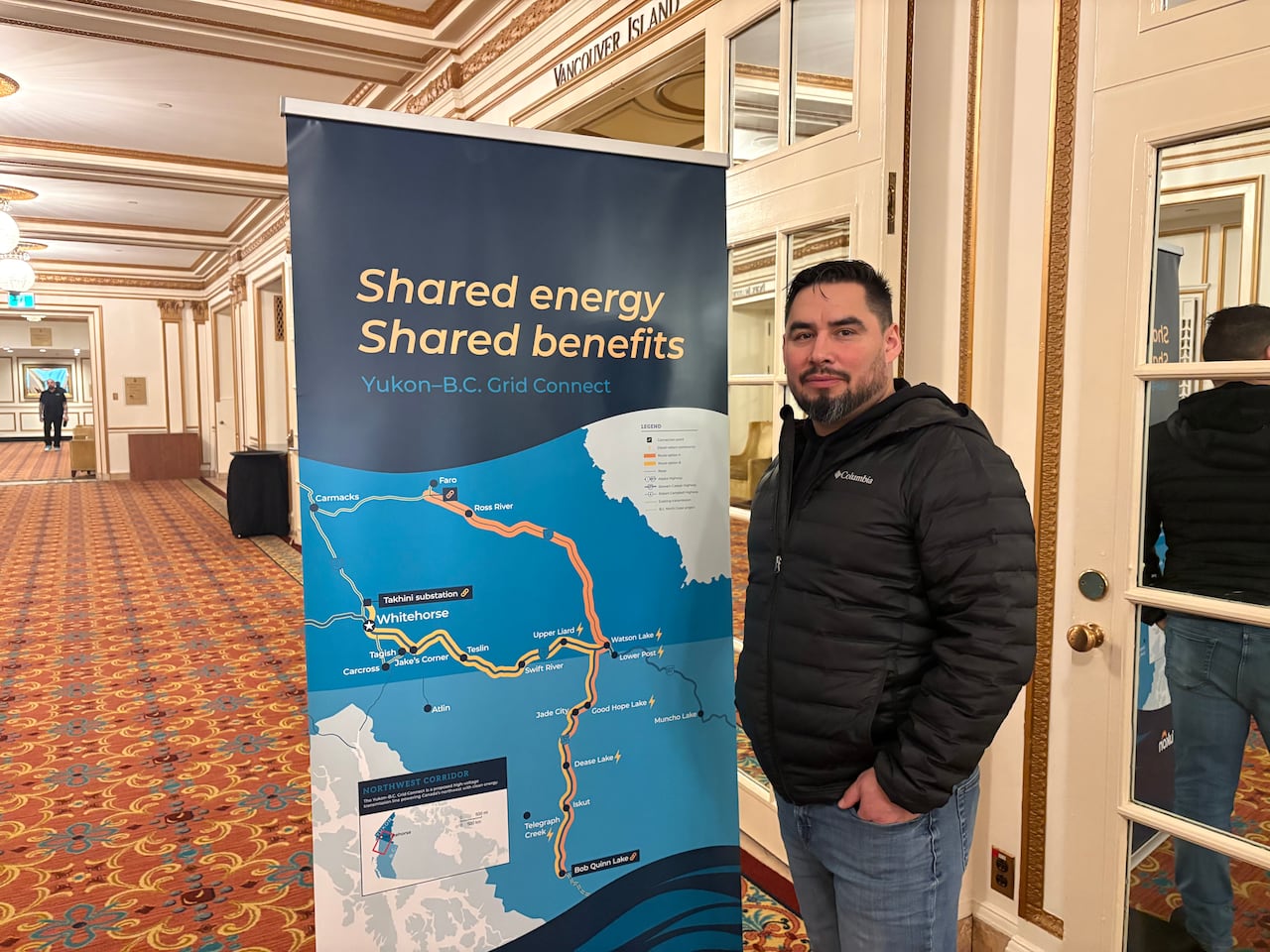 Harlan Schilling, deputy chief of the Daylu Dena Council, at an information event about the Yukon-B.C. grid connect project, at last month’s AME Roundup event in Vancouver. (Caitrin Pilkington/CBC)
“I think just on an economic scale, the possibilities are endless,” he said. “You take a look at where we are on a global stage economically, we need to be more self-reliant, and this allows First Nations to band together and lead a project of national interest.”
Schilling says it’s a step in the right direction that Indigenous leaders have been at the table since the very beginning of the project.
“It’s up to us as First Nations leaders to take this back to our membership and get a decision on whether or not we move forward,” he said.
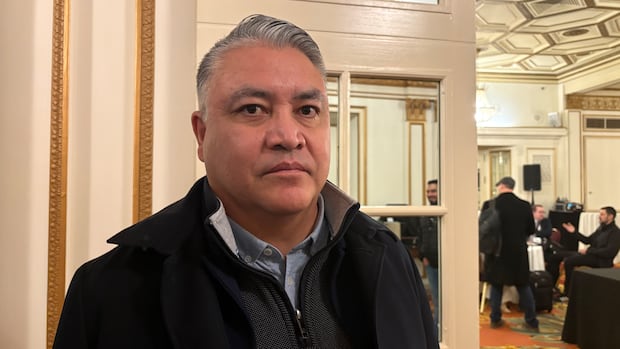
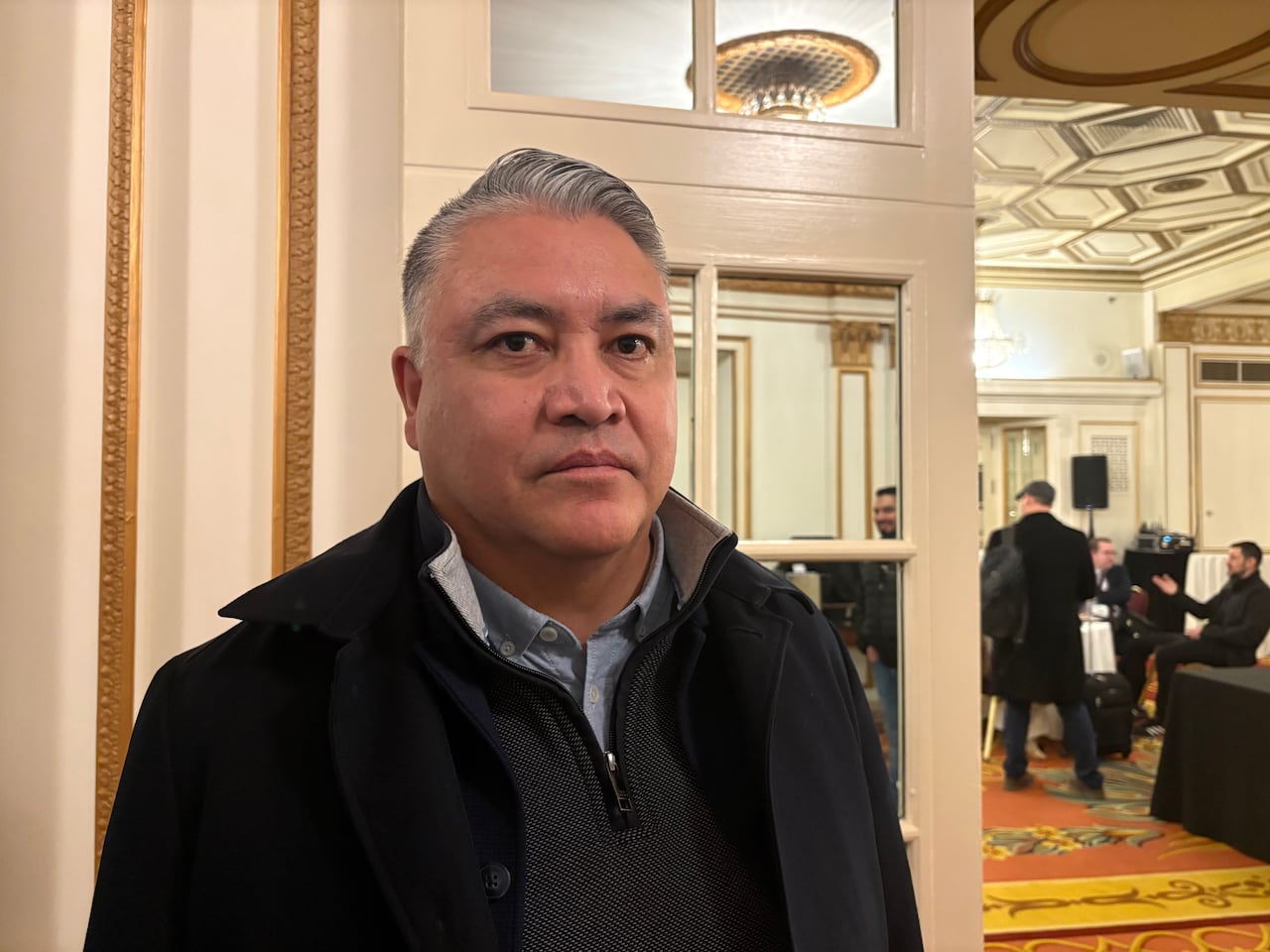 Terry Teegee, regional chief of the B.C. Assembly of First Nations, says any decisions about the project will have to be made carefully. (Caitrin Pilkington/CBC)
Teegee also recognizes that the project could present a number of opportunities to First Nations, including the opportunity for Yukon communities to get off diesel. But he says those opportunities may come with costs.
“It’s important to make these decisions really thoughtfully, because with some of these projects there is a downside — you know, pollution, CO2 emissions, tailings ponds,” he said. “And I think that’s why many First Nations are concerned.
“We need to make the right decision.”