

Listen to this article
Estimated 4 minutes
The audio version of this article is generated by AI-based technology. Mispronunciations can occur. We are working with our partners to continually review and improve the results.
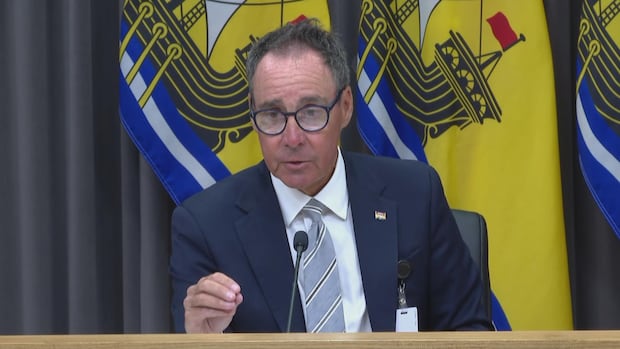
New Brunswick’s Natural Resources Minister John Herron says his government’s effort to protect more of the province’s landmass will not include proposals to log in existing conservation areas on Crown land.
In a statement released Thursday, Herron said the commitment to increase protected lands by 15 per cent will be done “the right way.”
“The target will be achieved by adding new lands, not by revisiting or weakening existing protections,” he said.
“Conservation in this province is about the long term and staying true to the commitments we make.”
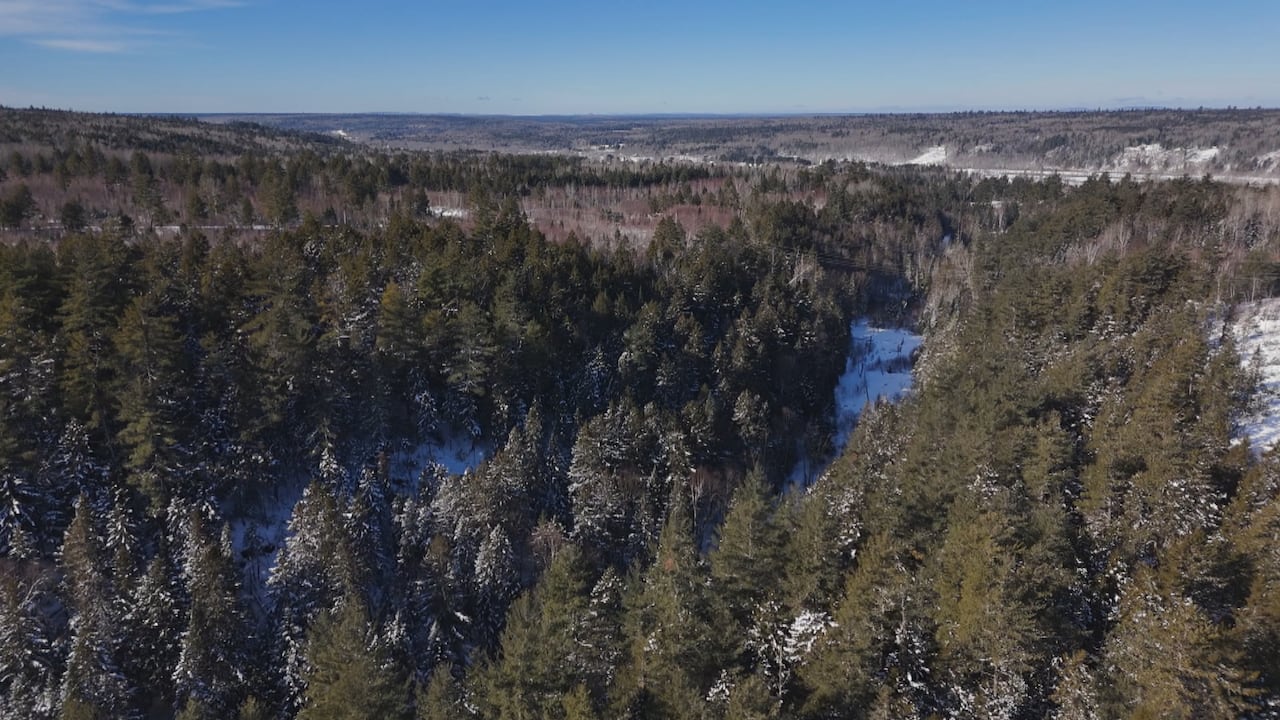 A plan proposed by J.D. Irving in response to the province’s conservation goal included conserving some areas of working forest in exchange for access to protected lands. (Aniekan Etuhube/CBC)
On Monday, CBC News reported that J.D. Irving asked the government to be able to log 32,000 hectares of protected areas in exchange for conserving areas with tourism or social value.
The plan focused on protecting areas of the working forest near communities in the southeast and Fundy regions and would have meant a net increase in 46,000 hectares of protected areas.
Herron was not available for an interview on Thursday, but a spokesperson confirmed that the land swaps in J.D. Irving’s proposal would not be allowed.
WATCH | Minister says protected lands to stay protected: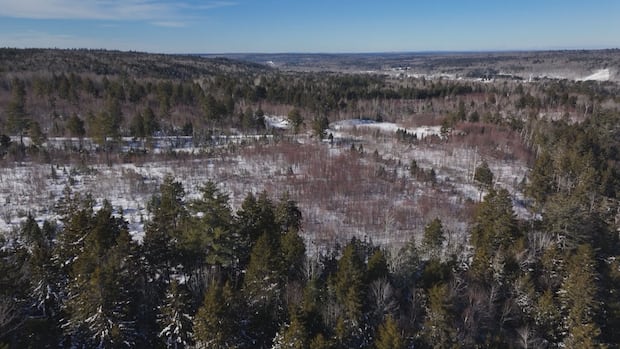
Conservation plan won’t weaken existing protections, minister says
Natural Resources Minister John Herron says timber companies won’t be allowed to log already-protected areas as part of the province’s new conservation plan.
“We will achieve our target by identifying and protecting new, low-conflict Crown lands, including drinking-water watersheds, wetlands and vital coastal ecosystems,” Herron said in a statement.
“This work is underway and will be informed by science, guided by Indigenous consultation, and advanced through early and respectful collaboration with communities and stakeholders.”
Indigenous leaders of two First Nations were critical of the plan and said they hadn’t been told about the land swap proposal prior to CBC News’ reporting.
“In this situation, our Wolastoqey communities were treated as an afterthought,” the six Wolastoqey chiefs said in a statement on Wednesday.
“No business organization, including J.D. Irving, should be engaged ahead of the First Nations whose lands and rights are unceded.”
Another statement from the organization representing Mi’gmaq chiefs in the province raised similar concerns. It went on to say the only communication Mi’gmawe’l Tplu’taqnn had received about the conservation plan was an invitation to meet in December.
“It is very concerning that the Government of New Brunswick has been working stakeholders, soliciting their input on areas to protect, and that Irving is engaging with other stakeholders, before and without involving First Nations leadership and MTI especially considering the potential impact on Mi’gmaq Rights,” said the statement from Mi’gmawe’l Tplu’taqnn.
J.D. Irving and the three other companies with licences to manage and harvest timber from Crown land made presentations to Herron in October, detailing their proposals to help the province reach its 15 per cent conservation.
At least one other licensee also wanted to make land swaps in order to get access to protected areas, but Herron wouldn’t say which.
J.D. Irving began approaching municipalities in the Southeast and Fundy regions shortly afterwards asking them to support the plan. At least eight communities signed a letter to Herron voicing their support for the proposal.
 Roberta Clowater of the New Brunswick chapter of the Canadian Parks and Wilderness Society says allowing forestry companies access to conservation land would have been contrary to the purpose of protecting land in the first place. (Maria Jose Burgos/CBC)
Conservation groups were quick to question the plan, saying it would undermine efforts to protect biodiversity and old forests in the province.
“It’s quite a concerning idea in the sense that the protected areas were never meant or established for clear cutting,” said Roberta Clowater, the executive director of the Canadian Parks and Wilderness Society’s New Brunswick chapter.
“The idea behind them is to conserve the kind of habitats that are needed for wildlife or needed to protect water or other features on the landscape.
“It goes against the very idea of the conservation lands to begin with.”
According to a presentation made to several municipalities, the proposal would mean a net 46,000-hectare increase to protected lands. It would see 38 per cent of its Crown licence protected, up from 33 per cent.
The percentage of old forest conserved would go up slightly from 20 per cent to 21 per cent.
Most of the land that would be conserved under the plan was near the Fundy Parkway or in the Turtle Creek area, where a reservoir supplies water to Moncton, Riverview and Dieppe.
Much of the protected areas J.D. Irving wanted to harvest are near existing mill operations in the Doaktown and Chipman areas.