
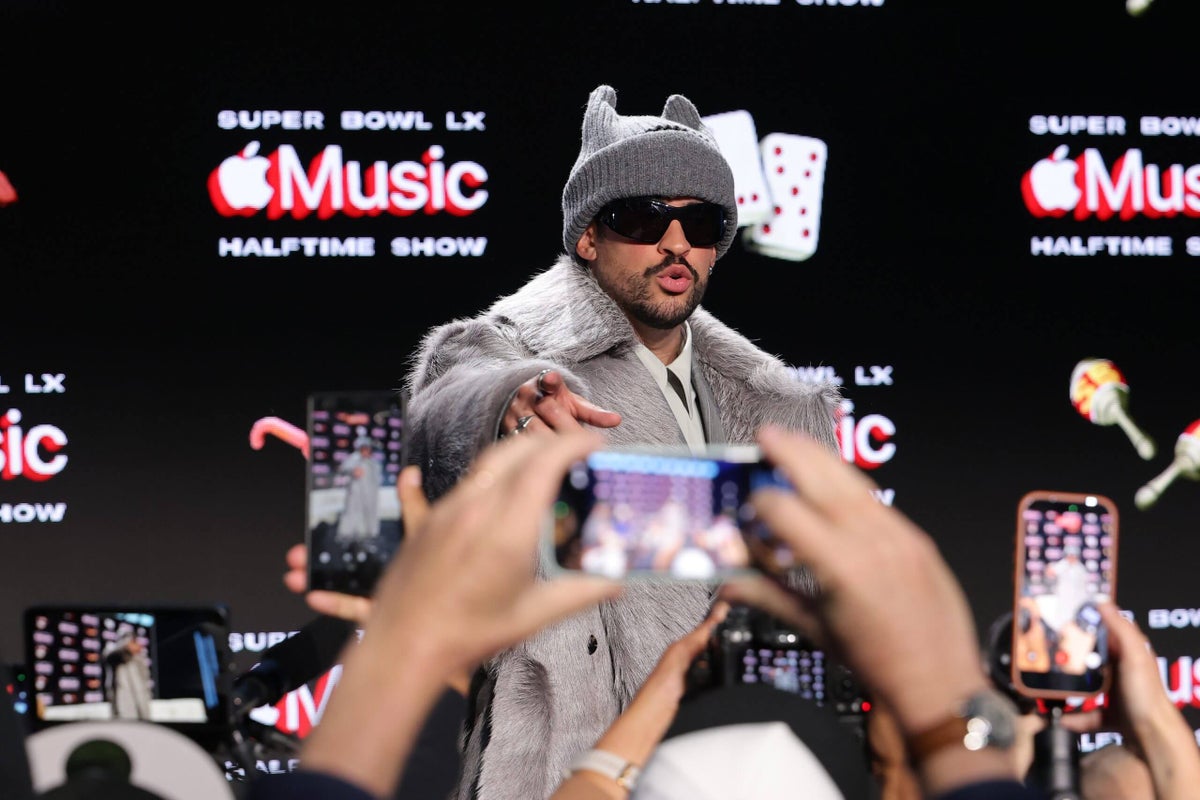
SAN FRANCISCO — American football doesn’t make the world dance.
That’s not meant to slight the NFL, a sporting behemoth with vast influence and financial might. It is an acknowledgement that, despite its power, there are limits. For all of the league’s reach, television dominance and cultural muscle, football is not a global game as much as it is an American brand reflecting the country’s vision of itself back to the world: strength, spectacle, patriotism, military obsession, competition, expansion. It’s men fighting to acquire or defend land.
The Super Bowl is our party, and we assume the world’s curiosity. But in the league’s unyielding desire to stretch and chase seemingly infinite international dollars, it must search for a language the entire planet can understand. And that’s why it turned to the musical genius of Bad Bunny.
The culture war engulfing the halftime show overlooks this larger reality. The NFL did not choose Benito Antonio Martínez Ocasio to make a political statement, and when President Donald Trump instigated MAGA backlash over the decision, the league declined to legitimize the squawking. It’s all because Benito, as his fans call him with infectious warmth, gets this American game closer to something it has never fully achieved on its own: a product with rhythm that doesn’t require translation, a sound that travels through the air faster than any spiral, an artist who literally makes the world move.
This guy, a lightning rod?
Bad Bunny stepped onto football’s biggest stage Thursday during a 30-minute Apple Music conversation to preview his halftime performance. He wore many shades of gray: light gray shirt, gray pinstriped suit, gray fur coat, gray winter hat with raised ears, making him seem like a rabbit processing his surroundings. He looked like a superstar. He sounded disarmingly grateful.
“I want to bring to the stage, of course, a lot of my culture,” the Puerto Rican singer and rapper said. “But it’s going to be fun, and it’s going to be a party.”
Five days after becoming the first Spanish-speaking artist to win the Grammy for Album of the Year, he kept returning to an idea: dance as a universal language. Months ago, he joked on “Saturday Night Live” that monolingual Americans had just a few months to learn Spanish before the Super Bowl. He was just poking the bear. He offered a hug on Thursday.
“People only have to worry about dance,” he said. “I think there’s no better dance than the one that comes from the heart.”
Football asks the world to understand America. Music simply moves it. Boogie doesn’t need a translator.
“I even listen to the songs, and I can barely say the words,” New England Patriots wide receiver Stefon Diggs said.
For decades, the NFL has increased its international presence, staging regular-season games overseas, marketing itself to the world. The traveling show has been successful enough to expand the league’s footprint, but it’s just a spectator export. Growing significant worldwide participation in tackle football is a difficult task, so the game remains an international oddity. It is a collision sport bonded to national myths of toughness and conquest. The theatrics around it — flyovers, flags, anthems — reinforce the red, white and blue identity. Global ambitions move the NFL, but the sport’s cultural gravity keeps it rooted at home.
The halftime show expands the possibilities. Those performances once amounted to a lifetime achievement award. The selected artists were the biggest names with the longest resumes. It has evolved into preferring icons in their absolute prime. In a world of quicksilver attention spans, relevance swallowed the nostalgia.
Even with the criticism, Bad Bunny was the best choice for the world. He is an American – a Spanish-speaking American – who has become a global force. To some obstinate Americans, he’s a singer with lyrics they can’t understand. To the world, he is more accessible than football. His starpower transcends language. It’s his humanity, his authenticity, his earnest desire to embrace Puerto Rico and invite others to experience it.
“I wasn’t looking for any of this,” he said. “I was looking to connect with my people more than ever, connect with myself, with my history, with my culture.”
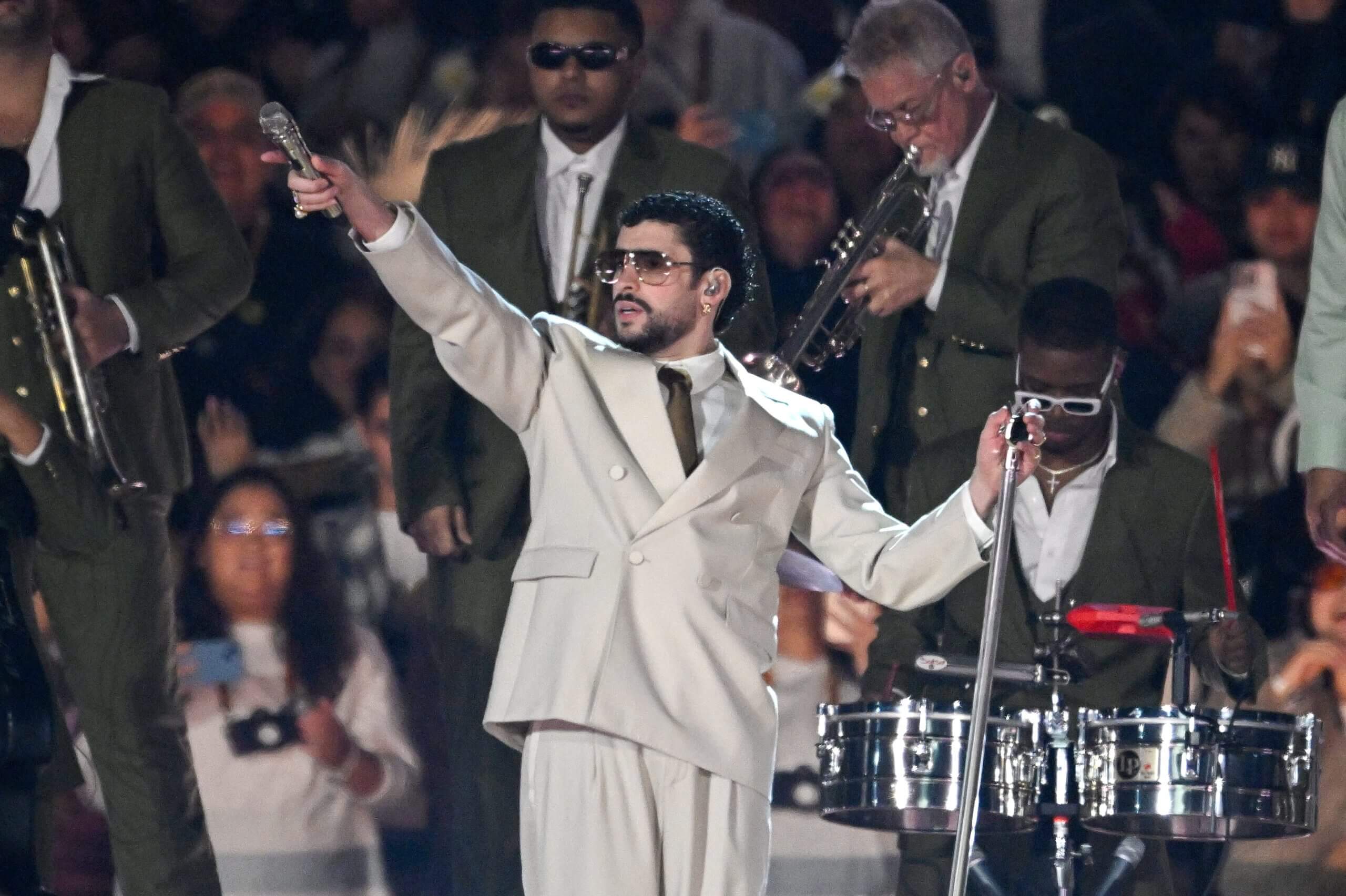
Puerto Rican star Bad Bunny performs in Mexico City in December during his “Debí Tirar Más Fotos” world tour. (Alfredo Estrella / AFP via Getty Images)
He inspires such a deep connection. Maritza Maldonado, 54, is a San Jose resident whose parents moved to California from Puerto Rico as children. She has lived in the Bay Area her entire life and visited Puerto Rico about a dozen times. During Bad Bunny’s residency in Puerto Rico, Maldonado made the trip alone. But at the concert, she didn’t feel that way.
“When I first walked into the coliseum, it was something indescribable,” Maldonado said. “You would’ve thought I was there with people I knew.”
Maldonado wasn’t an early Bad Bunny fan. She came to appreciate him about four years ago.
“There’s a song where he sings about keeping Puerto Rico authentic, not letting it turn into Hawaii, reflecting our feelings about how we don’t want to be the 51st state even though we’re Americans,” she said. “The title track of ‘Debí Tirar Más Fotos’ is all about cherishing the time you have. In English, it’s ‘I should have taken more photos,’ and I’m someone who’s always taking photos. It felt like he was speaking to me.”
Of his music, she added: “It makes me more proud to be Puerto Rican. He gets that message across in a way that I can’t.”
Fans don’t just admire Bad Bunny; they recognize themselves in his music. It turns casual listeners into family.
The pre-halftime show press availability tends to be more fan fest than media event. Even knowing that, Bad Bunny’s session stood out. During any pause in the conversation, people would shout affectionately in Spanish. He was so real, right down to apologizing as he searched for the right words in English.
In one moment, he accidentally cursed during a question-and-answer session with kid reporters. In the next, he brought himself and the room to tears as he talked about his mother believing in him “as a human” and “as a good person.”
He denounces the Immigration and Customs Enforcement out of concern, not for clout. It makes him a convenient target for criticism. But it’s deceitful to try to make a celebrity known for compassion and connection as a symbol of division.
The NFL rejects the notion. And the “Benito Bowl” may help to expand the league’s identity. The halftime show is the ultimate bridge connecting sport and culture, an understanding that music can carry the game where football cannot go alone. Beyoncé. Michael Jackson. Prince. Bruce Springsteen. U2. Every performance has the potential to add dimensions to how the Super Bowl is experienced well beyond the United States. So here comes Bad Bunny, helping the sport take another step in that evolution. An artist who makes the world dance offers a gateway to viewers who don’t know a blitz from a Hail Mary.
The NFL isn’t being woken. It is being wise.
Bad Bunny represents a side of America that resists being reduced. It’s an America that sings in multiple languages, that dances across borders, that blends tradition with change.
Brandi Carlile, another gifted and evocative artist, captured the nation beautifully when she described the inspiration she will channel to perform “America the Beautiful.”
“This is a song about a country, a beautiful country, that ebbs and flows in terms of hope,” she said. “And it’s a work in progress. And the song believes we can get there, and I believe we can get there.”
Unity cannot be achieved by shrinking the perception of who matters. It necessitates expansion.
To a crowd trumpeting an exclusive America, Bad Bunny is a target.
To the NFL, he is hope.
Football may never make the world dance on its own. But music can move where football cannot. On Sunday night, as more than 100 million people watch an American artist perform in Spanish, celebration will be the only language that any reasonable person will hear. The NFL will make its strongest case yet that the future doesn’t require choosing between America and the world.
Instead, it will partner with Bad Bunny in aspiration. It will invite the world onto the stage, and for 13 minutes of radical joy, it will make the world dance.