

Listen to this article
Estimated 4 minutes
The audio version of this article is generated by AI-based technology. Mispronunciations can occur. We are working with our partners to continually review and improve the results.
Artificial intelligence is giving participating health-care providers in Prince Edward Island some relief when it comes to administrative burdens.
Health P.E.I. is participating in a Canada-wide pilot program that makes use of AI scribe within primary care. It pilot runs until January 2027.
The technology creates a temporary audio recording during appointments, the transcript of which is then reviewed and edited by the health provider before it’s added to the patient’s electronic medical record.
Dr. Kristy Newson, a family physician at the Boardwalk Professional Centre in Charlottetown, is one of the 100 health-care providers on the Island taking part in the pilot. She said doctors and nurse practitioners who are taking part received training in mid-December.
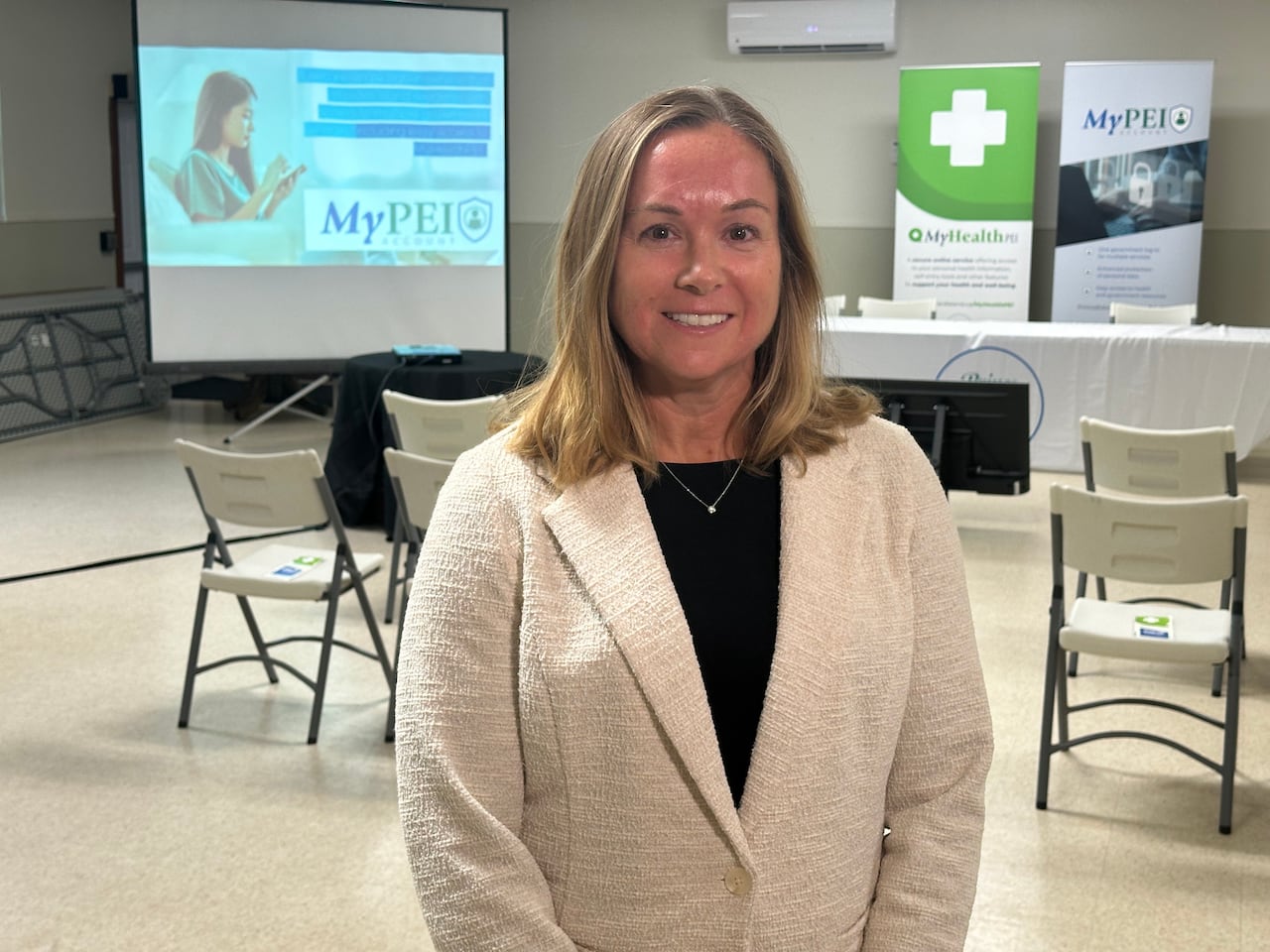 Dr. Kristy Newson is a family physician at the Boardwalk Professional Centre on the Charlottetown waterfront. She is one of the 100 health-care providers on the Island taking part in the AI scribe pilot. (Aaron Adetuyi/CBC)
“We’ve been using it pretty consistently in the new year,” she said.
With so many professionals taking part, thousands of patients have the potential to be impacted by the program, which is being paid for by Canada Health Infoway.
Newson said patients will receive a document describing the project when they show up for appointments, and they can choose to allow its use or opt out.
During an appointment, Newson said she has her laptop with her to access a patient’s chart, but she isn’t typing because the AI note-taking software is documenting everything medically relevant.
“I feel like it’s been very helpful in making me more of an active listener because I don’t have to worry about jotting down notes that I will have to remember for later in my day when I do my charting,” she said.
“I’ve been able to put my laptop to the side and really engage with the patients. So I’ve really enjoyed that.”
Dr. Johan Viljoen, chief medical officer of Health P.E.I., said in a news release that the authority is “committed to exploring innovative solutions” to improve experiences for patients and providers.
“While new technologies like AI offer significant potential, it is critical that they are introduced thoughtfully and responsibly,” Viljoen said in the statement.
“This pilot will help us better understand how AI tools can be safely and effectively integrated into our health system, while keeping patient care, clinical judgment and privacy at the forefront.”
How doctors are using AI in the exam room — and why it could become the norm
The Quebec government says it’s launching a pilot project involving artificial intelligence transcription tools for health-care professionals, with an increasing number saying they cut down the time they spend filling paperwork.
Newson said she typically leaves herself an hour at the end of the day to do her documentation. She noted that health-care workers cite administrative burden as a big reason for burnout.
The Health P.E.I. release said a survey conducted by Canada Health Infoway found 94 per cent of participants reported time saved, with 62 per cent saving 30 minutes or more per day.
“I feel like I could potentially see more patients because I won’t have to have that hour at the end of the day to document,” Newson said. “So it’s really helping with that admin burden.”
Newson said patients can ask for the notes because they’re a part of their medical records. Patients simply need to sign a document asking for a copy before the records are printed.
Still, she said about 20 per cent of her patients did not consent to the use of the technology, in which case “we just go back to our old-fashioned typing, which is fine, too.”
But she said she sees the potential in the technology, and hopes the program continues after the pilot.
“If it’s helpful for family doctors and nurse practitioners and pediatricians, I think it could be helpful for any allied health professional,” Newson said. “That would be the goal.”