
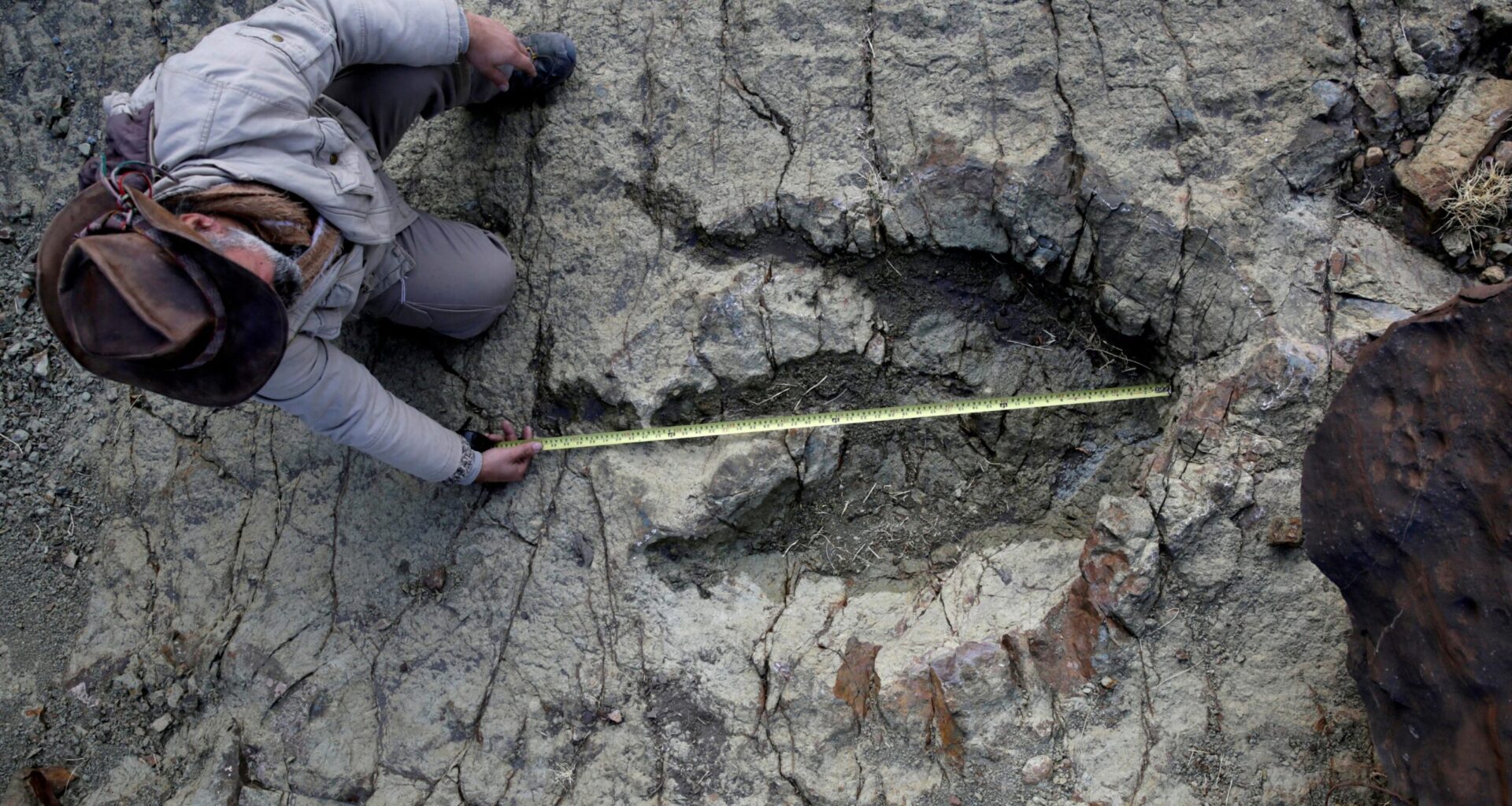
WASHINGTON, Feb 6 (Reuters) – Footprints are among the most common dinosaur fossils. Sometimes scientists come across a single solitary footprint. Other times, they encounter a chaotic tangle of footprints that resemble a dance floor, a kind of dinosaur nightclub. But identifying which dinosaur left which footprint has been notoriously difficult.
Researchers have now developed a method that uses artificial intelligence to help identify the type of dinosaur responsible for the footprints, based on eight different characteristics of a given footprint.
“This is important because it provides an objective way to classify and compare footprints, reducing reliance on subjective human interpretation,” said physicist Gregor Hartmann, from the Helmholtz-Zentrum Berlin research center in Germany, the lead author of the study published in the Proceedings of the National Academy of Sciences.
Take advantage of the stock market rally!
“Pairing footprints with their creators is a major challenge, and paleontologists have debated this for generations,” said Steve Brusatte, the Edinburgh University paleontologist and senior author of the study.
Dinosaurs left behind several types of fossilized remains, including bones, teeth and claws, impressions of their skin, feces and vomit, undigested remains in their stomachs, eggshells and nest remains. But footprints are usually more abundant and can reveal a lot of information to scientists, including the type of environment in which a dinosaur lived and, when other footprints are present, the types of animals that shared an ecosystem.
The new method was refined with an analysis by the algorithm of 1,974 footprint silhouettes spanning 150 million years of dinosaur history, with AI discerning eight characteristics that explained the variation in the shapes of these footprints.
These characteristics included: load and overall shape, reflecting the area of the foot’s contact with the ground; the position of the load; the distance between the toes; how the toes connect to the foot; the position of the heel; the load on the heel; the relative emphasis of the toes in relation to the heel; and the discrepancy in shape between the left and right sides of the footprint.
Many of the footprints had already been confidently identified by specialists as belonging to a specific type of dinosaur. After the algorithm identified the differentiating features, the specialists mapped how they corresponded to the various types of dinosaurs believed to have made the footprints, in order to guide the identification of future prints.
“The problem is that identifying who made a fossilized footprint is inherently uncertain,” said Hartmann.
“The shape of a footprint depends on many factors beyond the animal itself, including what the dinosaur was doing at that moment—whether walking, running, jumping, or even swimming—, the moisture and the type of substrate (the ground surface), how the footprint was buried by sediments and how it was altered by erosion over millions of years. As a result, the same dinosaur can leave footprints with very different appearances,” added Hartmann.