
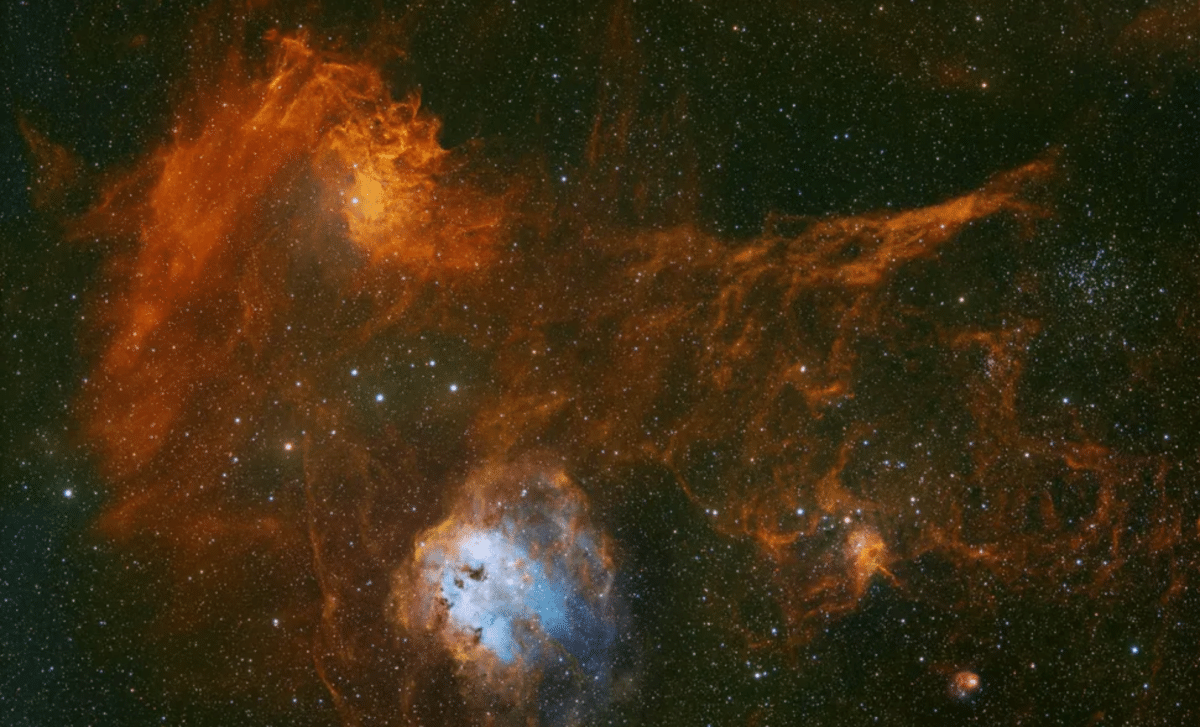
Astrophotographer Greg Meyer has captured a stunning image of the Flaming Star Nebula, a breathtaking deep-space object located 1,500 light-years from Earth. This mesmerizing photograph offers an unprecedented view of the nebula, showcasing the intricacies of interstellar gas and dust. The image reveals the vast and vibrant clouds surrounding the runaway star AE Aurigae, which is the focal point of the nebula. Meyer’s work is not just a piece of art but also a significant contribution to astrophotography, shedding light on the wonders of the universe far beyond our reach.
A Glimpse into the Flaming Star Nebula’s Mystical Beauty
The Flaming Star Nebula, also known as IC 405, is located in the constellation Auriga, around 1,500 light-years away from Earth. This nebula is not only visually captivating but also scientifically important. The nebula is filled with ionized hydrogen gas, illuminated by the light from the runaway star AE Aurigae. AE Aurigae is a fascinating object in itself, having been ejected from the Trapezium cluster at the heart of the Orion Nebula approximately 1.5 million years ago.
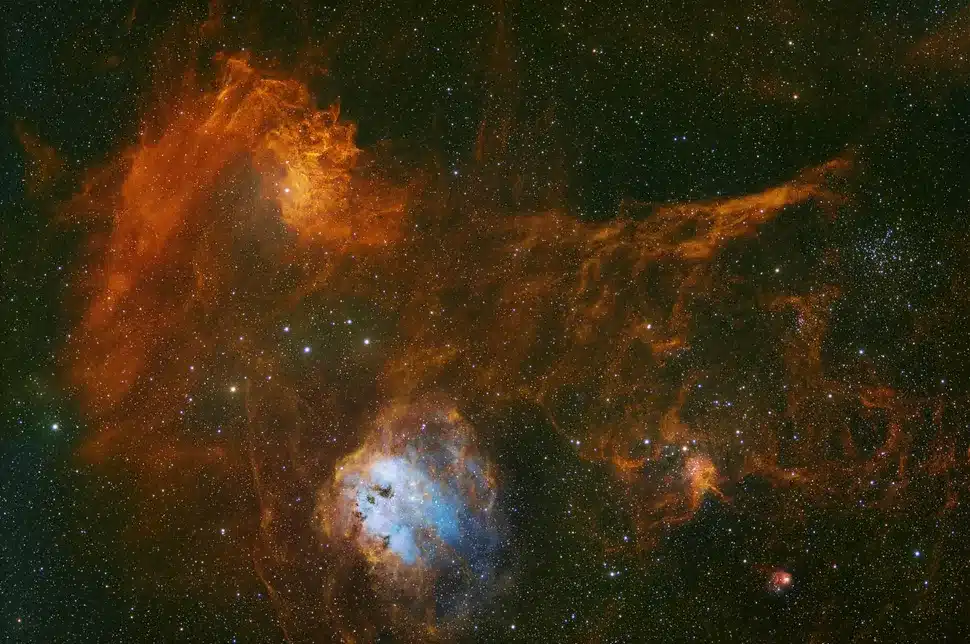 The “Flaming Star Nebula” captured by astrophotographer Greg Meyer. (Image credit: Greg Meyer)
The image captured by Greg Meyer portrays the nebula in remarkable detail, showing the interaction between stellar winds from AE Aurigae and the surrounding gas clouds. According to Space.com, the “flaming” appearance of the nebula comes from the ionization of hydrogen atoms, which glows in a characteristic red hue. This captivating scene is a snapshot of the ongoing processes in stellar evolution, where young stars like AE Aurigae shape their environments through radiation and powerful stellar winds.
The Journey of AE Aurigae: A Runaway Star’s Tale
AE Aurigae, the star at the center of the Flaming Star Nebula, has an intriguing backstory. It is classified as a runaway star, meaning it was expelled from its original star system due to gravitational interactions. Scientists believe it was born in the Trapezium cluster, a region within the Orion Nebula that is a hotbed for star formation. However, a violent encounter with a binary-star system caused AE Aurigae to be ejected from the cluster. Now, it roams freely through space, lighting up the nebula that bears its name.
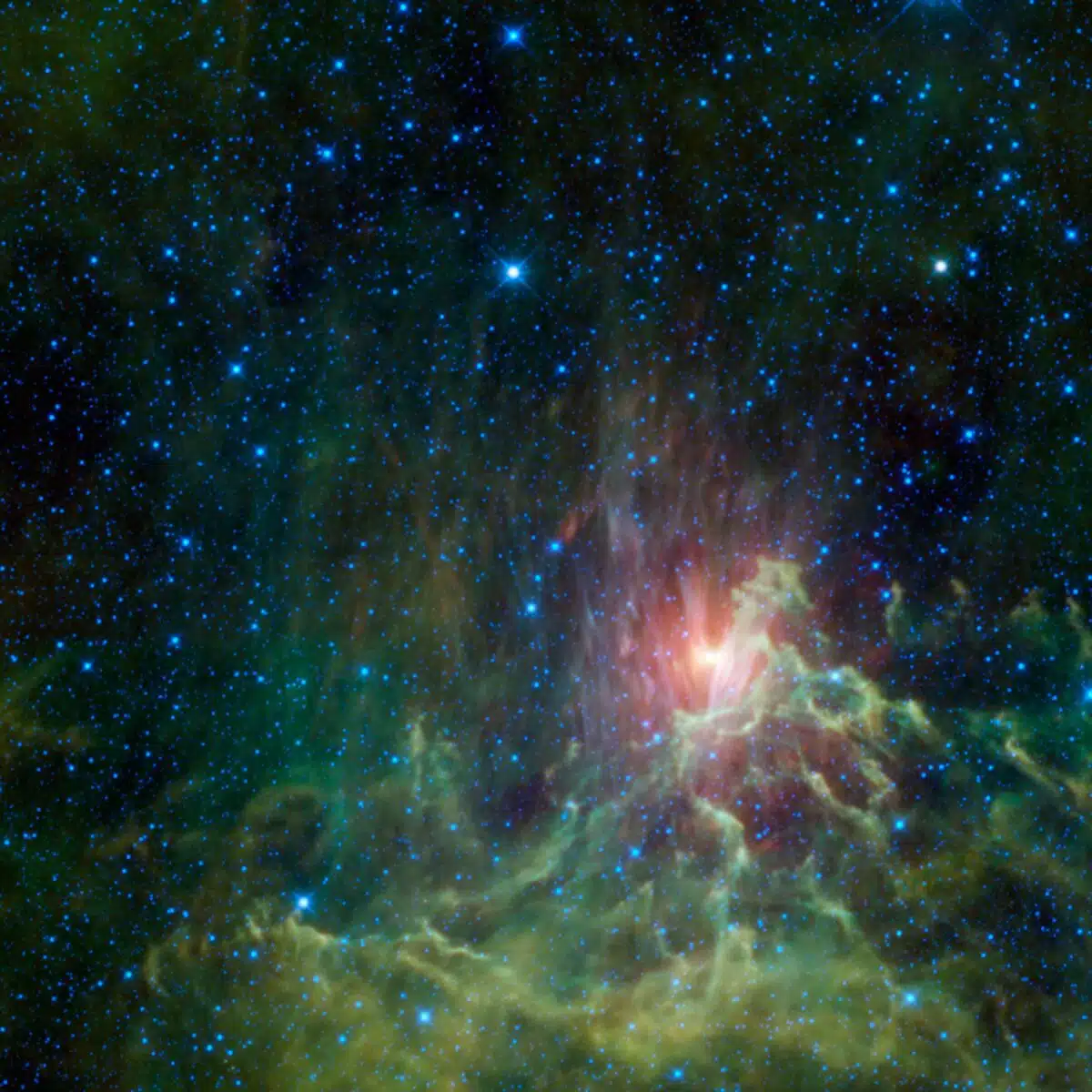 WISE Catches a Runaway Star in Flames
NASA’s Wide-field Infrared Survey captured this view of a runaway star racing away from its original home. Surrounded by a glowing cloud of gas and dust, the star AE Aurigae appears on fire. Appropriately, the cloud is called the Flaming Star nebula. Credit: NASA/JPL-Caltech/UCLA
This runaway star’s journey is a reminder of the chaotic and dynamic nature of star systems. The forces at play in the cosmos are immense, and events like the ejection of AE Aurigae shape the destiny of not only stars but the entire nebula that forms around them. The Flaming Star Nebula itself is a direct result of AE Aurigae’s radiation, sculpting the gas and dust into the dramatic formations we see today.
Greg Meyer: The Astrophotographer Behind the Magnificent Image
Greg Meyer is an accomplished astrophotographer known for his detailed and awe-inspiring space images. In mid-January, Meyer set out to capture the Flaming Star Nebula under the dark skies of Arizona, armed with a Radian Raptor 61 mm telescope and a specialized astronomy camera. Over the course of just under 21 hours, Meyer collected light data, painstakingly processing the information using Adobe Lightroom, Photoshop, and the advanced astrophotography software PixInsight.
The result of this effort is nothing short of spectacular. Meyer’s image reveals intricate details of the nebula’s complex structure, including the glowing gas clouds and the faint outlines of the Tadpole Nebula, located at the bottom of the image. The photograph not only showcases the beauty of the nebula but also highlights Meyer’s technical skill and dedication to the craft of astrophotography.
As the author of the article for Space.com notes, this photograph is a testament to the advancements in astrophotography equipment and software, which allow photographers to capture details of distant space objects that were once unimaginable. Meyer’s work is a reminder of the ever-growing possibilities in the field of space photography.
The Tadpole Nebula: A Cosmic Wonder
While the Flaming Star Nebula is the main attraction of Meyer’s photograph, the Tadpole Nebula, IC 410, plays an important supporting role. This nebula is located just below the Flaming Star Nebula in Meyer’s image, adding a beautiful contrast to the fiery hues of IC 405. The Tadpole Nebula gets its name from the two tadpole-shaped columns of gas and dust that appear to swim towards the glowing center of the nebula.
IC 410 is a reflection nebula, meaning it reflects the light of nearby stars rather than emitting its own light. The two tadpole-shaped columns in the nebula are sculpted by the radiation and stellar winds of young stars. These cosmic “tadpoles” are some of the most iconic features of the nebula, and Meyer’s photograph captures them with exceptional clarity, offering a rare look into the processes that shape the universe.