
Researchers have confirmed the discovery of a new toad species living in the remote highlands of Guyana. This species, now named Adhaerobufo wokomungensis, was previously misidentified as a lookalike species. Through a detailed re-examination of museum specimens and field notes, scientists were able to confirm the distinct characteristics of this toad, which lives in the isolated mountainous regions of the Guiana Shield. This new discovery not only reshapes part of Guyana’s biodiversity story but also provides insight into the adaptive evolution of species in remote habitats.
A New Discovery in the Highlands
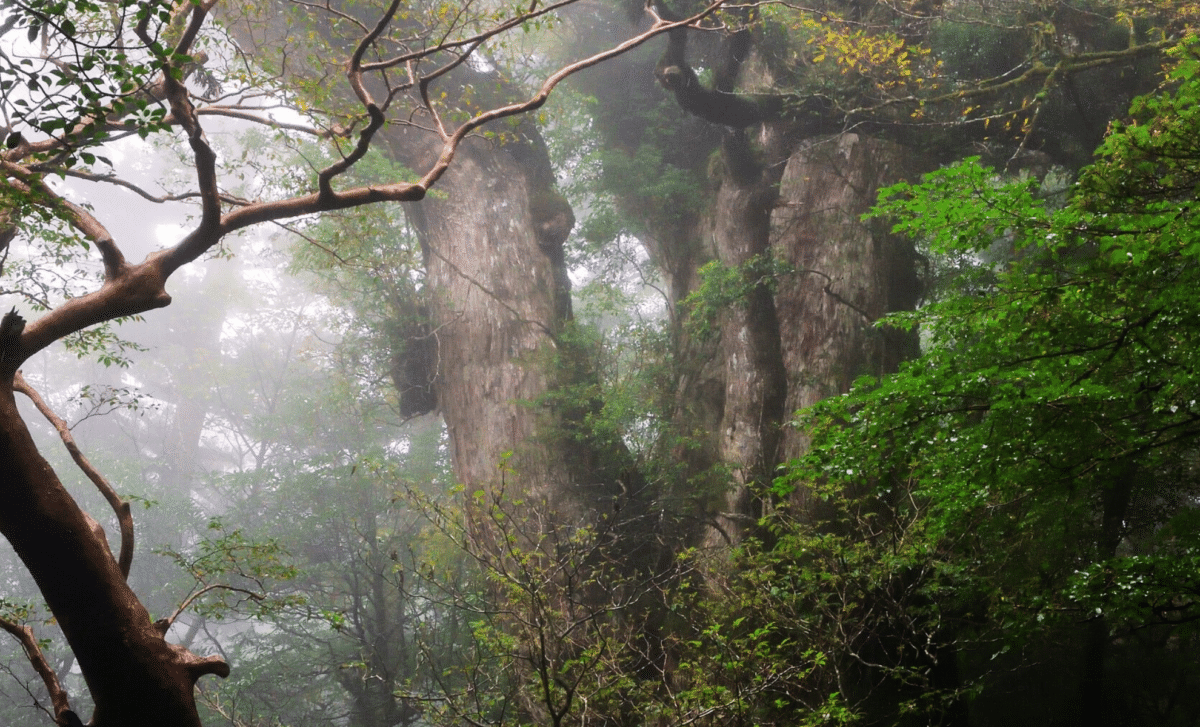
The discovery of Adhaerobufo wokomungensis is a significant addition to the rich biodiversity of the Guiana Shield, a region known for its isolated table mountains and rugged terrain. The toad, first observed in 2012, was initially mistaken for a similar species but was eventually recognized as a separate entity due to a range of unique characteristics. The toad is found primarily on the Wokomung Massif, an isolated mountain that hosts a variety of species with narrow, restricted ranges.
The study that led to this discovery was driven by a comprehensive comparison of specimens from the region, which began with a paper focused on highland amphibians. Dr. Philippe J. R. Kok, the biologist who led the effort, conducted meticulous fieldwork and laboratory analysis, examining both physical traits and genetic data to separate this toad from its lookalike relatives. The findings were published in the Journal of Vertebrate Biology, underscoring the importance of continued biodiversity surveys in remote, understudied areas of the world.
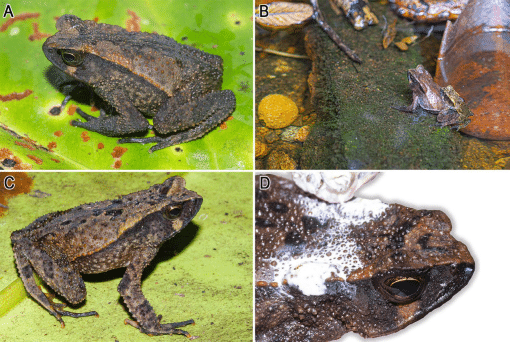 Adhaerobufo wokomungensis sp. nov. in life. A) Holotype (IRSNB4223, male, 45.3 mm snout-vent length), B) paratypes in situ, in amplexus (IRSNB4224, male, and IRSNB4225, female), C) uncollected male, D) white parotoid macrogland secretions produced by the same specimen as illustrated in C. Photos D.B. Means.
Credit: Journal of Vertebrate Biology
Unique Features and Behavioral Traits
Adhaerobufo wokomungensis has several distinctive features that set it apart from other toads in its family. One of the key differences is found around its mouth and hands. Unlike its cousins, this toad does not exhibit the bright white lower-lip stripe that many related species have. Males of the species also carry tuberous bumps between the first three fingers, a feature that further distinguishes it from similar toads.
“The species is diurnal and lives on the leaf litter in medium-high canopy montane forest,” wrote Dr. Kok, emphasizing the toad’s unique lifestyle. While many toads are nocturnal and vocal, Adhaerobufo wokomungensis stands out by being active during the day and staying hidden in the leaf litter of the forest floor. This behavior is in sharp contrast to the more typical toads, which are often heard calling from ponds at night. Researchers have also noted that the toad has not been observed making any vocal calls, making it an unusual member of its family.
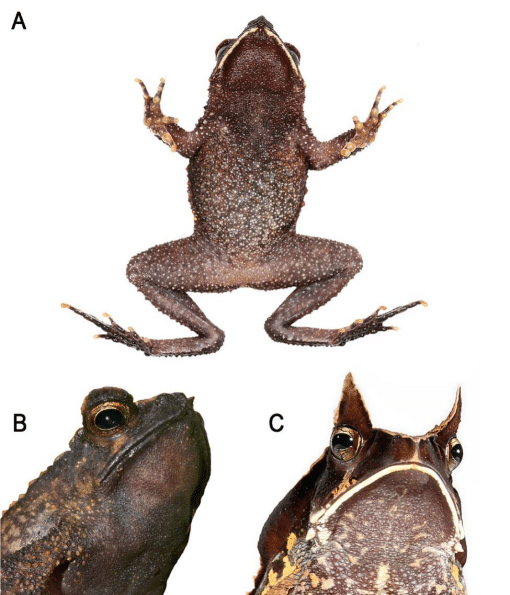 Underlip condition in live Adhaerobufo nasicus (A – bright white; IRSNB15678), Adhaerobufo wokomungensis sp. nov. (B – unmarked; holotype, IRSNB4223) and Adhaerobufo ceratophrys (C – bright white; QCAZ55426). Note also the condition of the dermal projection on the outer edge of the eyelid and of the preorbital and pretympanic crests. Photos P.J.R. Kok (A), D.B. Means (B), and courtesy Diego Quirola-BIOWEB, https://bioweb.bio (C). Images not at scale.
Credit: Journal of Vertebrate Biology
Genetic Evidence Confirms the New Species
In addition to physical differences, genetic analysis played a crucial role in confirming the distinct nature of Adhaerobufo wokomungensis. The genetic gap between this species and its closest relatives was measured at nearly five percent, a significant enough difference to classify it as a separate species. The research conducted by Dr. Kok and his team provides new insights into how species evolve in isolated environments, such as the remote mountain ranges of the Guiana Shield. The genetic study also helped clarify the evolutionary history of these toads, indicating that populations in isolated areas like the Wokomung Massif have evolved separately due to limited gene flow between them.
By comparing the genetic markers of different toad populations in the region, the study revealed the extent of genetic divergence that can occur in isolated ecosystems. This is a key factor in understanding how species adapt and evolve in unique habitats. The study’s findings underscore the importance of genetic analysis in biodiversity research, particularly in regions where species may be overlooked or misidentified due to their elusive nature.
Conservation Concerns and the Future of the Toad
Despite the excitement surrounding the discovery of Adhaerobufo wokomungensis, the species is currently categorized as “Data Deficient” by the International Union for Conservation of Nature (IUCN). This means that there is not enough information about the toad’s population size, reproduction habits, or long-term survival to accurately assess its conservation status. Dr. Kok and his team have expressed concerns that the toad’s narrow range and the increasing threat of climate change could pose risks to its survival.
Given the toad’s restricted habitat and the challenges of conducting research in such remote areas, further studies are needed to assess its population trends and identify potential conservation measures. Researchers plan to conduct additional field surveys to gather more information about the toad’s behavior, reproduction, and survival rates. These future studies will be critical in determining whether this newly discovered species faces any immediate threats and how it might be protected in the long term.