
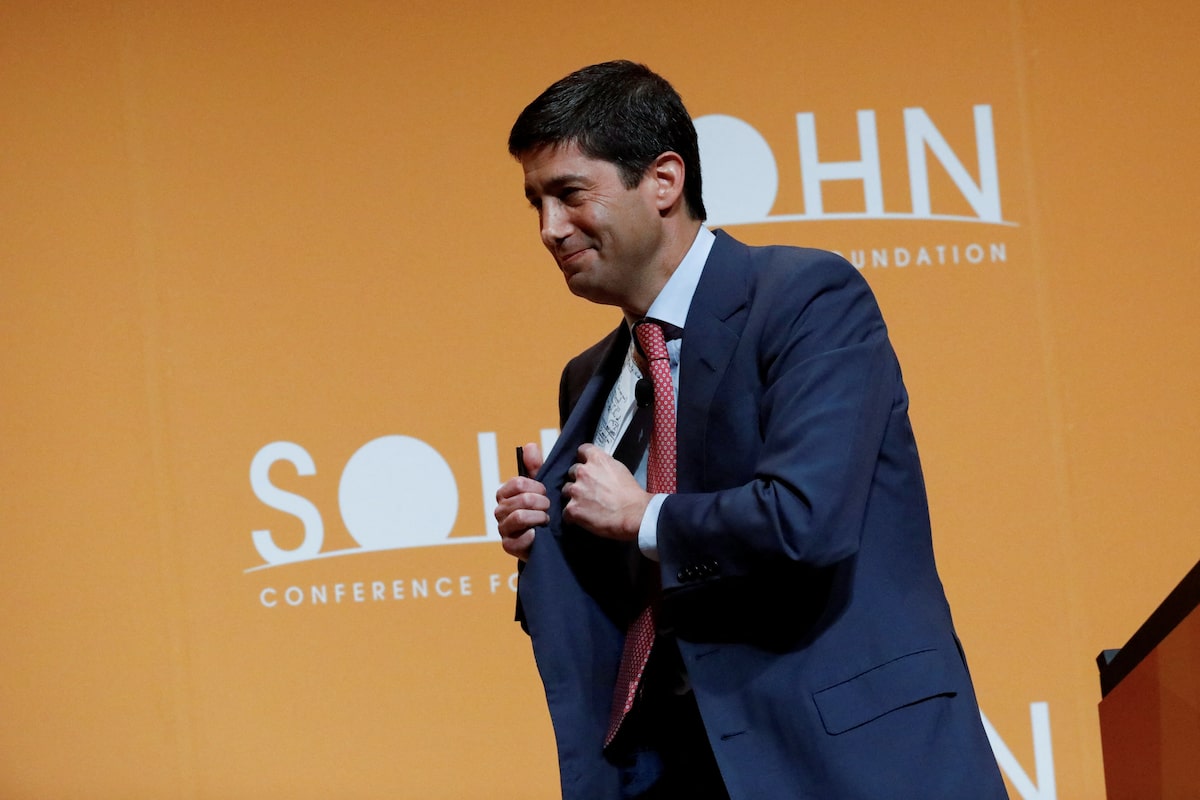
Kevin Warsh attends the Sohn Investment Conference in New York in May, 2017.Brendan McDermid/Reuters
Back in the spring of 2010, Kevin Warsh penned “An Ode to Independence” for the U.S. Federal Reserve.
Mr. Warsh is now U.S. President Donald Trump’s nominee to become the central bank’s next chair. But when he delivered that oratory, he was still a member of the Board of Governors of the Federal Reserve System.
“The Fed is not independent from government. It is independent within government,” Mr. Warsh told the Shadow Open Market Committee, an organization of independent economists that critiques the Fed’s policy decisions, stressing there is a “misconception” about the nature of the central bank’s authority.
“And elected representatives have every right to redraw the central bank’s authority, even if a fuller reading of economic history considers it unwise.”
Some 16 years later, that discourse portends Mr. Warsh’s potential vision for reforming the Fed and resetting its relationship with the Trump administration. As he explained during that address, the Fed must demonstrate its independence, not just declare it.
“Central bankers err if they presume that independence is some inalienable right, some entitlement,” he added.
Bessent refuses to offer opinion on Trump’s authority to fire Fed officials
The U.S. Senate still needs to confirm Mr. Warsh as the successor to outgoing Fed Chair Jerome Powell. But in recent months, Mr. Warsh has made strident comments about the Fed’s “credibility deficit” under Mr. Powell’s leadership.
There are mixed predictions about whether Mr. Warsh will actually shake up the storied institution as much as he intimated in those comments. After all, there is a world of difference between offering analysis and doing the job itself.
Still, Mr. Warsh has made it clear that he believes the Fed needs to go back to the future on monetary policy because it has strayed too far from its mandate. In doing so, he has linked the central bank’s independence to its institutional credibility.
“What we need is regime change at the Fed, and that’s not just about the chairman, it’s about a range of people,” Mr. Warsh said last July, according to published reports, including a story by The Wall Street Journal. “It’s about breaking some heads.”
That’s not the banter that one expects from a Fed chair candidate. But Mr. Warsh believes that central bankers “can ill-afford” to be anything but straight shooters.
Mr. Warsh, though, is a paradox. He is known for being an “inflation hawk” but also appears to share Mr. Trump’s desire to lower short-term interest rates – even though inflation is still above the Fed’s 2 per cent target.
But with the Fed’s independence under constant attack by Mr. Trump – Mr. Powell and Fed Governor Lisa Cook are facing criminal investigations – Mr. Warsh needs to make clear if he is an institutionalist.
He has mused about creating a new Treasury-Fed accord to reduce the size of the central bank’s balance sheet to put downward pressure on long-term rates. Key to his proposal is that Treasury Secretary Scott Bessent would have considerable sway over that process.
Mr. Warsh has also expressed the view that the Fed needs to move away from “data dependence” and potentially reduce its focus on certain factors, such as tariffs.
Investors bet on steeper yield curve under incoming Fed chief Warsh
But considering that he has criticized Mr. Powell for consistently missing the mark on interest rates, the Fed’s independence rests on Mr. Warsh not ignoring the data. The last time inflation was below the Fed’s target was in February of 2021.
Of course, the Fed’s credibility matters to Canadians, too.
Bank of Canada Governor Tiff Macklem welcomes Mr. Warsh’s nomination and has not commented on Mr. Warsh’s prospective plans for the Fed.
Mr. Macklem remains a vocal supporter of the Fed’s independence.
“The Federal Reserve, it’s the most important central bank in the world, and we all need the Fed to work well,” Mr. Macklem said on Thursday at the Empire Club of Canada. “Our financial markets in Canada are very integrated with U.S. financial markets.”
A loss of independence would result in a less predictable Fed, and that would affect U.S. interest rates, he said. For instance, movements in the five-year U.S. Treasury interest rate could affect the yield on the corresponding Government of Canada bond, which influences borrowing rates for business loans and consumer mortgages.
“Central banks with operational independence for monetary policy; they do a better job of delivering price stability for their citizens,” Mr. Macklem said.
“I spoke out because I believe that Chairman Powell has been doing a good job guiding the FOMC based on evidence, based on economic judgments, not on politics, and it is important that that continues,” he said, referring to the Federal Open Market Committee.
Amen to that.