
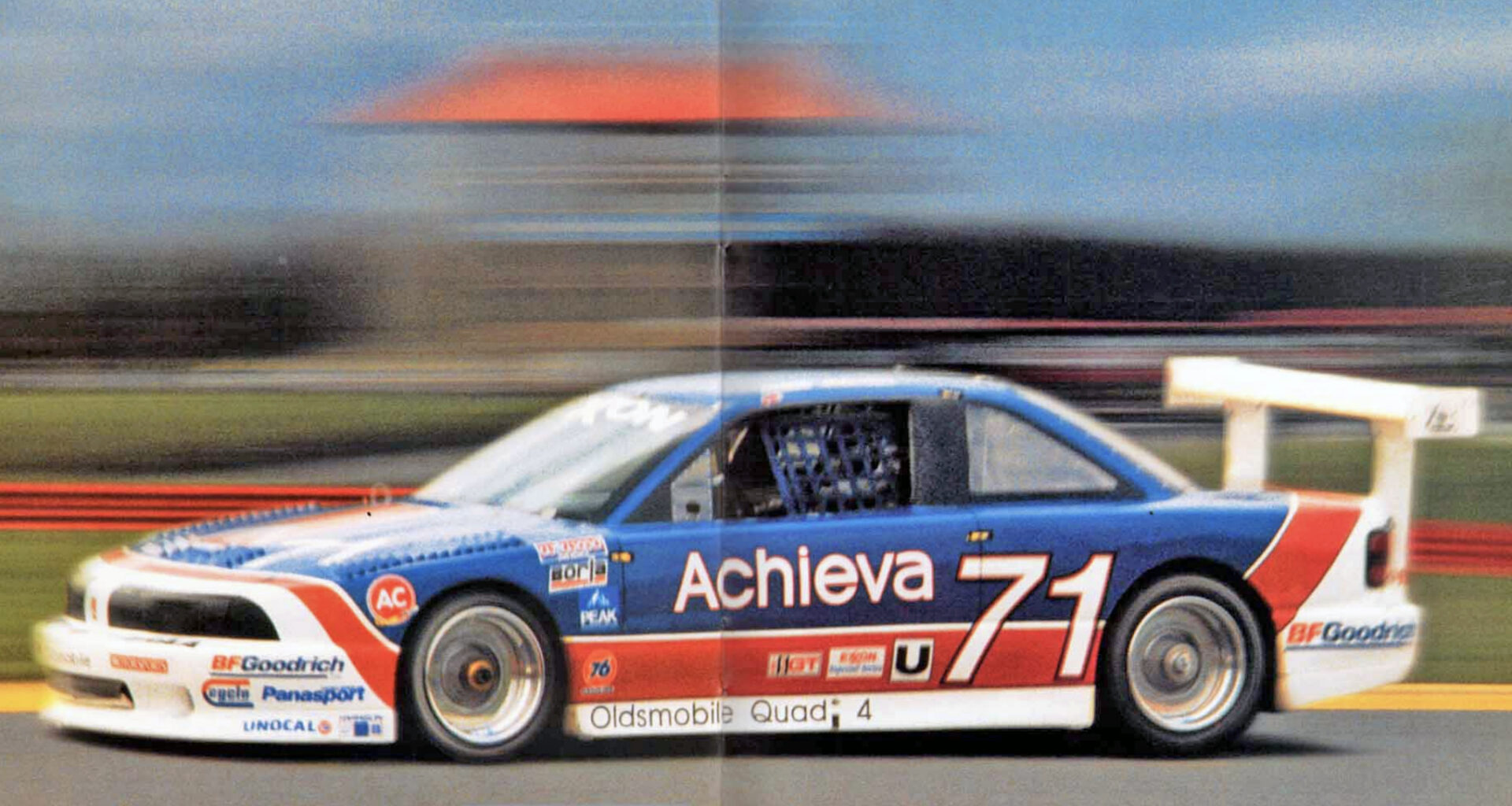
Cheeky title aside, there’s no doubt the Oldsmobile Achieva SCX was a shockingly competent compact sport coupe in the early/mid-1990s. It was designed to race in SCCA and IMSA and sported hardware upgrades over pedestrian models that were worthy of sport compact coupes from Japan. The problem, both reputationally and objectively, was that General Motors and Oldsmobile were behind the improvements and killed off everything before the sport compact craze fully took hold in the late 1990s. What could have been, however, had the potential to rewrite history.
The decade wasn’t kind to the biggest of Detroit’s Big Three, while Japanese automakers are widely praised for making some of the most famous sport compacts of the time. Honda was riding high, but Oldsmobile was hanging on for dear life. In our look at the Oldsmobile Bravada, we discussed both the lack of budget and Oldsmobile’s sales slide in a time when the Achieva was but a twinkle in its father’s eye. Clearly, the Achieva SCX had some strong headwinds to overcome.
 Oldsmobile
 Acura
Acura
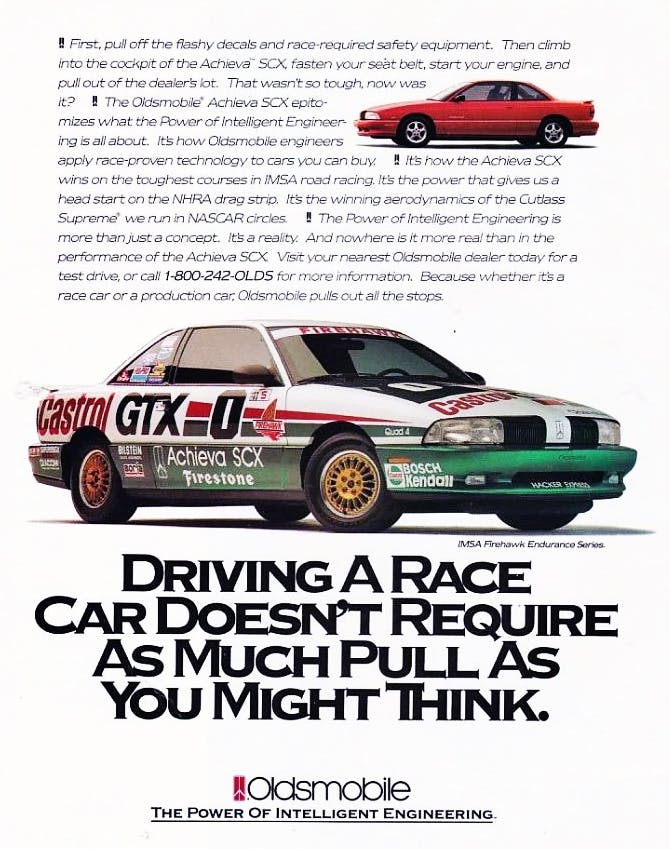
Some may suggest it’s disingenuous to mention the Achieva SCX in the same breath as an Integra Type-R, Honda Civic Si, or Mitsubishi Eclipse. There’s validity in that argument, but Oldsmobile went hard in the paint to promote its motorsport successes in 1992, so it’s worth discussing. Olds was an underdog automaker in the IMSA Automobile Magazine International Challenge Series but won against the likes of the Honda Prelude, Nissan 240SX, Mazda RX-7, Acura Integra, and BMW 325i. In that same year, the Achieva SCX took down the Taurus SHO, Toyota MR2 Turbo, and Dodge Stealth R/T in IMSA’s Firehawk Endurance Series.
 Oldsmobile AerotechOldsmobile
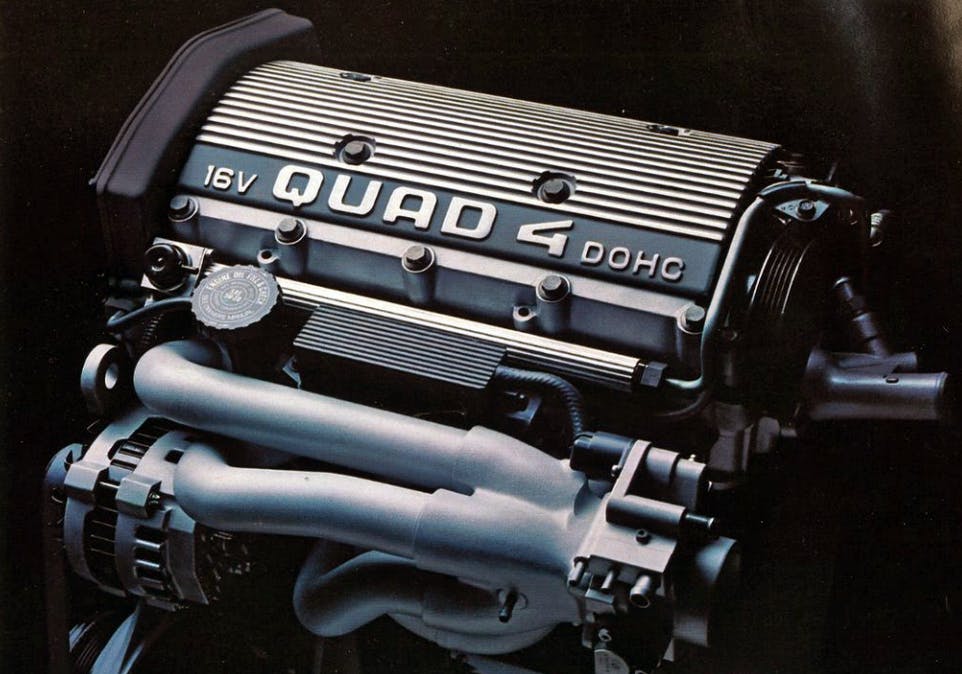 Base Quad 4Oldsmobile
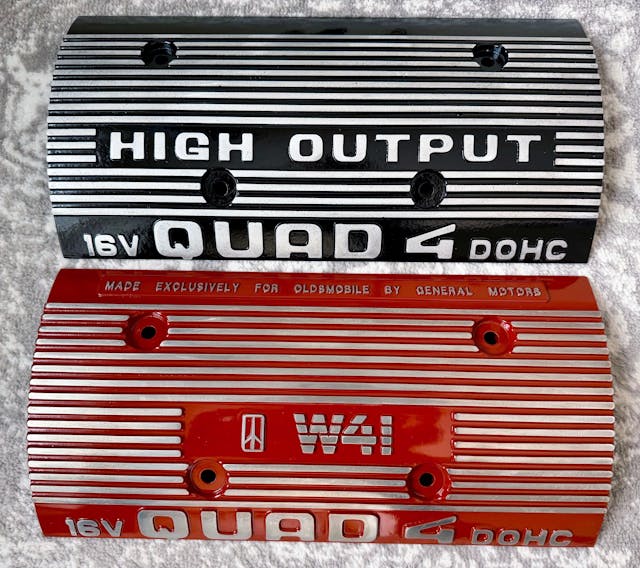 Made exclusively for Oldsmobile!Hagerty Media reader Tom
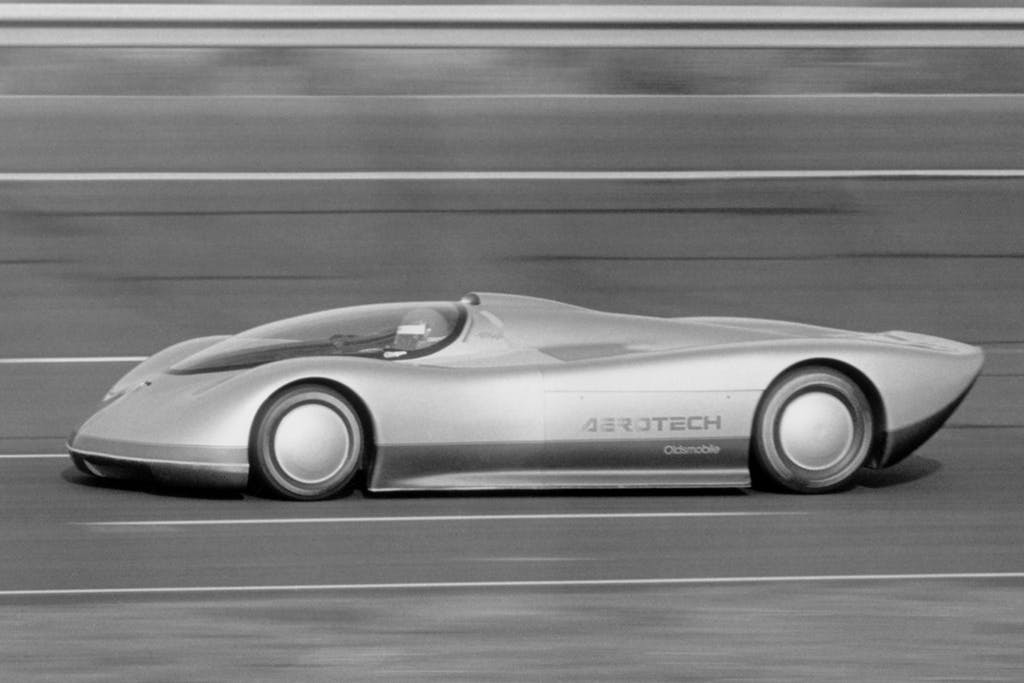
A fair bit of credit goes to Oldsmobile’s Quad 4 engine, proven with the slippery Aerotech’s feats of engineering might, and tuned up to W41 spec for the Achieva SCX (and its Cutlass Calais 442 W41 predecessor). This “hot one” came with more aggressive camshafts, unique engine mapping, free-flowing exhaust, and 190 horsepower, with a 7000-rpm redline.
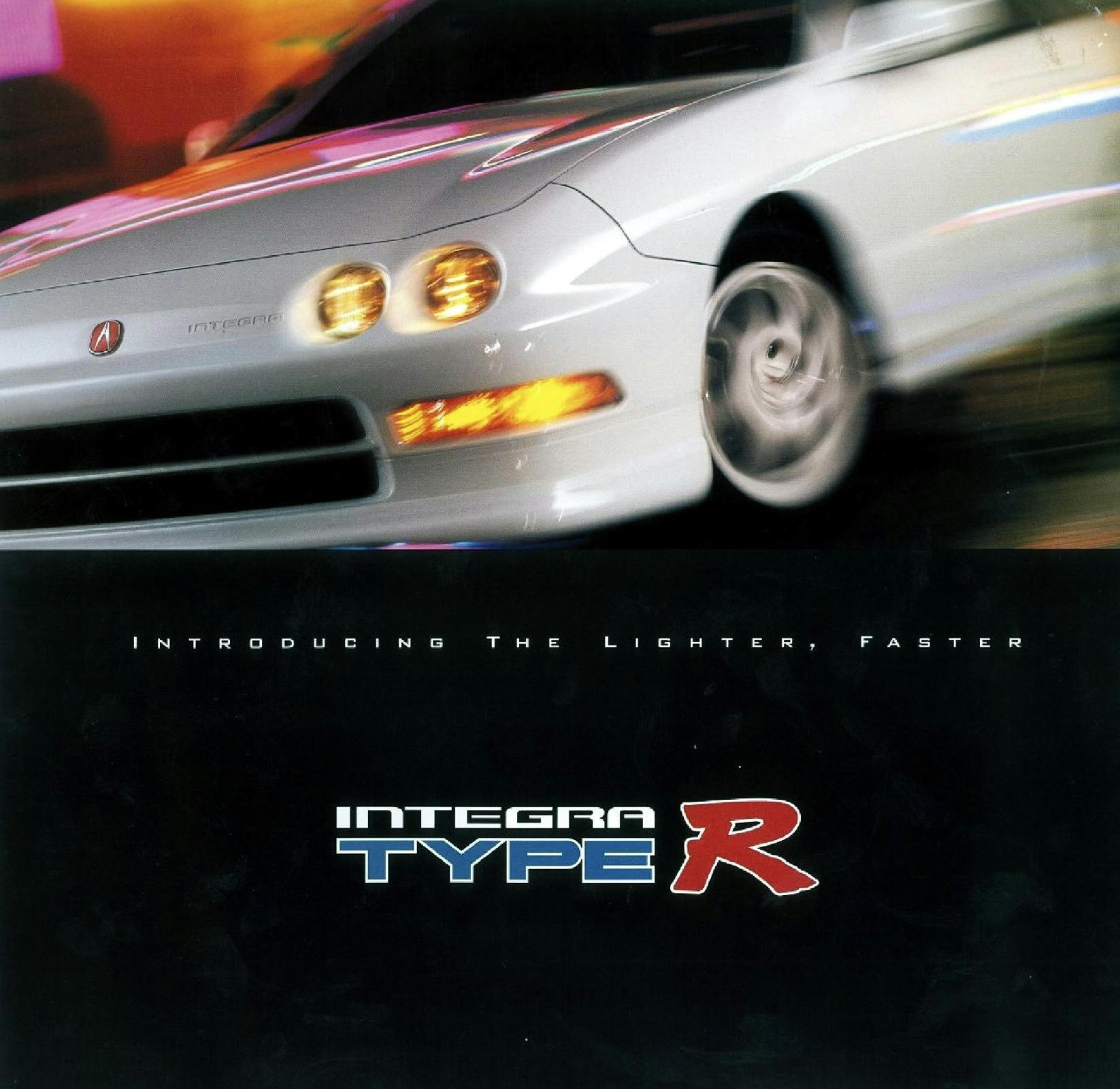
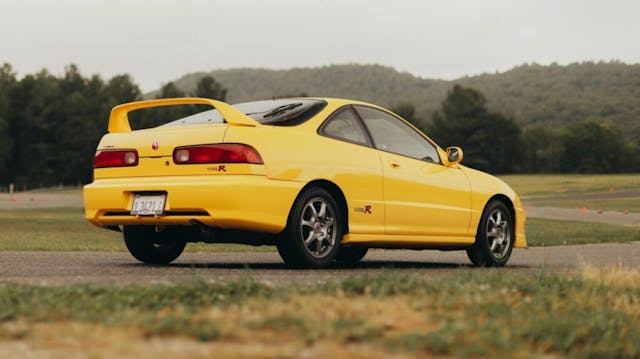
That’s only five fewer ponies than Acura’s famous Type-R, with more displacement (2.3 vs. 1.8 liters) for more torque (160 vs. 130 lb-ft) at a much lower rpm (4000 vs. 7500). The Acura revved to about 1500 more rpm, but General Motors should be applauded for getting this close with the Quad 4’s timing chain, where the Acura used a timing belt. On engine merits alone, it’s a shame the Achieva SCX didn’t live long enough to battle the Integra Type-R on a road course. There’s a good chance this little Oldsmobile would “rocket” (sorry) out of the corners with its bigger torque figures, leaving the Acura in its wake.
But the Integra Type-R is about 100 pounds lighter and sports a fully independent suspension. Oldsmobile could only add a 1.3-inch wider rear track with dual antiroll bars, while the front also received a larger bar. Both axles featured computer-controlled dampers to enhance the SCX’s firm coil springs, while Oldsmobile shockingly downsized the wheels relative to the 16-inchers on the Achieva SC: lightweight, five-spoke 14-inch wheels were the only option on the SCX, but they were a stout 6.5 inches wide and wore 215-section BFGoodrich Comp T/A tires.
While the SCX looked mundane on 14-inch wheels, the gearbox was treated to a significant upgrade. The Getrag 282 had unique gear ratios to complement the W41’s more aggressive camshafts and engine tuning. But what made the Achieva SCX an absolute shocker was the availability of a “heater only” option (C41) that deleted the heavy air conditioning, added crank windows, and installed a Torsen limited-slip in the differential.
The “heater only” SCX can very well be spoken in the same breath as Chevrolet’s famous Camaro 1LE package, and Oldsmobile’s own ordering guide for dealerships insisted these “should not be ordered for the majority of your stock.”
There’s little doubt the SCX was the most impressive tune for all of GM’s N-body compacts, a notion validated when it met the expert hands of MotorWeek staffers back in 1993. They got their hands on a model with air conditioning (C60) and were impressed with the acceleration, handling, and a shockingly affordable $15,524 asking price. Their misses were modest, mostly centering around the long-throw shifter.
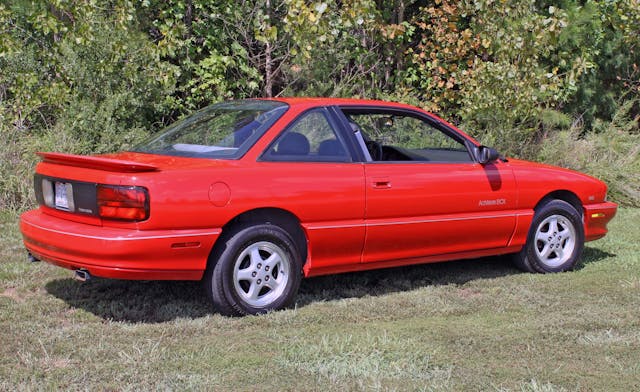 Wikipedia Commons | Jrobhenley
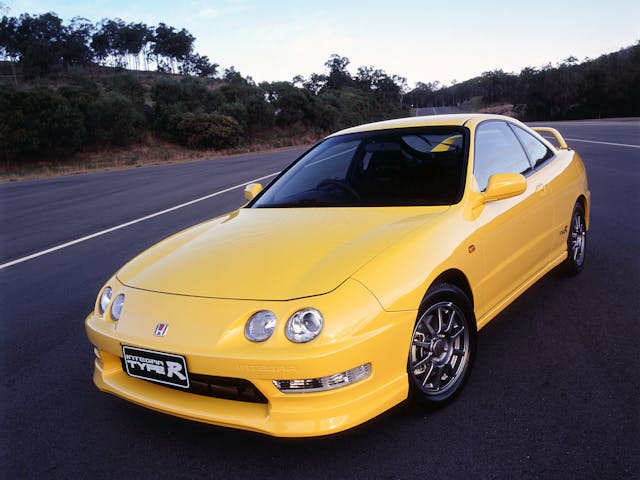 Honda
Honda
 Acura
Acura
 Oldsmobile
And that shifter is one of the few reasons why Oldsmobile’s Achieva SCX needed further refinement for a future throwdown in the sport compact class. Its gutsy motor and hunky tires could have proven the old adage “there’s no replacement for displacement” on a track with Acura’s Type-R. Oldsmobile even had several years to implement an independent rear suspension (arriving for all N-bodies in 1997) that could have put a completely new spin on our historical impressions of the sport compact era. The on-track dogfights between Oldsmobiles and Acuras would have been heroic!
Coulda, woulda, shoulda: All of Oldsmobile’s hard work was but a flash in the pan, as the SCX received its curtain call after the 1993 model year, with approximately 1600 units sold. It’s an audacious move to compare the Achieva SCX to Acura’s Integra Type-R, but I’ll take the heat for my assertion. No matter your automotive preferences, the untimely demise of the Achieva SCX is a tragedy, much like a few other GM vehicles that deserved a better fate.
(Special thanks to 1990’s GM expert Tom for lending a hand in researching this article.)