
Breadcrumb Trail Links
Daily GleanerFredericton & WestNew BrunswickThe IssuesEnergy & Environment
Mayor cites lack of dialogue, threat of environmental catastrophe
Published Feb 06, 2026 • Last updated 10 hours ago • 5 minute read
You can save this article by registering for free here. Or sign-in if you have an account.
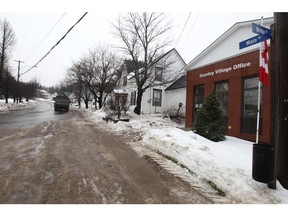 The former Stanley village office on Main Street now serves as the Nashwaak Rural Community office. BRUNSWICK NEWS ARCHIVESArticle content
The New Brunswick community where one of the federal government’s proposed nation-building projects will be located says there are still evironmental concerns to answer to before it can give its blessing.
Advertisement 2
This advertisement has not loaded yet, but your article continues below.

THIS CONTENT IS RESERVED FOR SUBSCRIBERS
Subscribe now to read the latest news in your city and across Canada.
Unlimited online access to articles from across Canada with one account.Get exclusive access to the e-Edition, an electronic replica of the print edition that you can share, download and comment on.Enjoy insights and behind-the-scenes analysis from our award-winning journalists.Support local journalism and the next generation of journalists.
SUBSCRIBE TO UNLOCK MORE ARTICLES
Subscribe now to read the latest news in your city and across Canada.
Unlimited online access to articles from across Canada with one account.Get exclusive access to the e-Edition, an electronic replica of the print edition that you can share, download and comment on.Enjoy insights and behind-the-scenes analysis from our award-winning journalists.Support local journalism and the next generation of journalists.
REGISTER / SIGN IN TO UNLOCK MORE ARTICLES
Create an account or sign in to keep reading.
Access articles from across Canada with one account.Enjoy additional articles per month.Get email updates from your favourite journalists.
THIS ARTICLE IS FREE TO READ REGISTER TO UNLOCK.
Create an account or sign in to continue with your reading experience.
Access articles from across Canada with one accountShare your thoughts and join the conversation in the commentsEnjoy additional articles per monthGet email updates from your favourite authors
Article content
“The protection of the Nashwaak and Tay watersheds is not negotiable,” said Nashwaak Rural Community Mayor David Sweeney, whose municipality encompasses the former Village of Stanley and the site of the proposed open-pit tungsten and molybdenum Sisson Mine near the Nashwaak River’s headwaters.
Sweeney says there’s been a communications gap between the province and his three-year-old municipality since the federal government revived talks around the Sisson Mine, a discussion that had laid mostly dormant since 2017.
Vancouver-based Northcliff Resources Ltd. owns the majority stake in the mine, and has said the mine would create 500 construction jobs and 300 full-time openings until the mine reaches the end of its expected lifespan after 27 years.
The tungsten it contains is particularly coveted by global militaries, used for aerospace applications and weapons systems, like armour-piercing ammunition. The world’s supply is controlled mostly by China, so the deposit along the Nashwaak could be a gamechanger for G7 nations.
Advertisement 3
This advertisement has not loaded yet, but your article continues below.
Article content
Nashwaak’s council issued a news release this week, saying “global experience has demonstrated that failures associated with large-scale tailings storage facilities can result in catastrophic and irreversible damage” to watersheds, and “any development that introduces even a low-probability risk of such outcomes must be approached with extreme caution and a precautionary lens.”
That referred to the Mount Polley copper and gold mine near Williams Lake and Xatśūll (Soda Creek) First Nations in central British Columbia, where a tailings dam fail in 2014 spilled 25 million cubic metres of toxic wastewater into three nearby lakes.
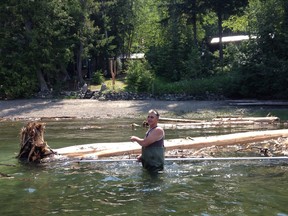 August 6, 2014 – John Jones, who lived in Mitchell Bay on Quesnel Lake at the time of the spill, wades into the contaminated water to clean up debris that had drifted onto his waterfront property. POSTMEDIA ARCHIVES
The Nashwaak feeds into the St. John River in Fredericton, meaning a similar break at the Sisson Mine could have consequences for the entire watershed.
Council’s concerns echo those from the Nashwaak Watershed Association, a nonprofit that works on conservation efforts along the river.

Morning Email Telegraph-Journal
Thanks for signing up!
Article content
Advertisement 4
This advertisement has not loaded yet, but your article continues below.
Article content
The group’s executive director, Allyson Huestis, said earlier this year a disaster similar to Mount Polley at the proposed mine could be “10 times bigger” given the scale of Northcliff’s plans.
“Tailings ponds are forever,” Huestis said in January. “Whether it’s a slow leak or a major breach, every drop flows downstream – to Nashwaak communities, to Fredericton, to farms, to the Wolastoq, all the way to the Bay of Fundy.“
It’s also alarmed some First Nations members, including Indigenous grandmothers, who occupied the proposed mine site in the past by setting up camp there.
The Wolastoqey Nation’s six chiefs signed an accommodation agreement with the province in 2017. But in January of this year, one of those chiefs, Patricia Bernard of Madawaska First Nation, told Brunswick News in January of this year they were “kind of duped” on the agreement, and that the province hadn’t fulfilled a number of its points including a promise by the provincial government to find property that would replace Crown or public land for the mine that the Wolastoqey Nation considers their traditional territory.
Advertisement 5
This advertisement has not loaded yet, but your article continues below.
Article content
Department of Natural Resources Minister John Herron said Friday he met with First Nations earlier in the week to speak on a number of issues.
“Overall, that conversation went well with respect to Sisson,” he said.
Herron said 28 of the environmental impact assessment’s approximately 40 conditions “have to be really in play” before the project can get underway, but “some of the conditions come in to play after the mine begins, or just at the moment that the mine begins.”
He also said his department is “very much live” to concerns had over tailings, “in particular with the proposed Sisson Mine itself.”
“How we approach the issue of the treatment of tailings, I think that will be very much a test,” said Herron, noting the Department of Environment and Local Governance had engaged a tailings “thought leader.”
The news release from the Nashwaak Rural Community said “council remains concerned that key environmental impact assessment requirements remain outstanding and that the proponents have not meaningfully engaged with council to date.”
Advertisement 6
This advertisement has not loaded yet, but your article continues below.
Article content
“The Nashwaak River runs right through the heart of my community, and it’s in the blood of everybody in the community,” said Sweeney.
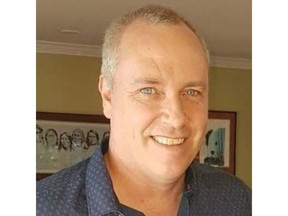 David Sweeney, mayor of Nashwaak Rural Community. BRUNSWICK NEWS ARCHIVES
The mayor said his council “supports development that is done responsibly and with full transparency,” later adding he spoke with the DNR minister about the matter on Wednesday at a meeting of the Capital Region Service Commission.
“I … was concerned about the communication aspect to it, and (the minister) just let me know that they’re just getting into the process of getting the company up to speed on what they’re doing,” Sweeney said.
The mayor says he wants to ensure his community is consulted before the project goes ahead, which he’s been told could happen next year.
“We’re right at the beginning stages of this, so we’re just trying to collect as much information as we can” from Northcliff and the provincial and federal governments, said Sweeney.
Advertisement 7
This advertisement has not loaded yet, but your article continues below.
Article content
“The organizations and the bigger groups are going to the (other levels of) government and asking questions, but the people that are directly affected are in my community, and they’re coming to council, they’re coming to me, and they’re asking me questions,” he said – questions his municipality doesn’t always have the answers to.
Herron said he’s told Northcliff, whose only holding is the Sisson Mine opportunity but only office is in Vancouver, and their parent company, the New Zealand-based Todd Corporation, that “over time, there would need to be more boots on the ground, from a head office perspective, in Fredericton than in Vancouver.”
“We’ve made it clear (to the company) that community engagement is absolutely vital.”
Sweeney said he thinks they’re getting there after his recent CRSC meeting with the minister, that included Grand Lake Mayor Kevin Nicklin, New Maryland Mayor Judy Wilson-Shee and Fredericton Coun. Greg Ericson, among a number of local representatives that had touched base with Herron when the mine was shortlisted in November.
Advertisement 8
This advertisement has not loaded yet, but your article continues below.
Article content
“I think they understood it all along, they just didn’t know how to get to that stage. But I think it’s coming along.”
“I’m quite heartened that the mayor, Sweeney, had that reaction,” Herron said, reiterating what the rural mayor had said about the process just getting started.
“I want to underscore this was a first of what I would envision to be many meetings of this nature,” he said.
“Consultation can never be seen as a singular event.”
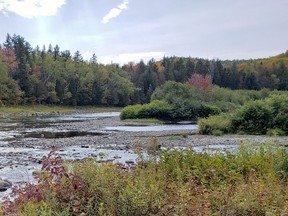 The Sisson mine would be built near the headwaters of the Nashwaak, the pristine river that meanders through several communities in central New Brunswick before draining into the St. John River at Fredericton. Photo by John Chilibeck/Brunswick News
Striking a balance between the economic development that comes with the mine and protecting their beloved watershed is difficult, Sweeney added.
“You want the prosperity for your community, but if the river’s not there in 30 years time, or it’s been destroyed because of something that … we could have had some form of stopping it, or having a conversation about what could happen, it’s difficult for council to tread through this.”
Article content
Share this article in your social network