
News > Expeditions
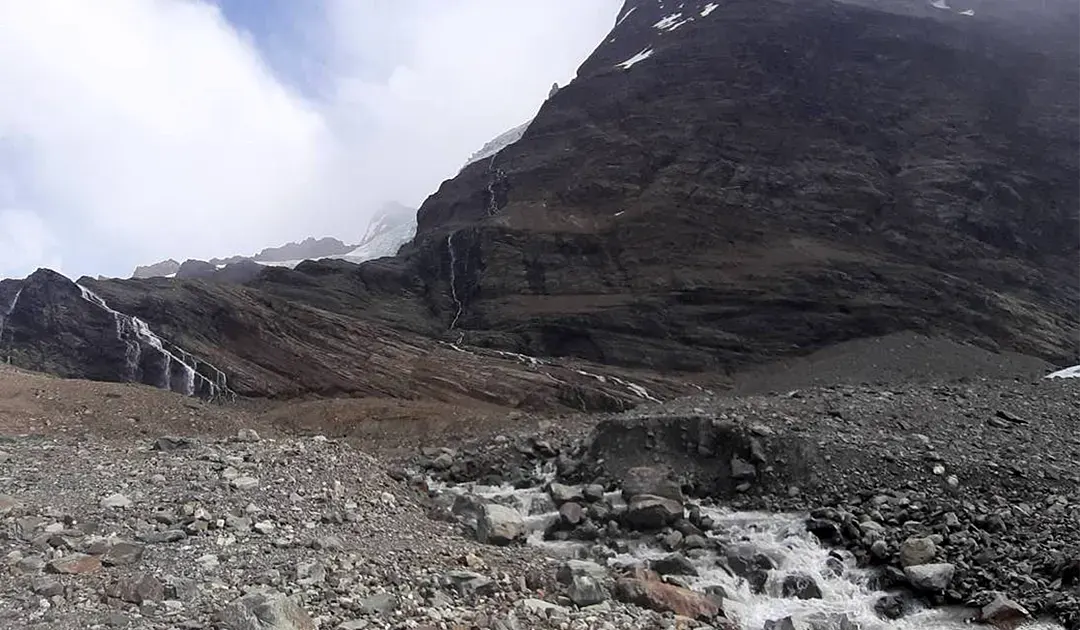 Meltwater stream in Cumberland Bay on South Georgia (Photo: Berenice Ebner / AWI)
Antarctic phytoplankton uses iron from glacial meltwater
Iron is an essential micronutrient for phytoplankton and a prerequisite for its growth. A research team from the Alfred Wegener Institute (AWI) has, for the first time, experimentally demonstrated that Antarctic phytoplankton can take up and utilize iron from glacial meltwater. By contrast, iron that enters the ocean via groundwater proved to be not bioavailable. This finding contradicts previous assumptions that groundwater also represents a usable source of iron. The results were published in the scientific journal Communications Earth & Environment.
Natural iron sources such as glacial meltwater, shelf sediments, and groundwater contribute to the fertilization of large-scale phytoplankton blooms in the Southern Ocean, for example around the island of South Georgia. These blooms play an important role in the uptake of carbon dioxide (CO₂). Until now, however, the bioavailability of these iron sources has mostly been estimated, which complicates the modeling of biological CO₂ uptake—especially against the backdrop of climate change and increasing glacial melt.
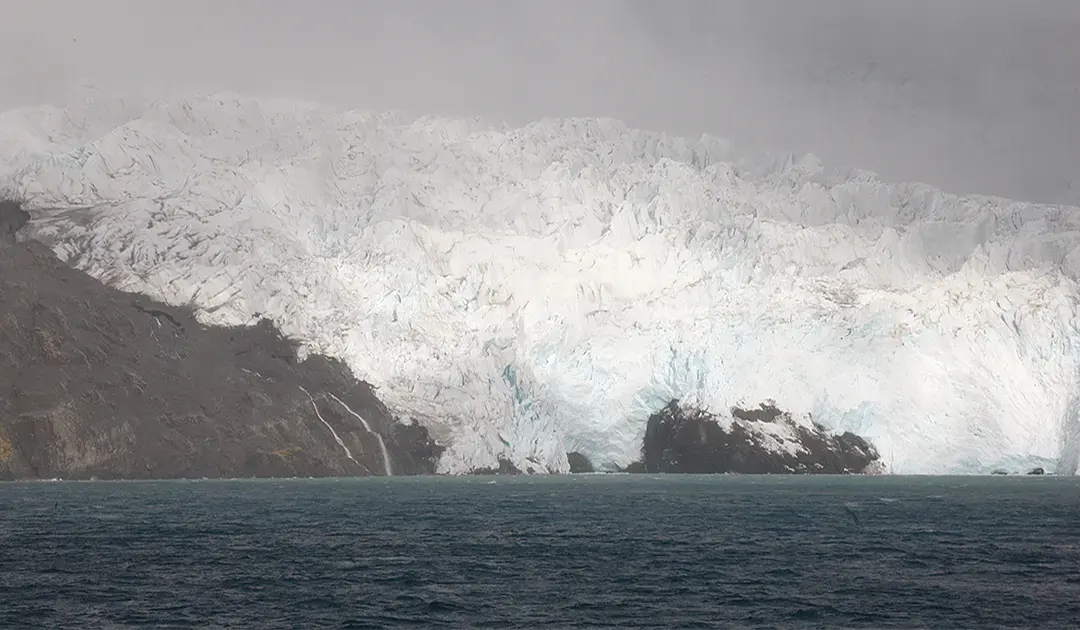 South Georgia is characterized by massive glaciers that flow from the mountains down to the sea. In King Haakon Bay, the eternal ice meets the ocean directly, creating a landscape of quiet, rugged beauty. (Photo: Heiner Kubny)
“We have experimentally quantified the bioavailability of iron from various natural sources for the first time,” explains Jasmin Stimpfle, doctoral candidate at AWI and first author of the study. “It became clear that iron from glacial meltwater is significantly more usable than iron from groundwater.” It was unexpected that iron from groundwater could not be taken up by the algae.
In addition, the study showed that the chemical composition of seawater is also crucial: dissolved organic matter can bind iron and thus make it inaccessible to phytoplankton—regardless of the iron source.
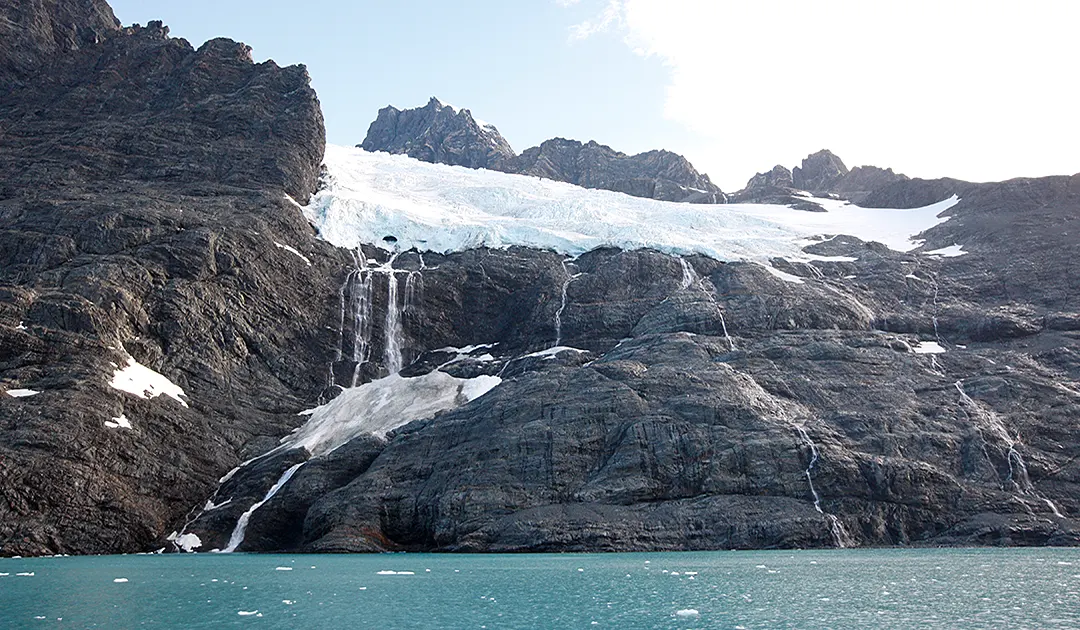 Between ice and sea: glaciers in the Drygalski Fjord. (Photo: Heiner Kubny)
The experiments were conducted during the Polarstern expedition Island Impact in November and December 2022 around South Georgia. “The Southern Ocean has great potential for carbon storage,” says Dr. Scarlett Trimborn, co-author of the study. “Our results underscore how important a better understanding of iron bioavailability is in order to reliably model future changes in CO₂ uptake.”
Heiner Kubny, PolarJournal