
In the winter of 2009, Patrick McCadden was a forward for the Green Bay Gamblers, a junior hockey team in Wisconsin that was grinding its way through a disappointing season. Early one morning, as the team bus rolled back into town after squandering the previous night’s game, their coach issued a stern order: report to a nearby soccer field at 6 a.m. No exceptions.
The players gathered in the darkness a few hours later, cursing their lack of sleep and contemplating how many laps they would have to run as punishment. Ten minutes passed, then 20, then 30. They always started on time. But the coach still hadn’t showed.
Then, off in the distance, someone spotted an object in the grass.
“So, we go out in the middle of the field and we see a puck,” McCadden said.
Underneath the puck sat a handwritten note: “This is how we feel when you guys don’t show up.”
The coach, probably home in bed, was obviously not coming. The blunt message was a wake-up call for the team.
After being summarily called out, the Gamblers reeled off 22 wins in their next 24 games and went on to claim the league championship. “It completely turned the season around,” McCadden said.
It was an early glimpse into the mind of Jon Cooper.
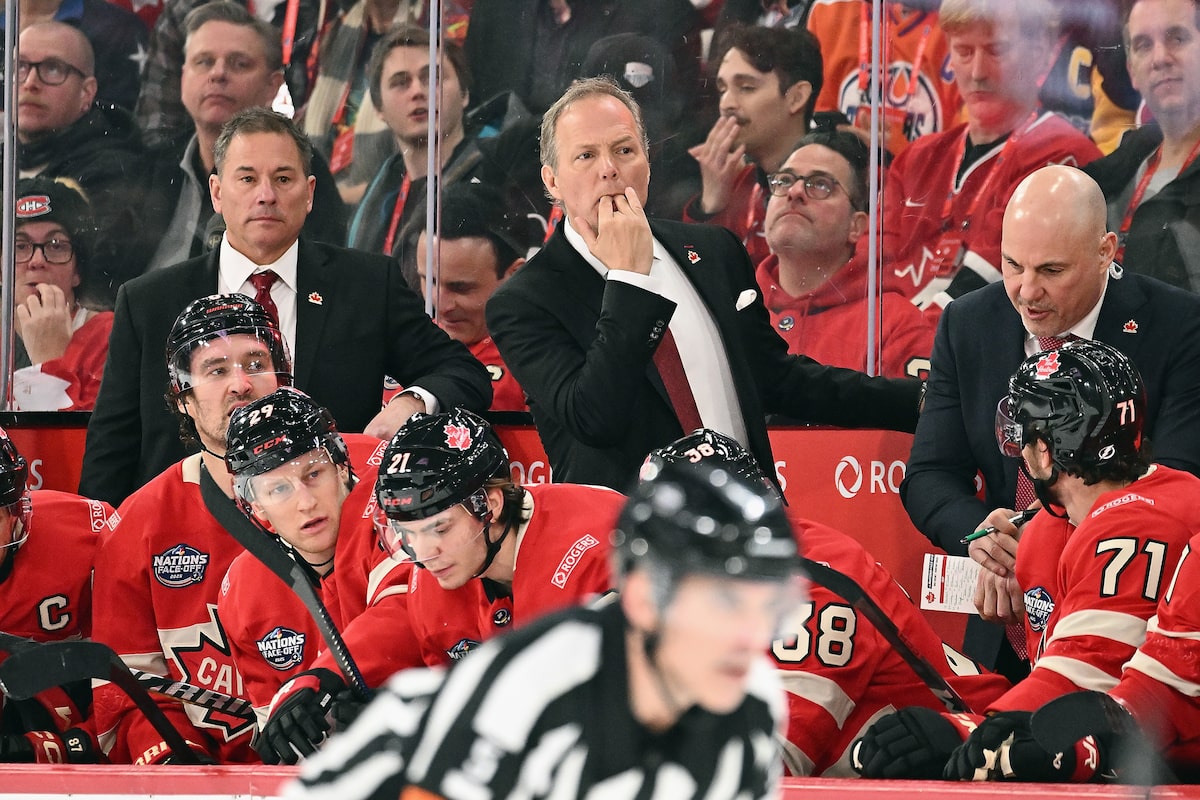
The man leading Team Canada in Milan, as NHL players return to the Olympics for the first time in 12 years, is not your typical bench boss.
Exacting in his words and calculating in how he approaches the game, he is an outsider who almost ended up a stock broker, later worked as a lawyer, then fell into coaching on a whim. He barged his way into the NHL ranks by succeeding everywhere he went.
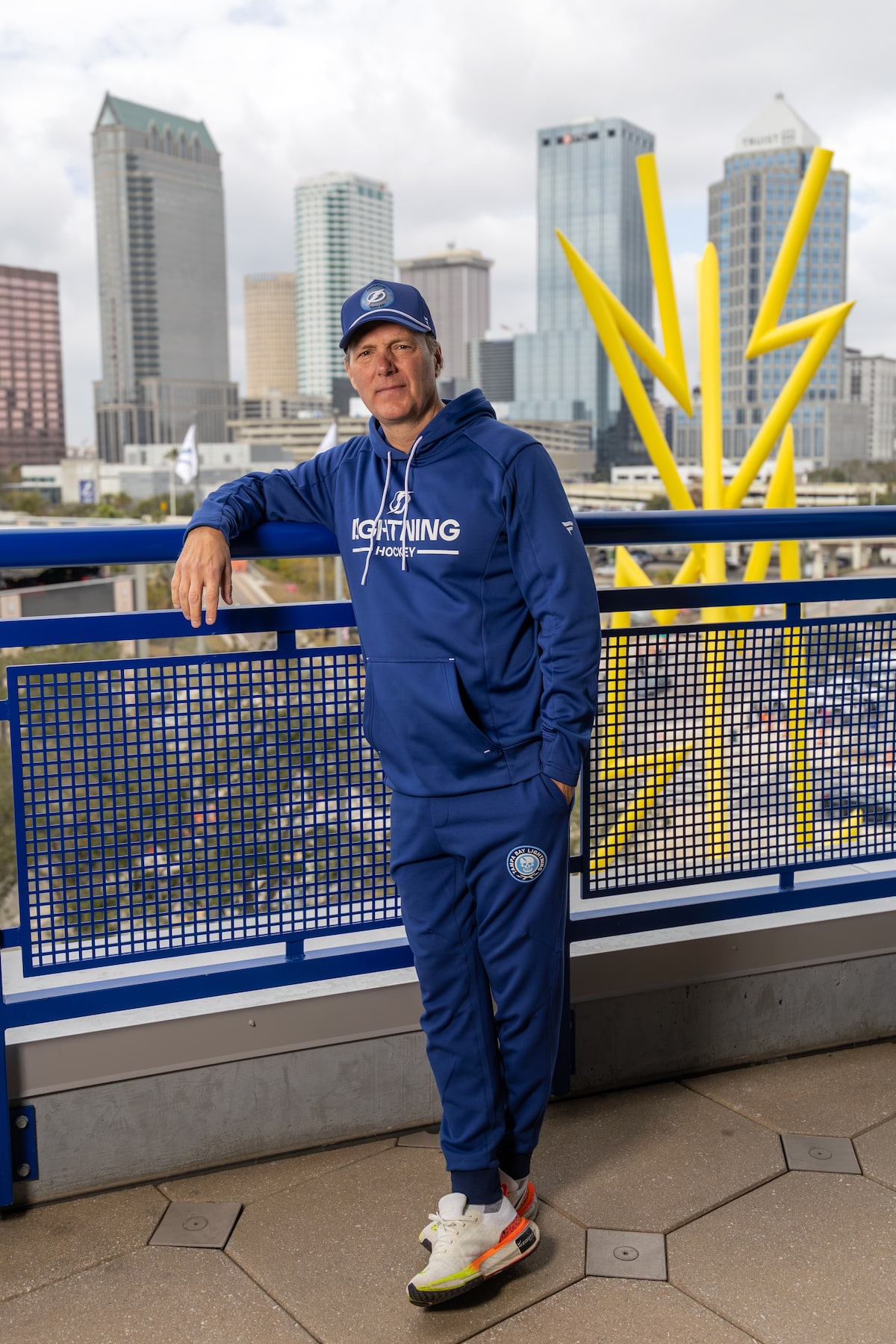
Cooper in Tampa this week before departing for the Olympics. As a lawyer, he wanted to be a player agent but got into coaching as a favour to a judge who needed someone to run his son’s team.
Mike Carlson/The Globe and Mail
The two-time Stanley Cup champion with the Tampa Bay Lightning now boasts one of the highest winning percentages in league history. But long before he became the Jon Cooper of today, he was a guy forced to contend with losing on a regular basis.
In the late 1990s, Cooper worked as a public defender in Lansing, Mich. – the kind of lawyer appointed by the court when the accused doesn’t have legal representation. They were difficult cases: some were long shots, others were downright impossible, and the money wasn’t great. But it was this challenge of somehow turning inevitable defeats into victories that ultimately taught Cooper about winning.
Coaches must be many things: salesmen, motivators, communicators, tacticians and master manipulators. The courtroom was no different.
“When you’re talking to a hockey team, basically your job is, you’re selling the hockey team. You need the 20 guys to buy into you, into what you’re preaching and what you’re doing,” Cooper said. “And it is the exact same thing as when you’re talking to a jury. You need those 12 jurors to buy into you, believe what you’re saying, so you get the verdict you want.”
It wasn’t something he was always comfortable doing.
“People say, ‘Coop, you’re pretty good at getting up in front of people.’ And I’m like ‘Well, yeah, I’ve been doing it for years.’ But trust me – I was scared.”
‘I will convince somebody’
Cooper never set out to become a public defence lawyer. It kind of happened by accident.
Born in Prince George, B.C., he grew up on a cul-de-sac in a town where all the kids played sports. His mother, who died not long after he won his first Stanley Cup in 2020, helped organize the local lacrosse tournaments. At a young age, she instilled independence in her son.
“My mom walked me the very first day of kindergarten and never walked me again. You could never do that today. But that was in the late seventies and things were different then. That kind of told you about the community; it was cool, small, safe.”
Cooper played hockey and lacrosse and figured sports were his future. At age 15, his parents sent him to Notre Dame in Wilcox, Sask., a boarding school known for its hockey academy, which has produced dozens of NHLers over the years.
Things didn’t quite go as planned.
“When I went to Wilcox – you find out you’re not going to be an NHL player,” said Cooper, who tried out for the school’s top team but didn’t make it. “It was the first time I’d ever been cut from anything, so that kind of changed me, a lot.”
Cooper played lacrosse for Hofstra University in New York, where he earned a business degree and briefly worked in the financial sector.Ann Parry/ZUMA Press Wire via Reuters Connect
Cooper contemplated going back to B.C., but decided to persevere. By Grade 12, he was finally called on to play a few games for the team.
“I could have left. And who knows what would have happened if I’d taken the easy, comfortable way out,” he said.
Cooper was fixated on playing U.S. college sports. Upon graduating, he began casting about for a hockey scholarship. Finding no takers, he convinced Hofstra University on Long Island, N.Y., to give him a spot on their lacrosse team. He eventually left with a business degree, but didn’t know what to do with himself.
“I think if there was ever a time in my life that I was a little lost, it was coming out of college,” Cooper said.
“Part of it was I was working for my dad digging ditches. He was a general contractor, so I was making great money. But I thought, ‘Okay. I’m not doing this,’” Cooper said.
In search of something more challenging, Cooper tapped his Hofstra connections and in the early 1990s landed a job at Prudential Securities in Manhattan, in their mutual funds division. It was a rollicking time to be on Wall Street. His colleagues pushed him to become a stock broker, but Cooper, still bent on hockey, began to envision himself as a sports agent.
He left Manhattan for Cooley Law School in Lansing. Upon graduating a few years later, Cooper opened his own practice and began working as a public defender. It was the least glamorous side of the legal profession.
“You’re paying your gas bill, not your mortgage bill,” he said. But as a young lawyer, Cooper needed any business he could get.
“There’s probably a lot of people out there who wouldn’t take the cases.”
Jill Kopec, a legal clerk who worked with Cooper (and later introduced him to his wife, Jessie, at a local watering hole named Crunchy’s), saw something unique in the young lawyer. His one-room law office, wedged into a non-descript strip mall next to a store that sold hospital scrubs, was as inauspicious as it gets. But inside the courtroom, she said, Cooper believed – perhaps irrationally – that he could succeed every time. “No matter what the odds were, every case, he did it like he was going to win.”
Cooper loved the idea that he could move the needle, particularly if it meant keeping someone out of jail who didn’t belong there.
“My focus wasn’t on anything else,” he said. “It was just, these are my facts, I will convince somebody.”
It also taught him something about himself.
“I hate admitting this, but I think my burning desire was to not lose,” Cooper said.
“I hated losing, I think, more than I liked winning.”
A meteoric rise through the ranks
Public defending could be a slog, though. Cooper never saw it as a long-term career.
“I remember a couple of times, he just got in his car and drove to Toronto for the weekend, just knocking on doors trying to become a player’s rep,” recalled Kopec, his former legal colleague.
Cooper’s entrée into coaching wasn’t planned. He played on a rec hockey team that drew most of its players from the legal community. One day, a local judge came to him with a problem: his son’s high school team had lost their coach. The team needed someone. Would Cooper do it?
Cooper was reluctant at first, but eventually relented. A favour to a judge never hurts, and the hockey parents at Lansing Catholic, a local private school, might need a lawyer at some point. It could be good for business.
Lansing Catholic was in a difficult spot. The team was losing twice as many games as they won. Around the league, and on the ice, opposing players openly called them losers.
When Cooper arrived in 1999, he figured he could change the culture, implement some structure and maybe teach winning habits. But he knew little about coaching.
“I would go to Michigan State and watch them do their practices, and steal drills off them,” Cooper said. “I was learning on the fly.”
The turnaround was remarkable. By mid-season the team was winning twice as many games as it lost. A few months later, they won the regional championship. In an article in the Lansing State Journal that year, defenceman Pat Frank struggled to explain the sudden shift. “It has to be something with these coaches,” he said.
Cooper, running drills with his Lansing Catholic team in 2000, came to coaching with little experience but managed to quickly turn the team around.Jesse Nieboer/USA TODAY NETWORK via Reuters Connect
The winning got Cooper noticed in the U.S. junior ranks. In 2003, he was hired to coach the Jr. A Texarcana Bandits. That was when he left law behind for good.
“I have to go see if I can make this my life,” he remembers thinking to himself. “That’s when you take the leap of faith.”
Straddling the football-mad border of Texas and Arkansas, the city was not exactly a hockey haven. Cooper and the players were responsible for dismantling the boards after games so the arena could be used for other events. When the State Fair came to town and the ice was removed, it was Cooper’s job to put it back in.
“I would set my alarm, go out and spray the ice at midnight, take an hour nap – because you have to wait an hour for it to set – wake up at 1 a.m., spray it again. I’d do it all night,’ he recalled.
“Don’t ever forget where you came from – I never do that.”
In 2006, the Bandits moved to St. Louis, and a pattern began to emerge: Cooper won back-to-back championships in 2007 and ‘08, which got him hired in Green Bay. In his second year there, he won again.
In his second year coaching the Green Bay Gamblers, Cooper led them to a championship in the 2009-10 season.Alan Ashley/ZUMA Press Wire via Reuters Connect
When Julian Brisebois was assistant general manager in Tampa, he went looking for an up-and-coming coach to helm their minor-league affiliate.Hyunsoo Leo Kim/The Virginian-Pilot via AP
By then, Cooper’s name was circulating in hockey circles. An agent reached out to tell him he should consider going pro. Cooper demurred, thinking he wasn’t ready.
As it happened, Tampa Bay, led by then-general manager and Hall of Famer Steve Yzerman, and then-assistant manager Julian Brisebois, were hunting for a coach to helm their minor-league affiliate in Norfolk, Va.
Brisebois, known as an outside-the-box thinker, called a different agent from that same firm to ask if there were any up-and-coming coaches he should know about.
“There’s a guy named Jon Cooper in Green Bay,” the agent replied.
Cooper flew to Tampa to meet them, but didn’t think he had a serious shot. “I came down to the interview just not to burn any bridges,” he said. “And I wanted to meet Steve Yzerman.”
When the interview went into its third hour, and Brisebois told Cooper to cancel his car to the airport, Cooper figured he might need to tell his wife they’d be moving again. Two seasons later, in 2012, the Norfolk Admirals won the American Hockey League championship.
Cooper’s rise up the coaching ranks was so fast, it sometimes left him disoriented.
In 2013, when he was brought in to coach the Lightning mid-season, Cooper was so green by NHL standards that he couldn’t find his way around any of the arenas.
It was a bad look for a coach. So when the team bus pulled into a new stadium each night, he had a routine.
“I would pretend I was on the phone when the bus pulled up. Then I’d get off and stand outside, and walk around like I’m on the phone,” he said. “And then when the players would get off, I would walk behind them, so I could find out how to get to the locker room.”
“True story,” Cooper said.
Did any of the players ever catch on?
“Well, they will now.”
After winning at every level he coached, Cooper was hired to coach the Lightning in 2013. He took the team to the finals in 2015, losing to Chicago, then won his first Stanley Cup in 2020 over Dallas.
Perry Nelson/USA TODAY Sports via Reuters
The game within the game
Like his high school roster at Lansing Catholic more than a quarter century ago, those who play for Cooper now say there’s something about the coach they can’t quite quantify.
“He’s won at every single league he’s been in, it’s crazy,” said Brandon Hagel, now in his fourth full season with Cooper in Tampa, and playing for Canada in Milan.
“Sometimes coaches will step away because they don’t have the room anymore. Or their message doesn’t get across,” Hagel said. “But there’s a reason Coop is the longest-tenured coach in the NHL.”
Cooper preaches accountability, and asks players to take responsibility for their own game. “The message he delivers, I don’t think there’s another guy that can deliver it better,” Hagel said.
It hasn’t all been champagne and parades though. After leading the Lightning to the finals in 2015, Cooper’s second full year behind the bench, the team stumbled and missed the playoffs two years later.
Then, in 2019, the Lightning were famously swept by Columbus in the opening round after setting what was then the record for most wins in a season, at 62. Had Tampa not come back and won two straight Stanley Cups, the collapse would have haunted the franchise for years.
And despite his successes, Cooper has never won the Jack Adams trophy as the NHL’s top coach, something that mystifies his players.
“He makes you believe in the system,” said Brayden Point, who has spent his career in Tampa under Cooper. “We’ve had a good run of guys buying into what he’s saying, and I think that’s why our team has had some success.”
‘The message he delivers, I don’t think there’s another guy that can deliver it better,’ the Lightning’s Brandon Hagel says of Cooper.Kim Klement Neitzel/Imagn Images via Reuters
But what is his method? How does Cooper manage talent – something he’s being called on to do in Milan, with a roster full of all-stars and generational players?
Cooper said the best athletes want more guidance than people think.
“The funny thing about the NHL is, they want structure,” he said. “These guys want to be pushed, they want to learn and they want to be coached.”
If his systems are communicated correctly, if the players trust the strategy – which can change week to week or game to game, depending on circumstance or opponent – and the team buys into the plan, the wins will come.
“On my best teams, by the end of the year, they just coach themselves,” Cooper said. “When we were winning the Cups and all that stuff, literally I would barely have to call anything. They all knew.”
“All you’re doing is, if something is starting to slide, you just guide them back.”
He makes it sound easy. And that’s part of his delivery. Cooper tries not to get too worked up if he doesn’t have to. If someone had walked into the room an hour and a half before his first Stanley Cup clinching game in 2020, Cooper said they would have found him playing cribbage with the video coach.
“That’s the thing with Coop, he’s so calm,” Lighting centre Anthony Cirelli said. “Especially when we were winning those Cups, no matter what happened in the game, you look back and he was calm. You could kind of feel from him that we’re good. They get a goal and it’s like, whatever – we’ll just go get one.”
Cooper, preparing for an outdoor game with the Lightning this season, says the world’s best players ‘want to be pushed, they want to learn and they want to be coached.’Mike Carlson/Getty Images
Cooper’s calm and calculating approach extends to his postgame press conferences, where he often addresses the refs, the opposition or the league as though he is still trying to sway a jury. He rarely criticizes anyone directly, but will paint a picture of how disappointed he is in a particular call.
After Tampa lost in overtime to Colorado in Game 4 of the 2022 Stanley Cup finals, Cooper was apoplectic about what he thought was a missed penalty. But he never let on.
Instead, he delivered what could be seen as a closing argument for that night’s game.
“You know, I love this league. It’s the greatest league in the world. The people that run it are amazing. Everything about it is like a dream come true for me. Especially being a Canadian kid,” Cooper began.
“I’ve been part of some heartbreaking losses and defeats to teams that took us out, and have been with a group that just fights and fights and fights.”
“And we’re all in this together – players, coaches, refs, everybody. But this one’s going to sting much more than others, just because I think it was potentially – I don’t know, it’s hard for me. This is going to be hard for me to speak, I’m going to have to – I’ll speak with you tomorrow. You’re going to see what I mean when you see the winning goal. And my heart breaks for the players.”
After a controversial goal decided Game 4 of the 2022 Cup final, Cooper questioned what he thought was a missed call.John Bazemore/The Associated Press
At that moment, Cooper sent the hockey world scrambling to find a replay of the winning goal from different angles, which ultimately showed that Colorado probably won the game with too many skaters on the ice.
A lot of coaches would have walked into the news conference raging about a goal that shouldn’t have counted. Instead, Cooper used the moment to give his audience a tour of the crime scene, imploring them, as he might a jury, to consider the injustices of the world.
But does Cooper think he’s ever actually influenced a game or a series with his approach? This question makes him laugh.
“That’s a hard question to answer,” he said. “Do I hope it has happened? Has there been intention for it to happen? Have I calculated things for it to go in a certain way? Yes. Do I think it’s actually happened? In the end, I hope not. I hope that nobody can influence that stuff. I hope the games are done the right way.”
It’s all part of the game within the game.
“Like preparing for a case,” he said. “You do everything possible to give yourself that little edge.”
‘The country exhaled’
In 2021, Cooper was on the beach in Florida when he got a call from Team Canada general manager Doug Armstrong, asking him to lead an NHL squad at the 2022 Beijing Olympics.
“It’s so hard to describe the emotion I felt,” he said. “You think about where you grew up, the country you grew up in, and the fabric of what hockey means.”
But then the NHL pulled out, and Cooper wondered if he’d ever get another chance.
“You just don’t know. It’s four more years. It would be understandable if I didn’t, because there’s so many other great coaches out there.”
At the 4 Nations Face-Off, Cooper got another chance. The tournament, originally marketed to fans as a midseason replacement for the NHL All-Star game, exploded into something different amid bad blood over Donald Trump’s tariffs and threats about Canada becoming the 51st State.
It was high-pressure hockey, and Cooper said he felt that weight right up until Connor McDavid scored the winning goal.
“The country exhaled. I think we all did, because of everything that built up,” Cooper said.
Now, in Milan, the pressure is back, and on a bigger stage.
After the NHL pulled out of Beijing 2022, Cooper is glad to get another chance to coach Canada at the Olympics.Susana Vera/Reuters
Though there is always hand wringing in Canada about the state of the game and the amount of talent the country churns out, Cooper believes those fears are misplaced.
“It’s not like Canada has gotten worse. It’s just that everybody has gotten better – that’s how the game has changed,” Cooper said.
He also knows replicating the success of the 4 Nations tournament is not a foregone conclusion. That’s the burden he carries.
“We saw what worked, but we were an overtime shot away, and an overtime save away, from it not working,” Cooper said.
Strategic revisions and tactical adjustments will be made as a result.
“The way the tournament ended was how we wanted it. But we can get better,” Cooper said. “And that’s our job – to make it better.”
It’s one more case Cooper can’t stand to lose.
Mike Carlson/The Globe and Mail
Milan Cortina 2026: More from The Globe and MailThe Decibel podcast
Canada may bill itself as a “middle power” these days, but Team Canada will not settle for middling results in Milan. Sports columnist Cathal Kelly spoke with The Decibel how politics could shape the Olympic narrative and where our athletes have good chances of success. Subscribe for more episodes.
Olympic hockey at a glance
Canada’s women’s hockey team has something to prove in Milan
At her fifth Olympics, Marie-Philip Poulin keeps the fire burning
The ice at Milan’s Olympic hockey arena is ready to go – but just barely