
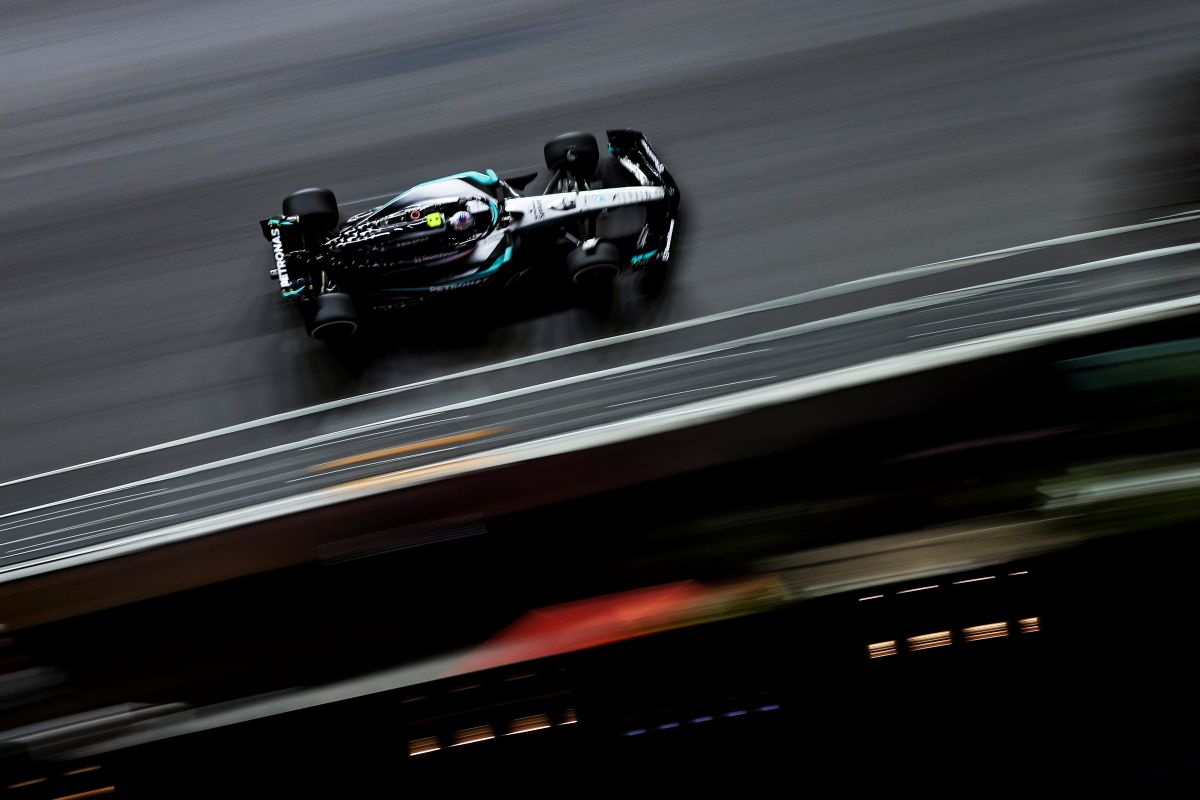
As part of a technological revolution, described by Charles Leclerc as ” one of the biggest changes in the history of F1 The feared catastrophic scenario was ultimately avoided. Deeply scarred by the chaotic introduction of the V6 turbo hybrid in 2014 at Jerez, where teams only completed 93 laps on the first day, F1 preferred to hold the first tests of the season, the Shakedown, behind closed doors.
The teams gathered at the Barcelona-Catalunya circuit for their first practice sessions. All but one answered the call: Williams was notably absent, penalized by a development delay that the Grove team will absolutely have to make up for during the Bahrain tests (February 11-13 and February 18-20).
Mercedes at the top of the table
As anticipated, Classic Mercedes for sale dominated the discussions, completing 500 laps in three days of testing. Team followed closely with 437 laps, while Haas completed the top 3 with 390 laps. A podium of reliability, the true arbiter of these first tests, pure pace not being the main issue. Lewis Hamilton However, he distinguished himself by setting the absolute best time in Barcelona, in 1:16.348.
Beyond reliability, the drivers had to adapt to completely redesigned single-seaters: lighter, narrower, and more compact, to encourage on-track action. Some drivers seemed to quickly feel at ease, while others anticipate a critical period of adjustment.
Although the new machine is ” fun to fly “, the reigning world champion, Lando NorrisHe is particularly concerned about energy management. We have a very powerful battery, but it doesn’t last long. So we need to know how to use it at the right time, how much energy to use, how to distribute that power over the lap… [That will be] the biggest challenge. he says. This is where the use of gear ratios and choosing the right engine speed come into play.”The Briton nevertheless promises an intense spectacle on the track.”
More enjoyable F1 cars
The drivers nevertheless noted significant improvements. Faster, more agile, and more prone to oversteer, the new versions are, in general, more enjoyable to drive. We no longer have a rebound, which is a very good thing. There’s no need to drive the car so low, and we have a bit more leeway to play with the ride height.Antonelli points out. We have more freedom to work on the setup, to play with the car, which is super nice and very interesting as a driver, in order to understand what compromises can be found in the settings. »
« This generation of cars is actually a bit more fun to drive. Lewis Hamilton echoed this sentiment. It’s responsive, lively, it glides, but it’s a little easier to catch and I would clearly say more enjoyable. “Others, like Charles Leclerc, Esteban Ocon, George Russell and Oscar piastri However, they tempered their enthusiasm. It’s still Formula 1, after all. “For his part,” emphasizes the Ferrari driver. I wasn’t completely lost when I got back in the car, and fairly quickly I felt comfortable. “Despite everything, everyone praises the increased power resulting from the hybrid engine.” The acceleration is quite abrupt. “Kimi Antonelli even pointed out.
However, opinions differ on the ability to follow another car on the track, the initial objective of the new machines aimed at improving driving in dirty air during races. According to Ollie Bearman, the 2026 F1 cars have not lived up to their promise. It was a little harder to follow, he laments. There was a fairly significant shift in balance compared to clean air, more pronounced than on the previous generation of cars”A generation that was initially designed to allow pilots to follow each other more closely, but never fully succeeded in its mission. For his part, George Russell asserted the opposite of Oliver Bearman.” Following another car clearly seems easier, especially on high-speed bends. contradicts the Mercedes driver. This is primarily because there is less downforce and you take corners slower, so there is naturally less turbulence. »
The pilots are confident
In general, fears related to change now seem to have subsided. That was a question mark for me before the test: whether it would be like in Formula Ewhere an engineer would be needed to drive the car rather than a racing driver, explains Russell. But it was much more intuitive to drive than expected. “A sentiment shared by Esteban Ocon.” I was a little worried that we wouldn’t touch the car all year and that we’d only work on the engine and electronics. In the end, it’s going rather well. »
Overall, the concerns raised during the initial simulator tests last season have been allayed, and the teams have gathered valuable information ahead of the upcoming Bahrain tests, scheduled for February 11-13. It remains to be seen whether these initial impressions will be confirmed and if the established order will shift as the tests progress.
ALSO READ > The FIA is heading towards a change in F1 regulations amid the Mercedes and Red Bull engine controversy