
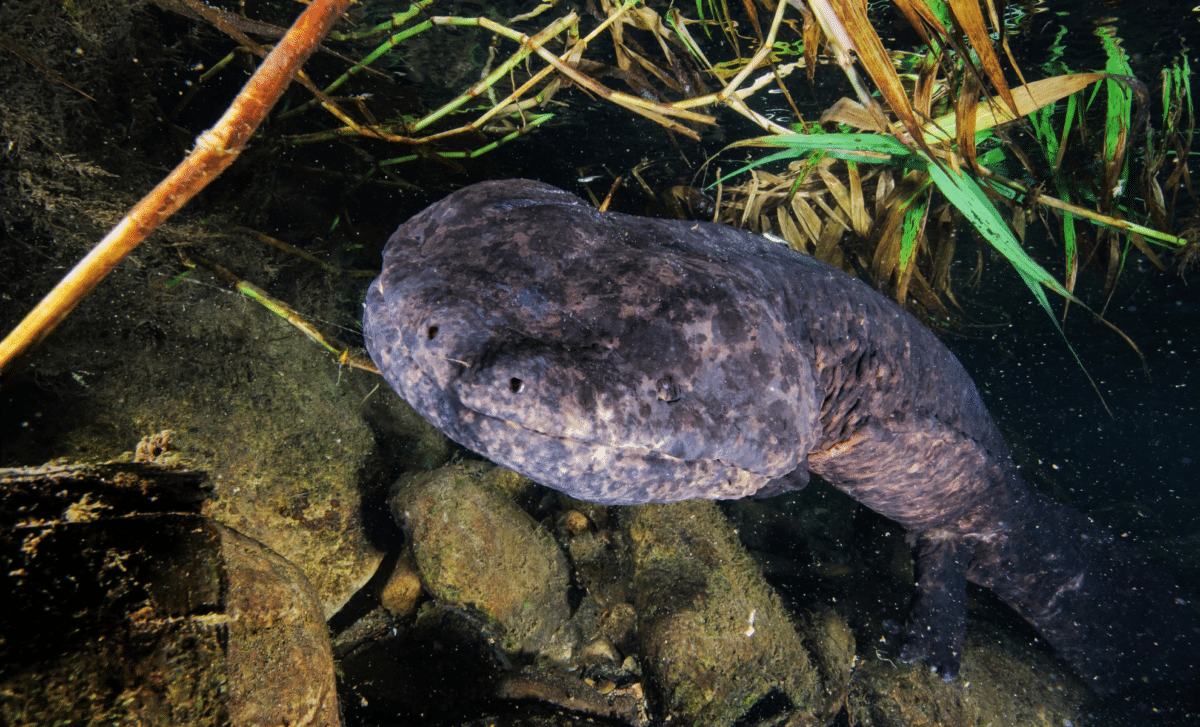
Deep in Japan’s rivers lurks a massive, ancient predator whose presence has remained largely hidden, until now. Recent research published in the Journal Oikos has uncovered a startling transformation in the diet of this mysterious creature. As it matures, it shifts from consuming small aquatic insects to hunting much larger prey, ultimately becoming an apex predator in its ecosystem. This dramatic dietary change not only reveals the evolutionary adaptability of the species but also underscores its growing impact on the delicate balance of Japan’s freshwater habitats.
The Growth and Dietary Evolution of the Japanese Giant Salamander
The Japanese giant salamander is one of the largest amphibians on Earth, capable of reaching lengths of up to 1.5 meters. This creature spends its life in cold, fast-flowing rivers and has an incredibly slow metabolism, allowing it to survive on a variety of prey found in these environments. The new study, led by researchers at the University of Liège, explored how the diet of these salamanders changes as they mature. According to the findings, published in the journal OIKOS, young salamanders feed mainly on small aquatic insects, making them secondary consumers in their ecosystem.
“Young, small salamanders feed mainly on aquatic insects. Their trophic position is similar to that of secondary consumers, an intermediate level in the food chain, as is the case with most salamanders.”
The dietary habits of these amphibians reflect their growth and developmental changes. As the salamanders increase in size, their feeding patterns evolve, and they begin consuming larger prey, including fish, frogs, and freshwater crabs. This shift occurs around the time they reach an average size of 62 cm, marking a pivotal moment in their lives.
“However, when individuals reach an average length of 62 centimetres, a sudden shift occurs in their diet,” says Clément Duret, one of the study’s lead researchers.
The transition to larger, more energy-rich prey allows these creatures to take on the role of top predators in their ecosystem.
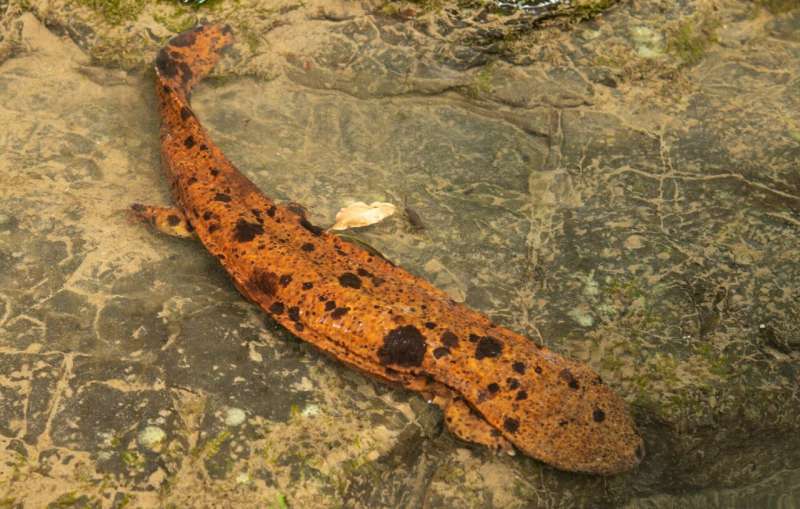 Japanese giant salamander. Credit: Clément Duret / ULiège
The Study Behind the Transformation: A Detailed Examination
The researchers used a combination of methods, including analyzing the stomach contents of 160 Japanese giant salamanders from the Ichi River watershed in Hyogo Prefecture, Japan. By measuring carbon and nitrogen isotopes in the salamanders’ tissues, they were able to track changes in their diets as they grew. The results revealed that young salamanders primarily feed on small, soft-bodied aquatic insects like caddisflies, beetles, and mayflies. These insects occupy a low trophic level in the food chain, making them an ideal food source for juvenile salamanders still developing their hunting skills.
However, as the salamanders grow larger, they begin to hunt more substantial prey. This dietary shift allows them to acquire the energy needed to sustain their large bodies. Crabs, though plentiful, offer relatively low nutritional value compared to fish. Nonetheless, they still make up a significant portion of the salamanders’ stomach contents. As Clément Duret explains, “In terms of mass, crabs occupy the majority of the space in the salamanders’ stomachs, but their nutritional value is low.” On the other hand, fish are a much more energy-efficient food source, providing the salamanders with more calories per unit of food.
This shift in diet is not only about size but also reflects the morphological changes that accompany growth. As the salamanders develop, their jaw structure evolves to allow them to tackle larger prey. The enlargement of the jaw and skull enables the salamanders to consume animals that would have been too large for smaller individuals to handle. This adaptation is a clear example of evolutionary pressure shaping the salamander’s behavior and survival strategies.
Ecological Implications of the Salamander’s Diet Change
The transition to a carnivorous diet places the Japanese giant salamander at the top of its food chain, turning it into a key predator in the freshwater ecosystems of Japan. By consuming a variety of prey, including frogs and crabs, the salamander helps regulate the populations of these animals. Its feeding habits influence the structure of the entire ecosystem, keeping prey species in check and preventing overpopulation.
The study highlights the importance of preserving the populations of animals that the salamanders rely on for food. For example, if frog or fish populations were to decline, it could significantly impact the salamander’s ability to survive. This information is vital for conservation efforts, particularly as the Japanese giant salamander is classified as vulnerable due to habitat loss and pollution in its rivers. Researchers suggest that understanding the salamander’s diet and its role in the food chain can help guide conservation strategies aimed at maintaining healthy ecosystems.