
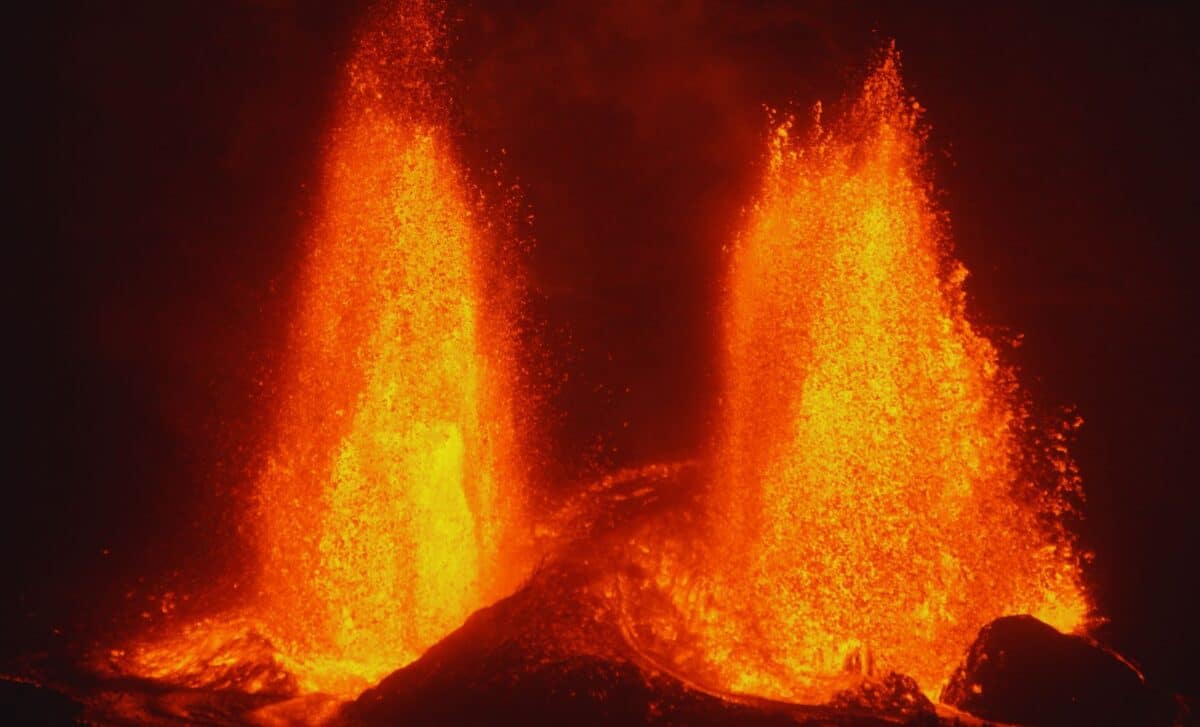
Five volcanoes on Jupiter’s moon Io erupted simultaneously, releasing an enormous amount of lava and offering new clues about what lies beneath the moon’s surface. This unprecedented event, observed by NASA’s Juno spacecraft, suggests that the volcanoes may be connected to a vast underground magma system, potentially revealing a spongy, porous interior.
For years, scientists have been puzzled by the internal composition of Io, the most volcanically active body in the solar system. The synchronized eruptions, seen in late 2024, provide crucial new data that could reshape our understanding of Io’s geology.
A Volcanic Event of Unmatched Scale
In December 2024, scientists monitoring Io through NASA’s Juno spacecraft noticed an extraordinary eruption near the moon’s south pole. Initially, the researchers were focused on a single massive lava flow, but a closer examination revealed that several other volcanic hotspots had also erupted simultaneously.
“There was this one gigantic eruption and lava flow, and that’s what first caught our eye,” said Jani Radebaugh, a planetary scientist at Brigham Young University. “But on second look, all these other hotspots lit up as well.”
The eruption released a mind-boggling amount of lava, far more than typical volcanic events on Earth or even on other moons. This rare phenomenon suggests that the volcanoes are likely part of an interconnected magma network beneath Io’s surface, allowing for a synchronized eruption on a massive scale.
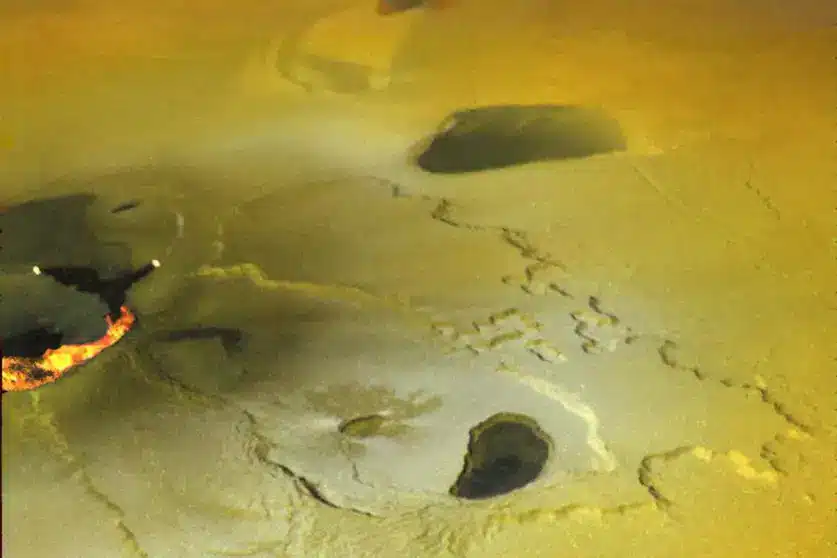 Lava flows and volcanic pits on Io’s surface. Credit: NASA/JPL
Could Interiors Be Spongy? A New Theory Unfolded
The simultaneous eruptions have prompted scientists to propose a new hypothesis about the internal structure of Io. According to Radebaugh:
“There’s so much magma that we can’t quite wrap our minds around it.”
As stated in the research published in JGR Planets, the eruptions suggest that Jupiter’s moon Io’s interior may not be solid, as previously thought, but rather porous or spongy, with magma flowing freely beneath the surface. This could explain the moon’s extreme volcanic activity, as the interconnected magma chambers would allow for large amounts of lava to erupt at once.
This new theory challenges long-standing ideas about Io’s internal makeup. If Io does have a porous interior, it would mean that its geological processes are more dynamic and complex than previously understood. Scientists are now working to gather more data to test this hypothesis and explore its implications for the moon’s volcanic behavior.
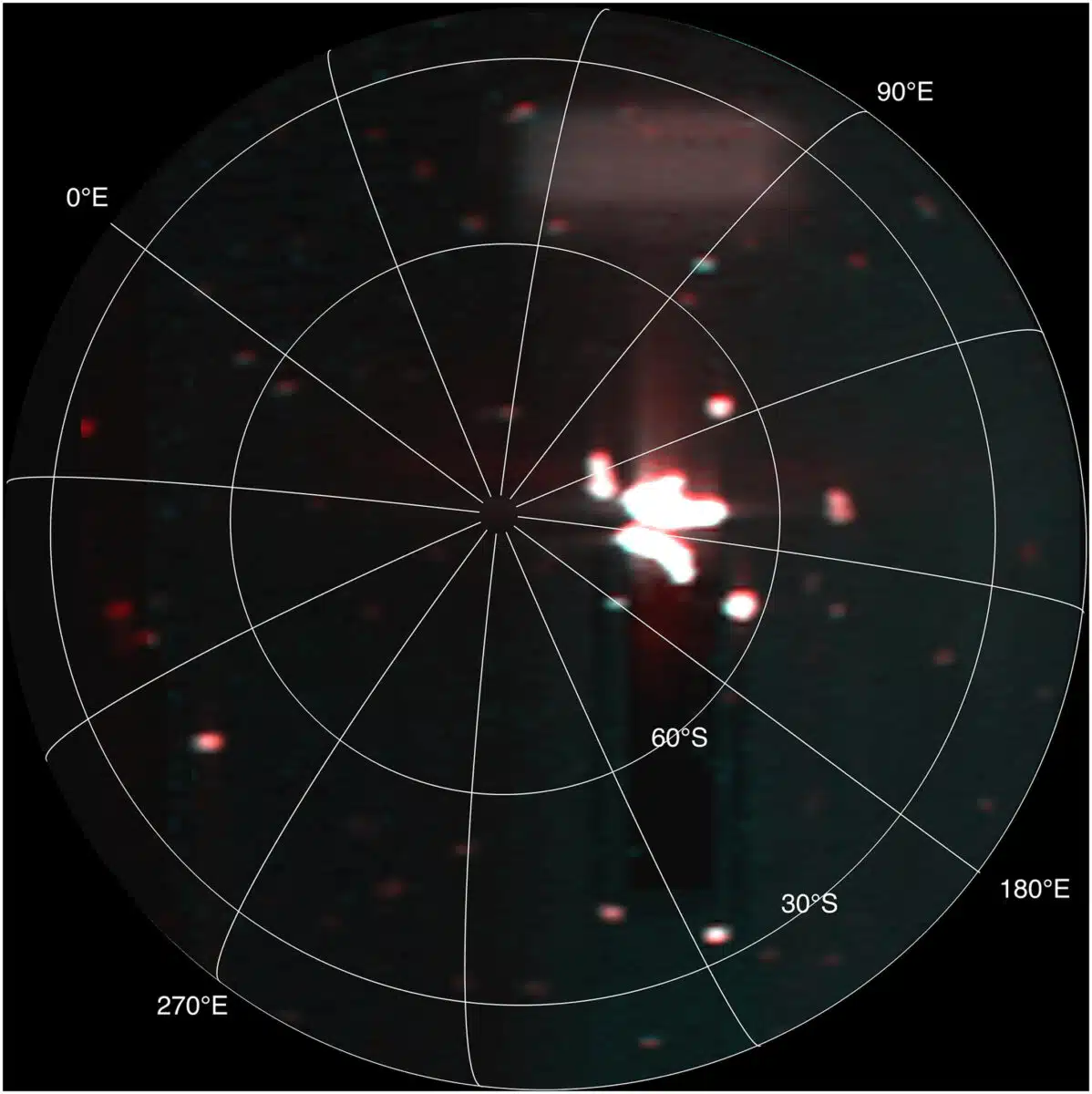 Polar map of Io, showing volcanic activity captured by Juno. Credit: JGR Planets.
How This Will Influence Future Mission Strategies
As scientists continue to analyze the data from Juno and other spacecraft, they will need to reconsider how they approach the study of volcanic activity on moons and planets. By examining the magma system on Jupiter’s Io, researchers could refine techniques for investigating volcanic bodies elsewhere in the solar system.
The finding also raises new questions about the geological processes that drive volcanic activity on other moons of Jupiter and beyond. If Io’s volcanoes are linked to anextensive underground network, could similar systems exist on other bodies in the solar system?
Future missions to explore Io’s surface and internal structure will likely focus on unraveling the complexities of its magma system, potentially leading to groundbreaking discoveries about planetary formation and volcanic dynamics.
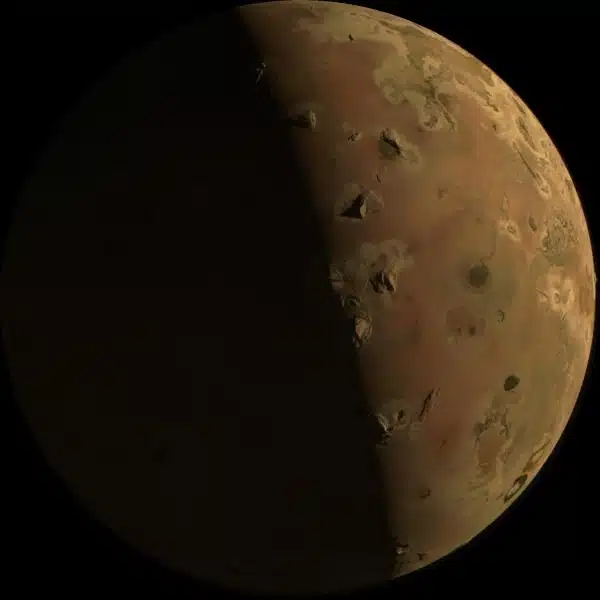 Io, Jupiter’s stormy moon, photographed during a close flyby by NASA’s Juno spacecraft. Credit: NASA/JPL-Caltech/SwRI/MSSS