

Listen to this article
Estimated 5 minutes
The audio version of this article is generated by AI-based technology. Mispronunciations can occur. We are working with our partners to continually review and improve the results.
“It’s just kind of mind boggling, the audacity to ask for more mining, while they’re still in the process of not having finished cleaning up their past events.”
That’s how Simon Wiebe, a geologist and mining impacts and policy lead with the environmental organization Wildsight, describes a proposed expansion of one of British Columbia’s largest coal mines, as concerns continue about long-standing water contamination in the Elk Valley.
Elk Valley Resources is seeking approval for the Fording River Extension Project, which would extend the life of its existing Fording River Operations by about 35 years.
The plan would maintain current production levels while expanding mining into a new area south of existing operations.
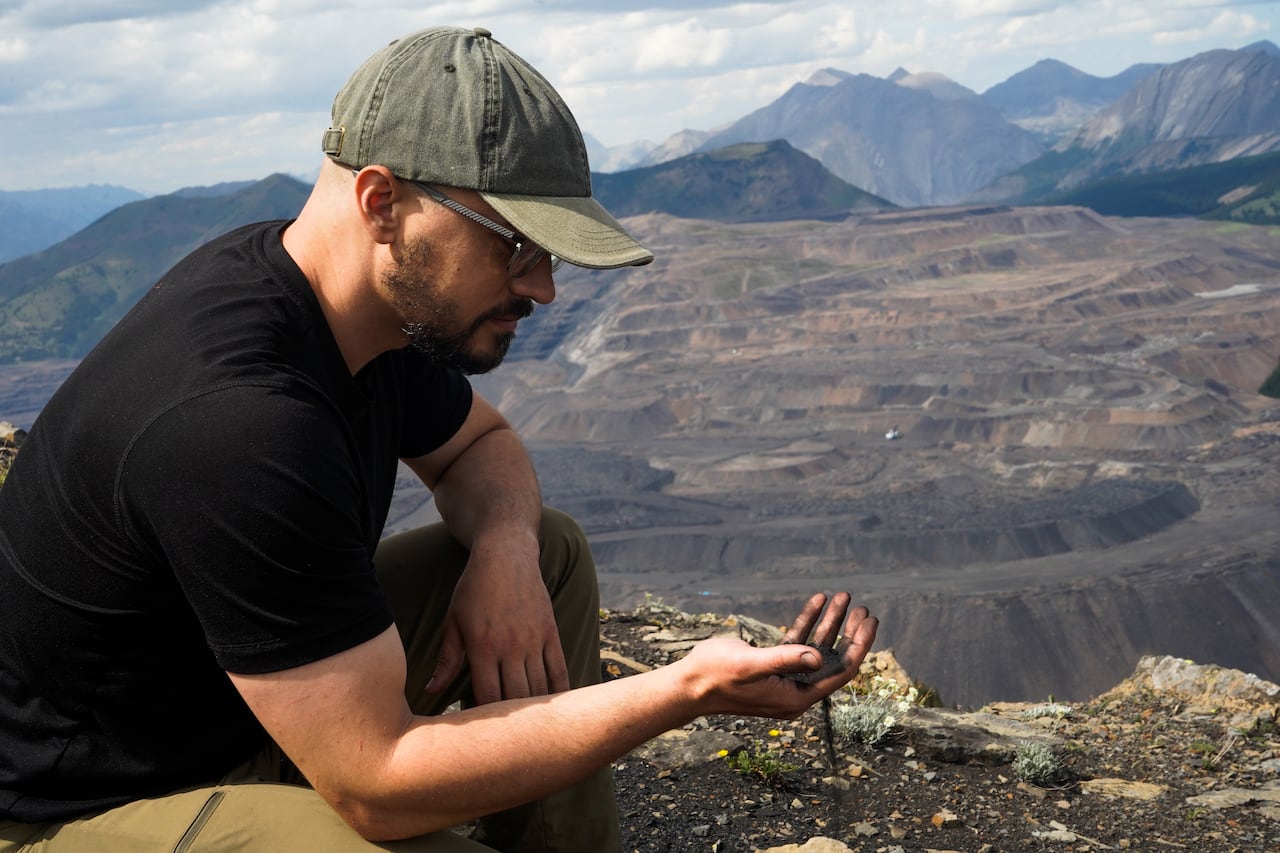 Simon Wiebe, mining impacts and policy lead with Wildsight, holds a piece of coal near Castle Mountain with the Fording River Operations visible in the background. (Siobhan Williams/Wildsight)
There are already four of the largest metallurgical coal mines in Canada operating in the Elk Valley, in B.C.’s southeastern Kootenay region. Over decades, waste rock from those operations has leached selenium, a naturally occurring element that can be harmful at elevated levels, into local waterways, affecting fish and aquatic life.
Wiebe said the proposed expansion comes at a critical moment.
“We’re starting to make things better for once, and now they want another mine which will actively set everything back,” he said.
Wiebe said decades of large-scale mining have already placed significant environmental pressure on the Elk Valley watershed.
Company points to treatment progress and economic impact
Elk Valley Resources said it is making progress under the Elk Valley Water Quality Plan, a provincial strategy introduced in 2014 to stabilize and reduce concentrations of mine-related contaminants.
The company said selenium and nitrate levels are stabilizing and declining downstream of treatment, and that additional treatment capacity is under construction. It added that it expects full compliance with selenium limits at all monitoring locations by mid-2027.
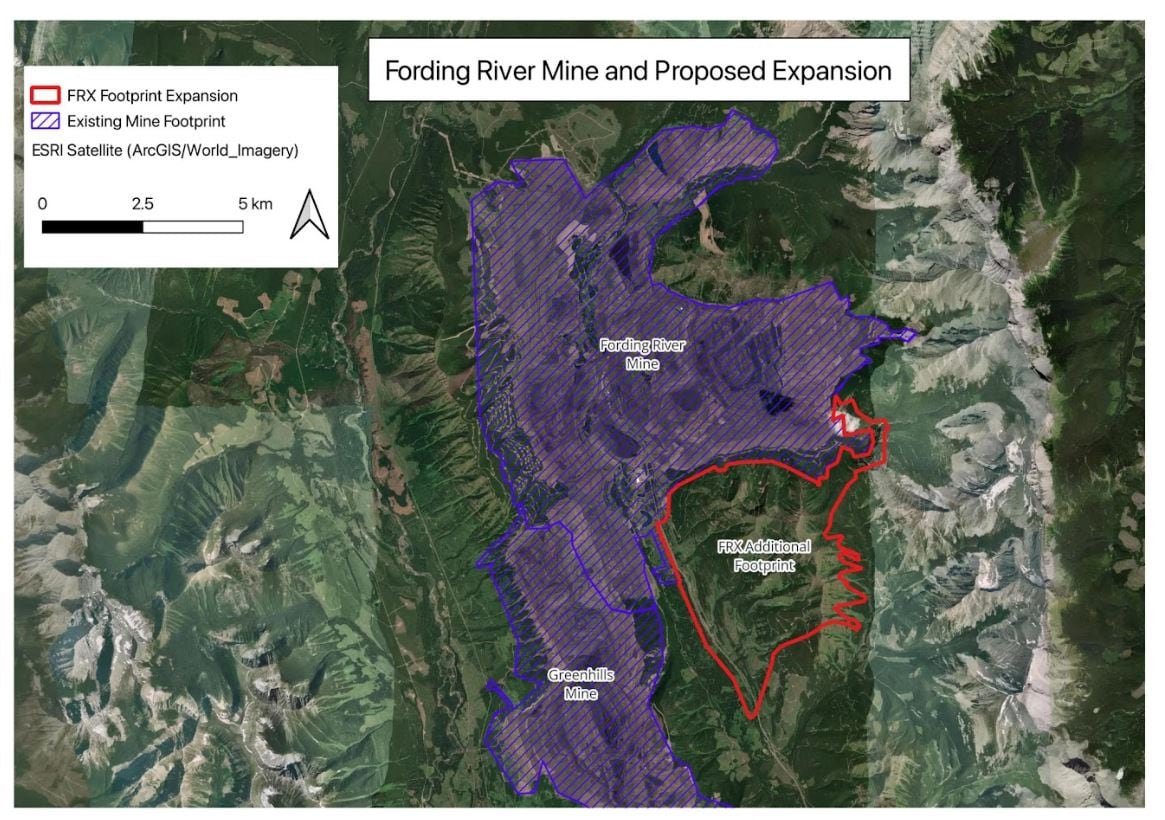 According to Wildsight, the proposed Fording River Extension (FRX) would involve expanding the coal mine by over 2,000 hectares, which it says will knock down a mountain covered in sensitive alpine grassland and fill in the adjacent river valley. (Wildsight)
The company said the extension would allow operations to continue into the 2060s and would sustain approximately 1,500 direct jobs. According to Elk Valley Resources, the operation contributed about $1.5 billion to B.C.’s GDP in 2024, and that the project would rely largely on existing infrastructure while incorporating additional water-quality mitigation measures developed through engagement with Indigenous communities.
Government says framework balances multiple factors
The B.C. Ministry of Environment and Climate Change Strategy said decision-making in the Elk Valley is guided by the Elk Valley Water Quality Plan, which sets achievable targets to improve water quality while allowing mining operations to continue.
The ministry said major projects must undergo a structured environmental assessment that considers environmental, social, economic, cultural and health impacts, with input from Indigenous governments and local communities.
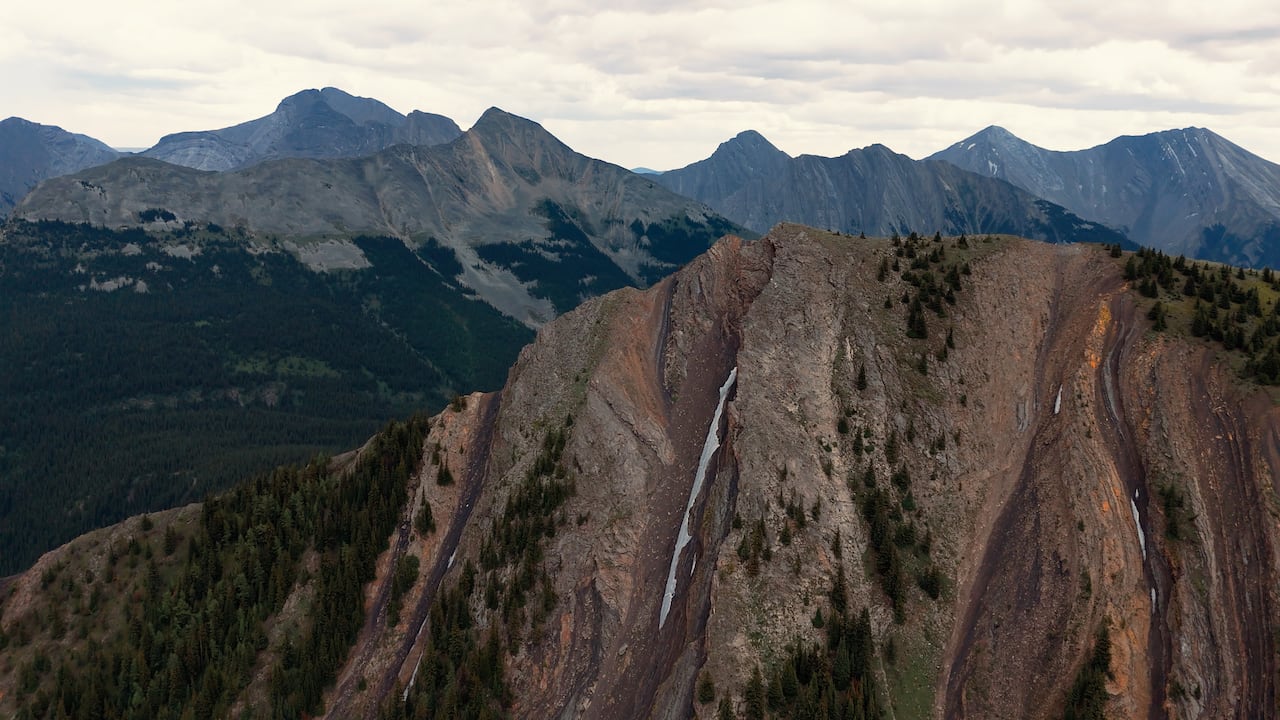 Coal seams are visible along a ridge on the north side of Castle Mountain, near existing and proposed coal mining areas in British Columbia’s Elk Valley. (Siobhán Winters/Wildsight)
Regulatory agencies also conduct inspections and can take enforcement action when companies fail to meet requirements, the ministry said.
Monitoring data shows mixed results
Provincial monitoring data suggests a more complex picture.
At the Elk River monitoring station downstream of Michel Creek, selenium concentrations have declined from earlier peaks but remain above BC.’s aquatic life guideline of two micrograms per litre.
Monthly averages at that site have fluctuated significantly over the past decade. In April 2022, concentrations exceeded 15 micrograms per litre. More recent values generally range between about six and 10 micrograms per litre, several times higher than the provincial guideline.
The province’s aquatic life guideline is intended to protect fish reproduction and long-term ecosystem health.
WATCH | Tracing the impact of toxic mining runoff from Elk Valley on U.S. border communities: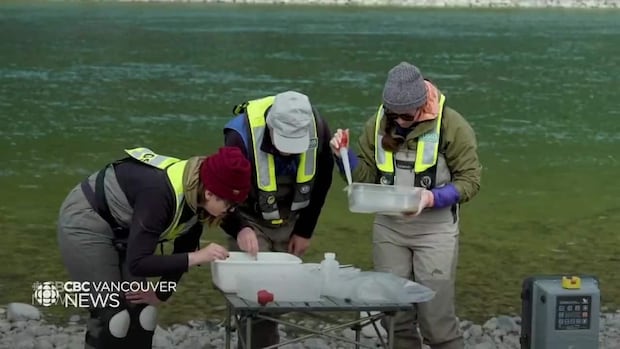
Tracing the impact of toxic mining runoff from B.C.’s Elk Valley on U.S. border communities
Coal mines operated by Teck Resources are releasing selenium into the waterways in B.C.’s Elk Valley. Selenium is a natural mineral, but in high concentrations, it can be harmful to aquatic life. As the selenium continues on its way to the U.S. border, tensions between Ottawa and Washington are rising. Radio-Canada’s Camille Vernet followed the path of selenium from B.C. to the U.S. to meet the communities that live around the waterways.
The Ktunaxa Nation Council has also raised concerns. In a letter to the province, the nation said it does not support the project moving into the environmental assessment stage, citing ongoing water quality non-compliance at existing operations and stating that considering an expansion before compliance is achieved is “not acceptable.”
Assessment process still in early stages
The proposed Fording River Extension is currently in the process-planning phase of the environmental assessment.
During this stage, B.C.’s Environmental Assessment Office, working jointly with the federal Impact Assessment Agency of Canada, is determining what impacts must be studied and what information Elk Valley Resources will be required to provide before any decision is made.
Public comments on the scope of the assessment are being accepted until Feb. 15.
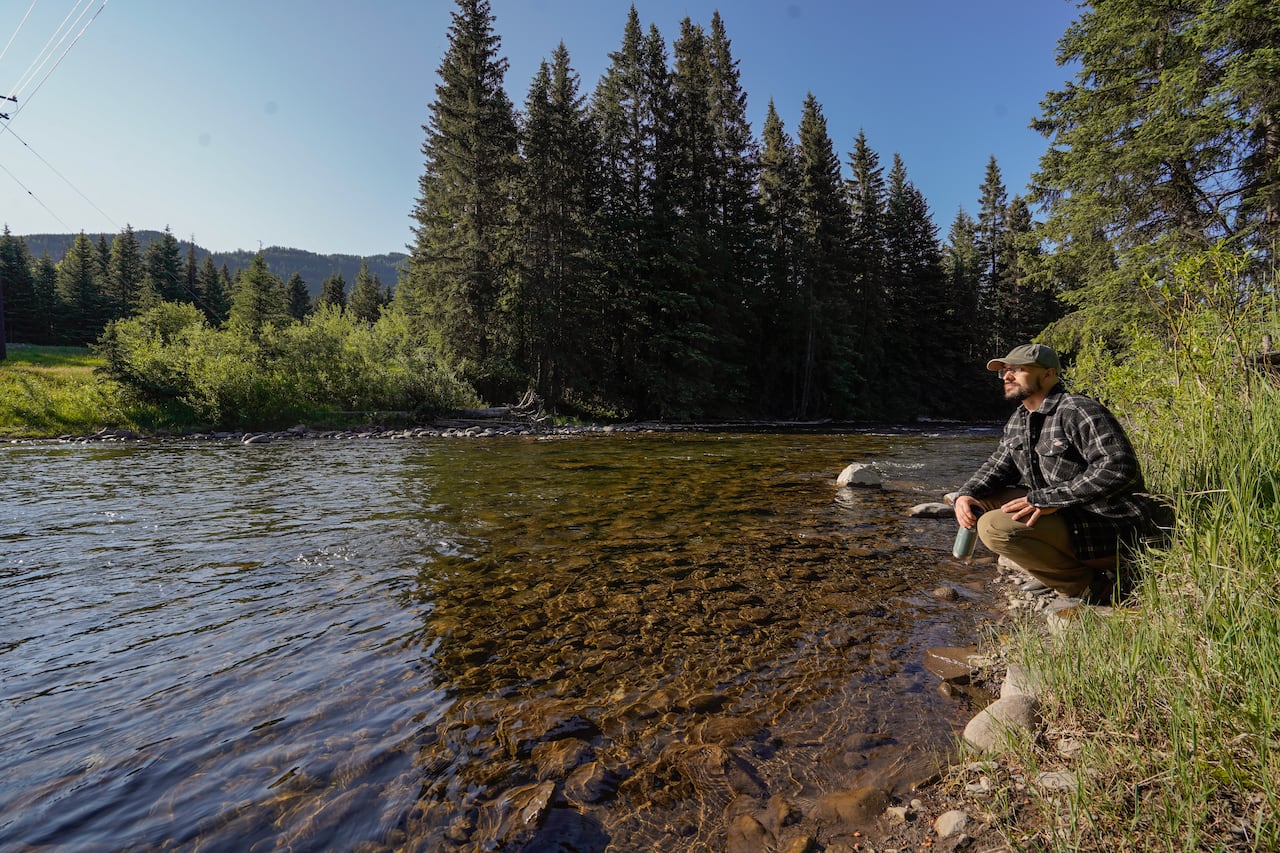 Simon Wiebe of Wildsight stands along the Fording River downstream of major coal mining operations in the Elk Valley. (Siobhán Winters/Wildsight)
In recent years, Elk Valley Resources and its predecessor companies have been issued nearly $80 million in administrative penalties related to water-quality violations, including a $60 million penalty in 2023.
Wiebe said those penalties have not been enough to change the company’s approach.
“At the end of the day, it’s a cost of doing business for them. They’re happy to take the fines and continue mining,” he said.