

Listen to this article
Estimated 4 minutes
The audio version of this article is generated by AI-based technology. Mispronunciations can occur. We are working with our partners to continually review and improve the results.
Vancouver Coastal Health says it’s moving part of its long-term care system into regular neighbourhood homes, a shift that comes amid a ballooning waitlist for long-term care as the number of seniors in B.C. grows.
Under the new model, the health authority says it will purchase existing houses in neighbourhoods and retrofit them to operate as licensed long-term care sites.
Each home will house up to 10 residents, with private rooms and shared kitchens, living rooms and outdoor spaces. People living in such homes will receive around-the-clock clinical care.
Health Minister Josie Osborne said the model is meant to preserve dignity and connection.
“They are an important part of B.C.’s continuum of seniors’ care, bridging the gap between independent living and long-term care, and providing the right level of support as people’s needs change,” Osborne said in a written statement.
Yasmin Jetha, VCH’s vice-president of community services, said the household-style model is evidence-based and better suited for many seniors, especially those with Alzheimer’s or other types of dementia.
“What we know … with all the research being done, is that the best way for caring for seniors is in a home-like environment,” she said.
“You smell coffee in the morning. You can have toast and tea. You’re not waiting for someone to come and bring your tray, but you’re actually living your life.”
Jetha says the health authority is now working with B.C. Housing and local governments in Vancouver, North Vancouver and Richmond to purchase homes.
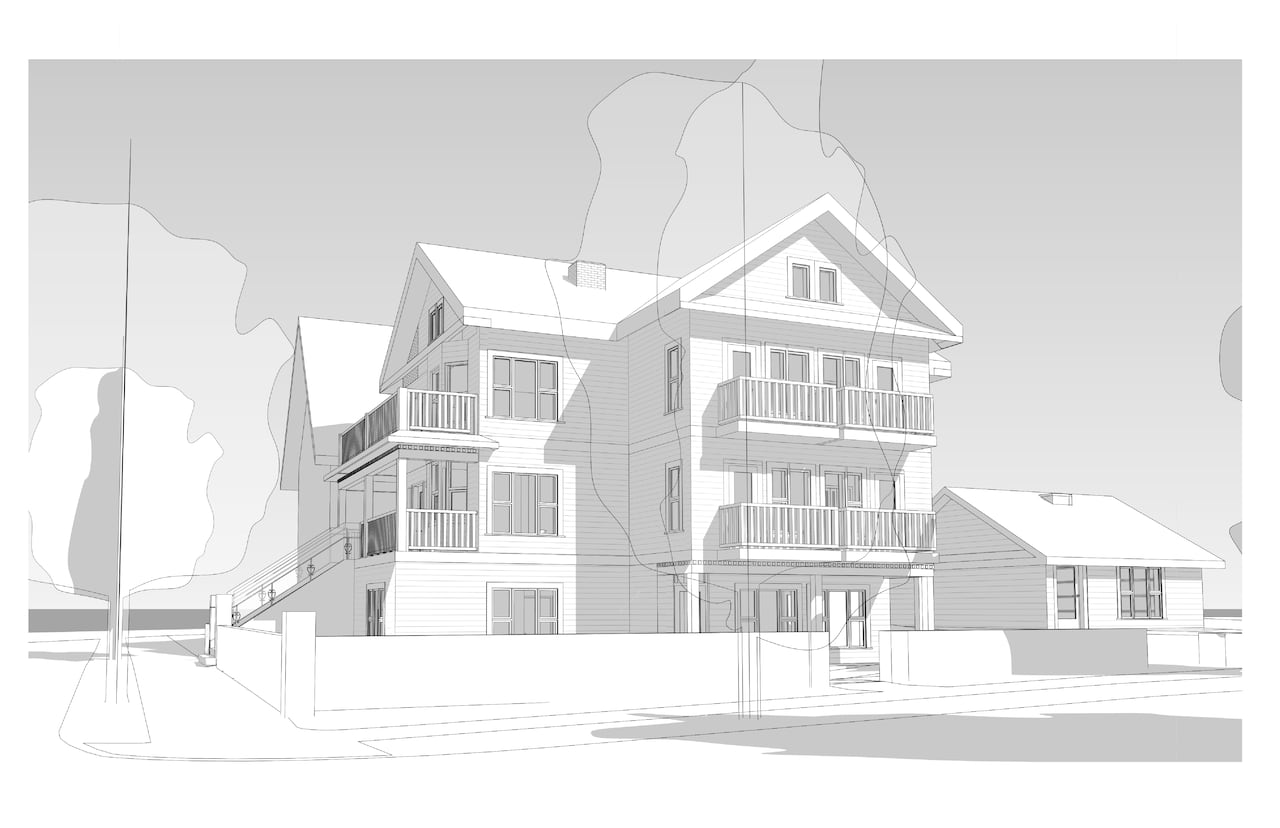 A rendering of Vancouver Coastal Health’s small care home model, which will house up to 10 residents in a converted neighbourhood house. (KR Architecture/Vancouver Coastal Health)
Some senior advocates are welcoming the move.
Laura Tamblyn Watts, CEO of CanAge, says the model will also help reduce staff turnover among long-term care workers, which she says is one of the biggest problems in the sector.
WATCH | Wait times increasing for long-term care beds:
Why are B.C.’s seniors waiting an average of 10 months to get into a long-term care home?
B.C. Seniors Advocate Dan Levitt says B.C. will need almost 16,000 new beds by 2036 in order to meet growing demand. He says the shortage is due to a lack of investment from the province, particularly with building new care homes in response to looming demand from the aging baby boomer population. On BC Today with host Michelle Eliot, he responds to a caller who had to care for her elderly mother while wait-listed for a long-term care home. He says caregiving and financial responsibility have shifted to family caregivers.
“Staff burn out very quickly,” she said.
Tamblyn Watts says people working in long-term care facilities last about 18 months on average.
“But we know that staff like small homes, they like the experience, and they like that it reduces wear and tear on their bodies when they’re providing the kind of care.”
B.C. Seniors Advocate Dan Levitt called the approach “innovative” and “pragmatic,” saying it fits better with how many older adults want to live.
But he says the province needs to build more long-term care homes to meet the increasing demands of an aging population.
WATCH | Vancouver long-term care providers say recent funding cuts impacting services:
Vancouver long-term care providers say recent funding cuts impacting services
Janice Boyle of Three Links Care Society and Rob Gillis from Haro Park Centre say provincial funding cuts have already resulted in reduced services for the people living there – and it could lead to fewer beds, longer waitlists, and more pressure on families.
A report released last month by Levitt found the number of people waiting for publicly funded long-term care has increased by more than 200 per cent since 2016. On average, the report found seniors are waiting nearly 10 months to get into a publicly-funded space, compared to five months in 2016.
Over the same period, the number of seniors grew by 19 per cent, while long-term care beds increased by just five per cent.
Tamblyn Watts says while small care homes are “a step in the right direction,” it is far from sufficient.
“By their nature they are small. So this means that there’s not a lot of capacity,” she said. “This doesn’t really solve the structural problem,” she says.
She also warned that the province’s plan to stop funding for overtime and agency staff in long-term care could deepen staffing shortages as demand rises.
“This is not an either-or situation,” Tamblyn Watts said. “The existing long term care home providers are going to need help … to rebuild, to renovate, to modernize and right now government isn’t providing much in the way of support.”
Vancouver Coastal Health says the first three small care homes are expected to open in the spring of 2026, with plans to eventually create about 200 beds by 2029.