
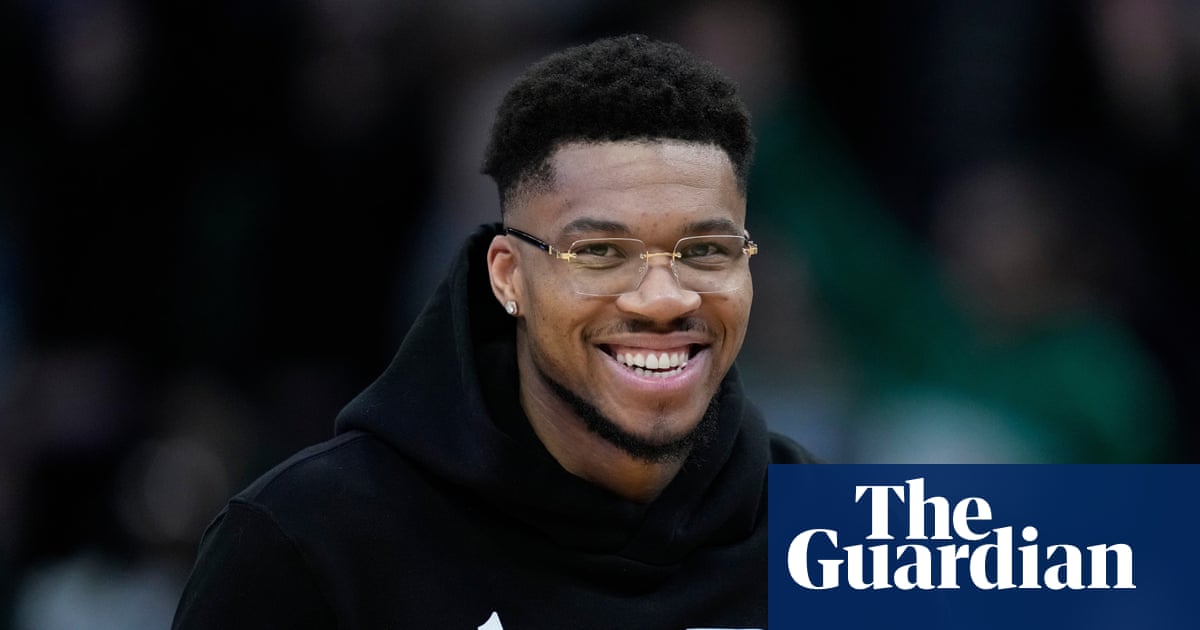
Couldn’t he have just started a podcast? “The Internet is full of opinions. I decided it was time to make some of my own,” Giannis Antetokounmpo, one of the four best basketball players in the world, posted in a statement announcing that he was joining the prediction market Kalshi as a shareholder. “We all on Kalshi now.”
We are not, but doesn’t the tone sum it up? The universe’s ineffable forces have clearly decided that the ubiquity of sports betting companies is insufficient. There must be new companies, with which you can bet on any outcome – Kalshi competitor Polymarket has hosted markets tied to geopolitical outcomes, including scenarios related to Israel and Gaza, for instance – that incentivize people to treat life’s most important avenues as trivially as a sports game. Kalshi and Polymarket are prediction platforms rather than traditional betting companies. Users effectively bet (or “trade”) against others on the platform about the outcome of events, from familiar wagers such as the result of a sporting event, to the obscure, such as the color of a politician’s suit at an election appearance. Kalshi has enjoyed plenty of freedom under the second Donald Trump administration, and Donald Trump Jr is a “strategic advisor” for them and Polymarket. A Kalshi outcome taking bets until recently was “Giannis Antetokounmpo’s next team?” as rumors swirled that the two-time NBA MVP was about to leave the Milwaukee Bucks. Antetokounmpo will be involved in marketing and publicity for Kalshi, and is forbidden from trading on markets related to the NBA. The move is also in step with the NBA’s rules – players are allowed to endorse betting companies as long as they don’t gamble on the league itself. But that hasn’t prevented scores of fans across Instagram and Reddit, and media members on Twitter, from expressing their displeasure at the move and insisting there is a conflict of interest.
Antetokounmpo seems to be fine with the deal though, and would have you know that jumping in bed with Kalshi is no more complicated than holding some opinions. For Antetokounmpo, a multimillionaire inking a deal with this company, whose CEO recently said, “the long-term vision is to financialize everything and create a trading asset out of any difference of opinion,” rather than just about any other company, is apparently no big deal. Nor is the fact that a significant part of Kalshi’s trades are on sports outcomes, and Antetokounmpo is a professional athlete. “We all on Kalshi now.” We are apparently also all in hell.
Antetokounmpo has done a fine job ruining what had been a stellar approval rating. He spurred the Milwaukee Bucks to the NBA title in 2021, emerging as a new face of the league. The next year, the Bucks made a respectable run at a title defense by losing to the Boston Celtics in the conference semi-finals in seven games. Game 7 was an unfortunate blowout, but Antetokounmpo put up more staggering numbers across the series. The Bucks were in a good place.
Since, though, they can’t stop exiting the playoffs in the first round. The Bucks are 21-29 so far this season; they’ll be lucky to even make the playoffs. Antetokounmpo has played some brilliant basketball but also suffered two non-contact calf injuries, keeping him out of games and making him the latest NBA star on Achilles Watch. Giannis is 31, and barring LeBron James-esque longevity, closer to the end of his career than the beginning. It is obvious to everybody that any winning he does from here on out will have to come on a team besides the Bucks.
The past several weeks have seen Antetokounmpo waffle between acknowledging this, which in conjunction with his agent shopping him around to other teams suggested he was on his way out, and acting insulted at the idea that he would leave. It was all very confusing and suggested that Antetokounmpo knew he had to go but didn’t want to be the bad guy.
The uncertainty behind Antetokounmpo’s future was almost certainly down to legitimate basketball reasons: teams’ willingness to trade or how much the Bucks wanted to keep their superstar. And, in any case, Antetokounmpo is forbidden from trading on the NBA with Kalshi. But perception trumps reality among NBA fans. And now it is impossible for many of them to reflect on Antetokounmpo’s future without his Kalshi stock front of mind. Every time Giannis turns in a performance, or even a play, that deviates from expectations, it may raise suspicion over whether he was trying to move Kalshi’s prediction lines. Or others could speculate he whipped up rumors of a trade so that gamblers would flock to Kelshi to bet on his future.
But perhaps what’s perhaps most depressing is that Antetokounmpo isn’t a remarkable case here. This news comes at a time when James is a DraftKings ambassador and Kevin Durant cashes checks from FanDuel. When watching a big game, regardless of league, odds are you won’t be able to avoid a deluge of over-under lines and parlays from commentators and social media accounts. Prior to joining ESPN, the NBA’s foremost news-breaker Shams Charania unintentionally moved a betting line with a misleading tweet while co-hosting a show for FanDuel. Many NBA-focused outlets – notably The Ringer and its large fleet of podcasts – are sponsored by a betting company, which could create a conflict of interest even in the coverage of gambling scandals. League commissioner Adam Silver has given tepid quotes in favor of more regulation but has largely welcomed sports gambling since arguing for its legalization in the New York Times in 2014. Then there are even more serious incidents. At the start of the season, the Miami Heat’s Terry Rozier was arrested for allegedly using inside information about NBA players to manipulate prop bets. The NBA is infested with betting companies and ripe for yet another scandal.
Wagering away your life savings has never been easier: just reach into your back pocket, open a fiercely addictive app striving for your attention, and click away. But gambling has become so ubiquitous that we decided somewhere along the way that this problem doesn’t matter, or is better ignored. The secondary problem with rampantly available gambling is the incentivization of rigging outcomes, and the constant suspicion even in absence of a scandal. Sports are meaningful enough to define the lives of players and fans alike, but all that love and time rests on the strength of the idea that what we are watching is real. It’s never been so easy to lose the faith, and Antetokounmpo’s latest deal has only made the whole mess worse.