
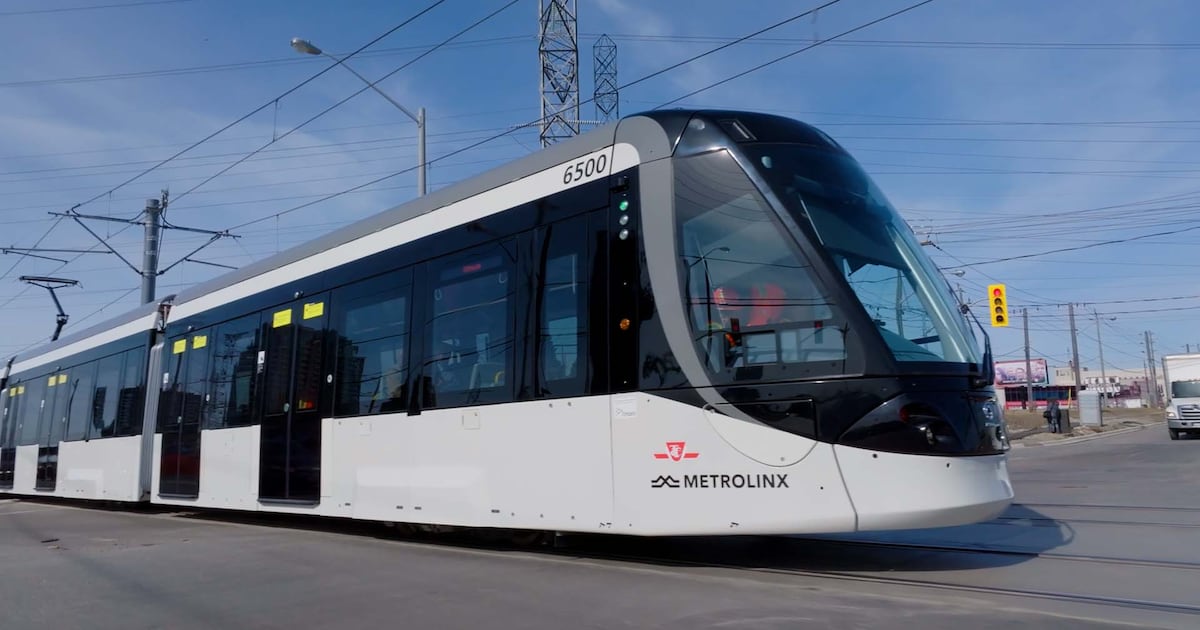
Watch CP24’s LIVE coverage of breaking news in the GTA.
The Eglinton Crosstown didn’t arrive on time, but it arrived with lessons Toronto can’t afford to ignore.
As Line 5 opens to riders for the first time today, transit experts say the bigger story isn’t in the launch itself — but what Toronto must learn from a megaproject that tested patience, communities and exposed deep flaws in how major transit lines are planned, contracted and delivered.
“This is a look-in-the-mirror moment,” said Matti Siemiatycki, the Director of the Infrastructure Institute at the University of Toronto. “This is where (we could use) some honest reflection about what has happened from start to finish.”
Construction on the $13-billion light rail line began in 2011 and was originally scheduled to open in 2020. Instead, the project was delayed by over 260 construction deficiencies, legal disputes between Metrolinx and its private consortium responsible for the design and construction of the line, COVID-19 disruptions, software and signalling problems, and surging costs that pushed the project roughly $1 billion over budget.
The risk and misplaced confidence
The Eglinton Crosstown was delivered through a public-private partnership model, with Metrolinx contracting Crosslinx Transit Solutions in July 2015, to design, build and finance the project under a fixed-price agreement. In theory, the private sector would absorb construction risk.
In practice, Siemiatycki said, that confidence didn’t hold up.
“There was overconfidence in the public-private partnership model,” he said. “The public-private partnership created an unrealistic expectation that all of the risk was going to be managed through the contract.”
The project became plagued by disputes over responsibility as problems mounted, including defective concrete at Avenue Station, water leaks, and eventually software and signalling issues that repeatedly delayed testing.
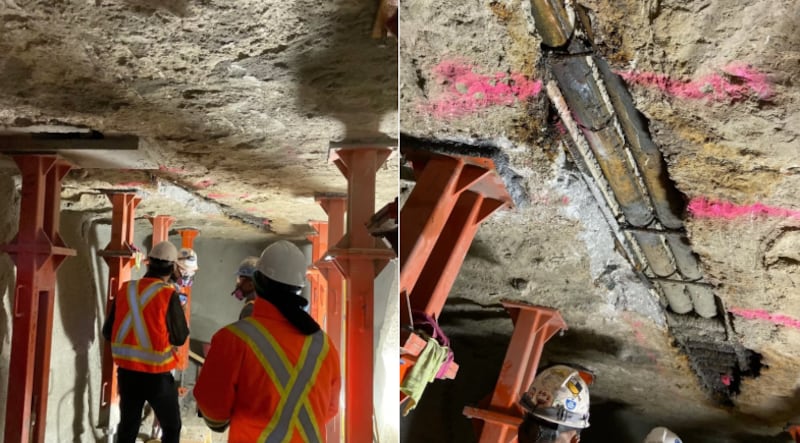 DEFECTIVE CONCRETE Metrolinx file photo.
By 2023, Crosslinx informed Metrolinx it intended to litigate and halt work, arguing it should not be held responsible for pandemic-related delays. A judge ultimately sided with the consortium, forcing the two sides back to the negotiating table.
“These giant bundled contracts — full design, everything bundled into one — have really struggled with big infrastructure projects,” Siemiatycki said. “Smaller contracts broken into smaller pieces, with more bidders and more competitive tension, might have done better.”
When the public becomes the project manager
As timelines slipped, experts say communities along Eglinton were left in the dark for years, fueling frustration and distrust.
“The lack of information in this project is creating and sowing uncertainty and doubt in the community,” Siemiatycki said. “The public is having to become like amateur transportation planners and engineers to try to understand what’s going on.”
Construction disruptions shuttered many small businesses along the corridor, with residents and merchants enduring years of noise, dust and reduced foot traffic.
Steven Farber, director of the University of Toronto Mobility Network, said those impacts need to be treated as a core part of future transit planning — not collateral damage.
“Compensation for affected businesses and residents is essential for future projects,” Farber said. “The public is too smart to be gaslit by a government that’s going to promise on-time transit delivery with no disruption and impact on local businesses.”
The first year is key
Line 5 runs between Mount Dennis and Kennedy Station, with 25 stops, more than half of them underground. The remaining surface stops will require trains to navigate traffic signals, an issue that has plagued the Finch West LRT, where riders have complained that buses are sometimes faster.
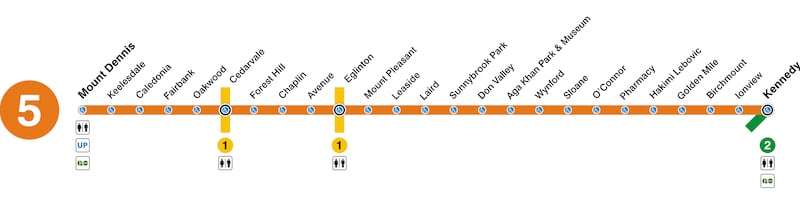 eglinton crosstown A list of station stops along Line 5. (TTC)
Experts say its performance that will determine whether riders embrace the Crosstown service.
“When these projects work, that shouldn’t be the concern,” Siemiatycki said. “The concern should just be: is the thing fast? Is it reliable? Are the trains frequent? Are they clean? Does it feel safe?”
Farber agreed that public trust, while politically important, is secondary to service quality.
“If the trains operate quickly and on time and with high frequency, people are going to see the benefit and ride them,” he said. “And I think that the memory and the scars of the disaster which was the process of getting here will fade away for the riders.”
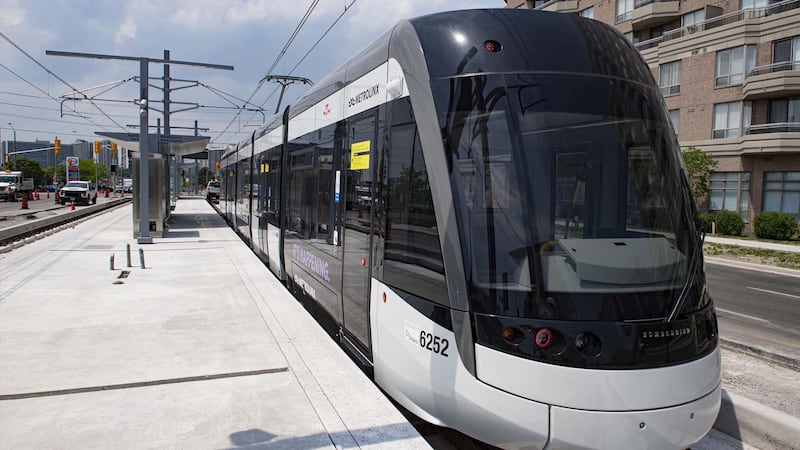 Eglinton LRT is FINALLY opening on Sunday Feb. 8 Eglinton LRT is FINALLY opening on Sunday Feb. 8
But Siemiatycki warned that failure on basic operations could undermine confidence for years to come.
“All the money and all the pain and suffering along Eglinton — and then the project is slower than the existing bus… that will chip away at public confidence,” he said.
Opening day and lingering questions
The TTC confirmed earlier this week that Line 5 would open in phases beginning Feb. 8, with free service offered all day on opening day.
CEO Mandeep Lali told the TTC board the gradual rollout would allow the agency to monitor performance and phase in upgrades, including transit signal priority by the second quarter of the year.
Coun. Josh Matlow, who has previously called for a public inquiry into the delays and cost overruns and whose ward includes parts of Eglinton West, said the opening does little to close the book on the project.
“It’s been incompetent,” Matlow said. “Hundreds of businesses have closed, people have lost their livelihoods, communities have been impacted, and the cost overruns and delays have been unacceptable.”
For experts, that reckoning matters as much as the trains themselves.
“Every project needs a North Star of the public’s benefit and the user benefit,” Siemiatycki said. “That has to be what drives every decision.”
With files from CTV Toronto’s Phil Tsekouras and CP24’s Bryann Aguilar