
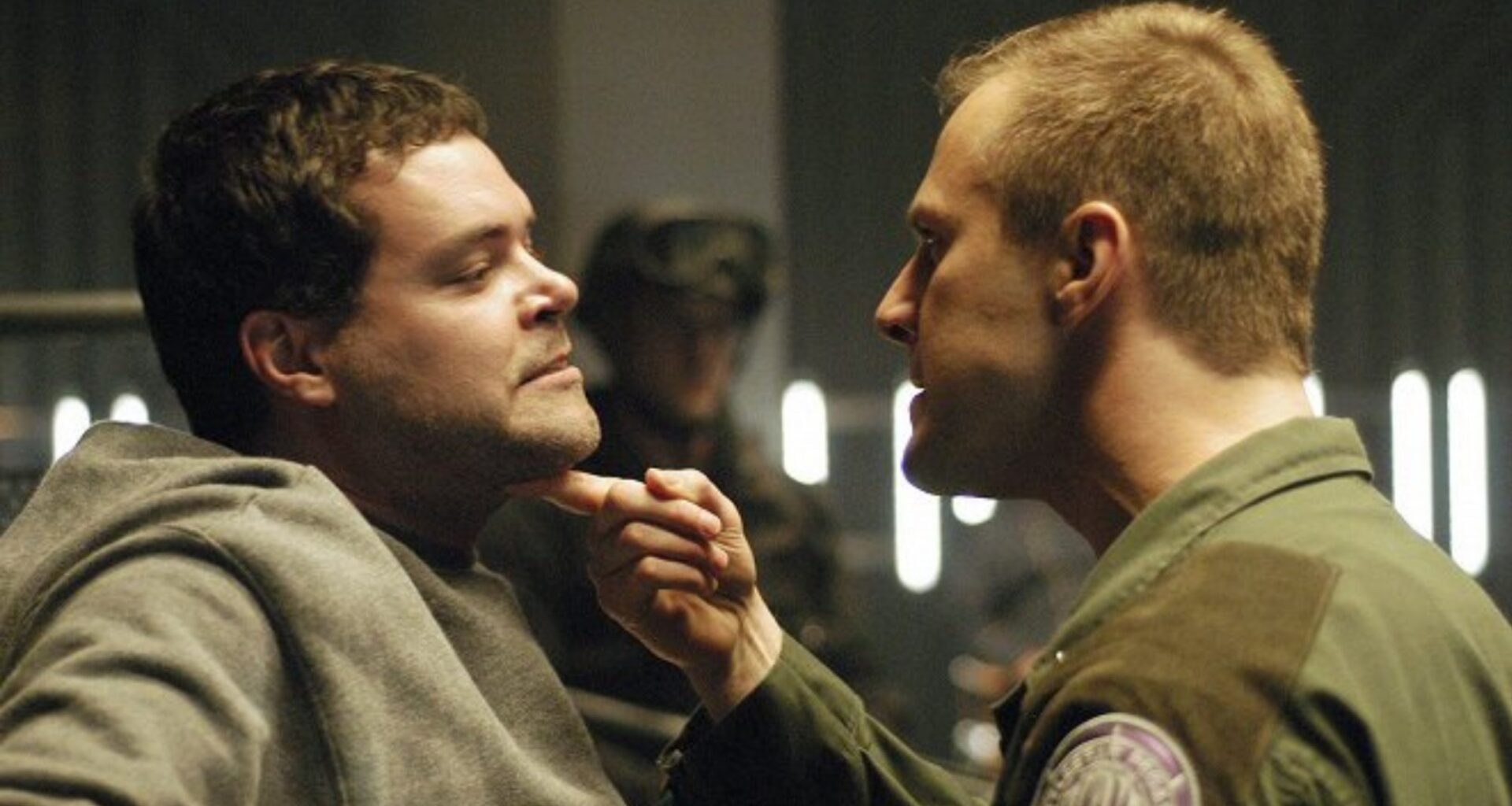
When Ronald D. Moore rebooted Battlestar Galactica for SYFY in the 2000s, he took a goofy cult classic and turned it into one of the greatest sci-fi outings in all of television. The post-9/11 series was boldly executed, never shying away from direct commentary on the War on Terror. Over four seasons, BSG depicted a rogues’ gallery of fascinating characters, including complex and morally ambiguous antagonists who helped usher in the era of prestige TV we know today.
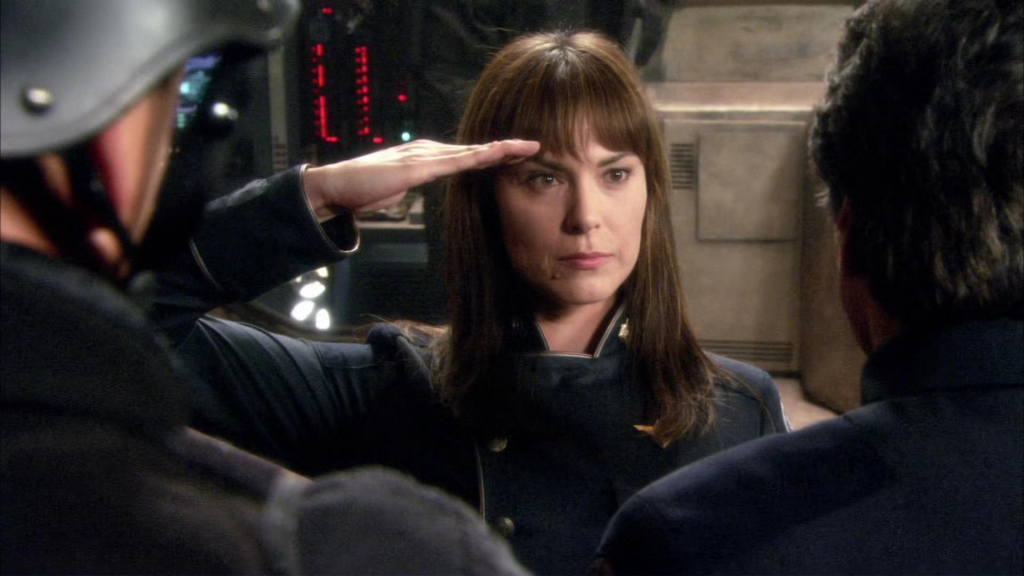
One such villain was Admiral Helena Cain, played by Michelle Forbes, whose goal was to save humanity, even if it meant abandoning any code of ethics and the principles that the colonies once stood for. She fractured the fleet, challenged William Adama’s (Edward James Olmos) authority, and in doing so, became one of the show’s most iconic bad guys. Admiral Cain’s reign came to an end on January 13, 2006, in the all-timer episode “Resurrection Ship – Part 2,” which somehow killed Cain without making her into a 2D cartoon villain or offering cheap redemption.
Why Admiral Helena Cain is Battlestar Galactica’s Best Villain
 syfy
syfy
Forbes’ Admiral Cain is introduced only a handful of episodes earlier in “Pegasus,” but her arrival sends shockwaves through the Twelve Colonies of Kobol and begins one of the best three-episode arcs of the series. As commander of the Battlestar Pegasus, Cain’s military leadership is completely stripped of compassion. While Adama’s approach is about finding middle ground between survival and his own moral compass, Cain has embraced a doctrine of ruthless efficiency where civilians are expendable, prisoners are enslaved, and the ends always justify the means. Humanity, in her view, can only survive if it abandons the “luxuries” of ethics and sentiment.
Brilliantly, however, BSG and its writers never fully condemn her logic, always laying out both sides of the argument without bias, forcing the audience to form their own ethical stance. The show does its due diligence to remind us that Cain’s philosophy stems from her own traumatic backstory, which is revealed in pieces, and includes watching her family die, seeing her crew slaughtered, and surviving relentless Cylon attacks. By the time of her death, it’s clear Cain wasn’t born evil, but forged her doctrine amid cruelty and survival.
In the masterful episode “Resurrection Ship – Part 2,” the battle of the ideologies reaches a breaking point. The episode picks up in the middle of a dangerous mission to destroy a Cylon Resurrection Ship (or the ship that allows Cylons to download into new bodies after death), and it quickly becomes the perfect crucible for Cain and Adama’s worldviews to collide.
“Resurrection Ship – Part 2” The Masterpiece that Killed Off Admiral Cain
 SYFY
SYFY
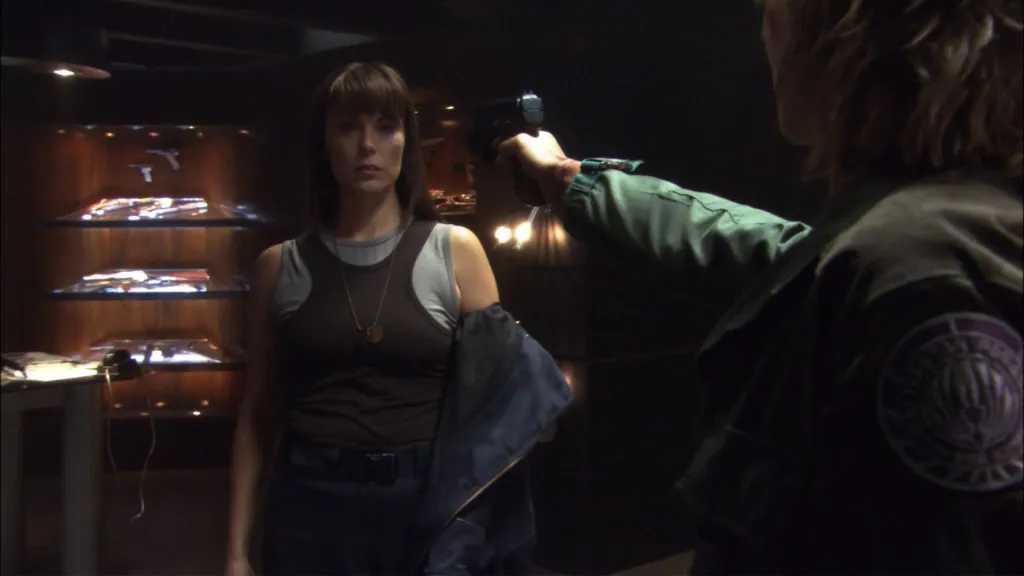
Cain’s ultimate end in “Resurrection Ship – Part 2” both retains her complexity to her last breath and manages to feel inevitable rather than forced. Throughout the Pegasus arc, Cain crosses many lines, including ordering unethical executions, sanctioning the sexual abuse of prisoners, and even plotting to assassinate Adama. By the time we reach “Resurrection Ship – Part 2,” her final beats feel almost Shakespearean as she catapults toward the only natural consequence of her worldview.
Yet despite this inevitability, Cain’s end still feels surprising, because rather than giving her an epic conclusion with an expected military coup, the episode shows restraint in killing her swiftly, and in the most ironic way possible. Gina Inviere, the Cylon Cain, who was repeatedly abused, tortured, and held captive, assassinates the Admiral with a shot to the head in her private quarters. It’s ironic because it comes right after Admirals Cain and Adama abandon their parallel assassination plans in a truce. And it’s poetic, because it was Cain’s unnecessary cruelty and hatred for the Cylons that was her ultimate downfall.
Even in the aftermath, BSG refuses easy answers, which is perhaps why it’s often regarded as one of the best sci-fi shows of the 21st century. Admiral’s death doesn’t magically resolve the conflict or erase the ruthless leadership style she embodied. Instead, her ideas echo throughout the fleet, which doesn’t suddenly become more unified. Even Adama doesn’t necessarily emerge vindicated in every sense, thus forcing the characters (and the audience) to grapple with how thin the line between hero and tyrant actually is.
In retrospect, killing arguably thier most compelling villain after just three episodes was a brave move by Moore. Cain easily could have brought intrigue to an entire season or even become a recurring antagonist. However, Battlestar Galactica and its creators obviously recognized that prolonging her story would dilute its potency. Two decades later, “Resurrection Ship – Part 2” and the entire Pegasus arc are still widely considered some of the best hours of BSG.
Do you think Admiral Cain is BSG’s best villain? Leave a comment below and join the conversation now in the ComicBook Forum!